Biggest German Shepherd Ever
The largest German Shepherd ever recorded stood over 30 inches at the shoulder and weighed more than 130 pounds — nearly double the breed standard. But the biggest GSD isn’t always the healthiest. Here’s what you need to know about true giant German Shepherds and what to expect if you own one.

For reference, the breed standard for a male German Shepherd is 24–26 inches tall and 65–90 pounds. Females are slightly smaller at 22–24 inches and 50–70 pounds. While no official Guinness record exists, reports of giant individuals like “Kaiser” (33 inches, 140 lbs) have circulated in breeder communities. These extremes are rare and often come with serious health trade-offs.
Typical vs. Record-Size German Shepherds
| Measurement | Breed Standard (Male) | Largest Reported |
|---|---|---|
| Height at shoulder | 24–26 inches | 33+ inches |
| Weight | 65–90 lbs | 140+ lbs |
| Lifespan | 9–13 years | Often shorter (7–9 years) |
| Common health risks | Hip dysplasia, bloat | Severe joint stress, heart issues, early arthritis |
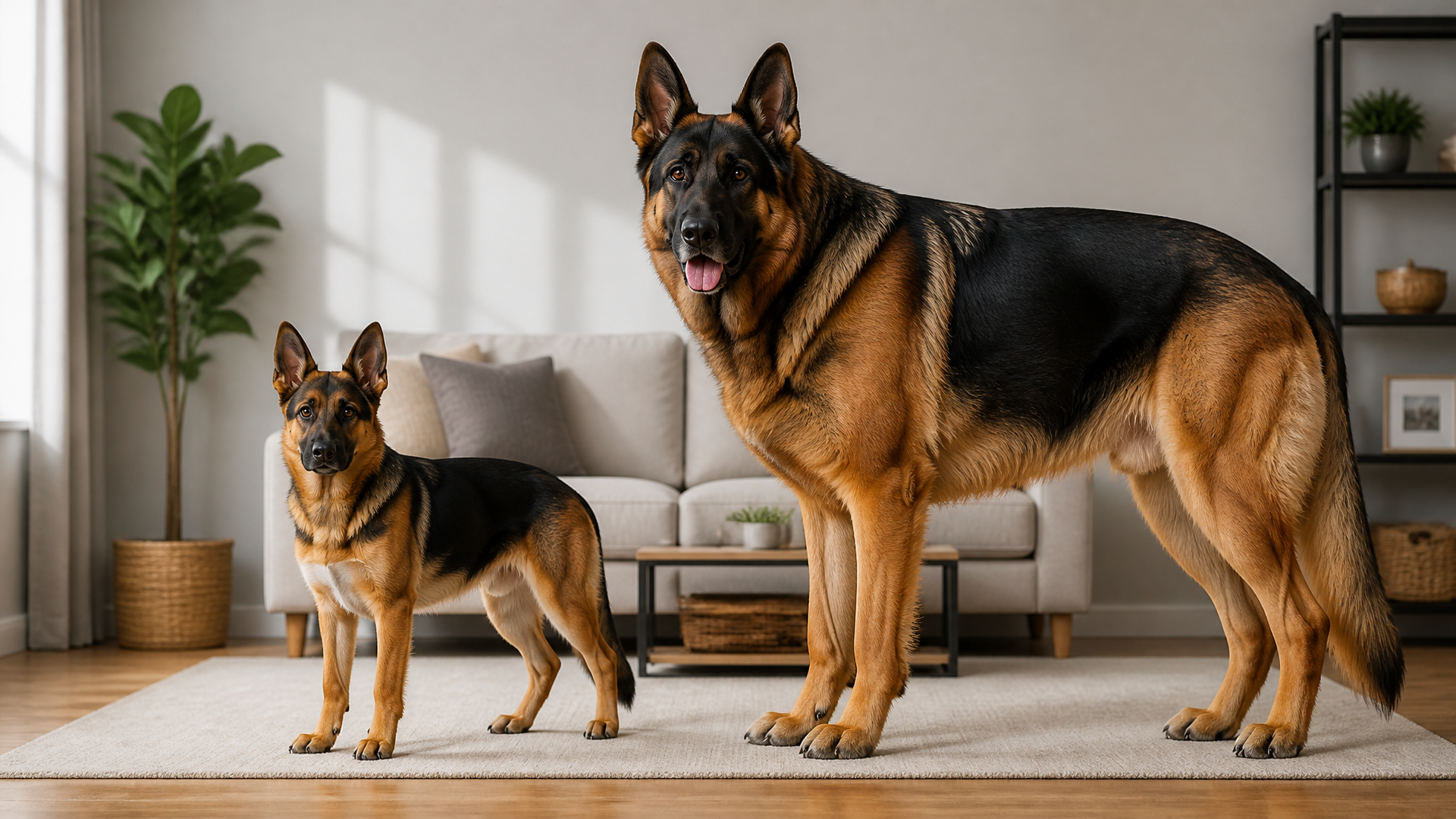
The difference between a healthy working-line GSD and a giant outlier is striking. A 140-pound dog is carrying nearly the weight of an adult human on a frame that evolved for agility, not bulk. That mismatch drives the health problems listed above.
Why the “Biggest” German Shepherd Isn’t a Goal
The biggest mistake owners make when trying to raise a large GSD is overfeeding the puppy to accelerate growth. This pushes bone development ahead of joint formation, leading to angular limb deformities, lifelong lameness, and hip dysplasia.
How to detect this early: Weigh your puppy every two weeks and plot the numbers on a breed-specific growth chart. A sudden upward spike (faster than the standard curve) is the first red flag. Catching it early means you can reduce food portions before permanent damage occurs. If your puppy jumps from the 50th percentile to the 80th in weight within four weeks, that’s a clear signal to adjust feeding.
When This Advice Changes
The guidance above applies to German Shepherds bred for standard conformation and typical working lines. If your dog comes from a rare “giant” breeding line advertised as extra-large, the health trade-offs are even more pronounced — and the expected lifespan often drops below 8 years. No matter the lineage, pushing for extreme size carries the same joint and heart risks.
What This Means for Your Next Choice
If your German Shepherd is already above breed standard weight (90+ lbs for a male), shift your focus immediately from “how big can he get” to joint health and weight management. Do not switch to a high-calorie adult food thinking it will help — it will worsen joint stress. Instead, keep your dog lean with a visible waist and palpable ribs. The single best decision you can make is to stop trying for bigger and prioritize healthy structure.
How to verify healthy body condition: Run your hands along your GSD’s sides. If you can’t easily feel the ribs without pressing, your dog is carrying too much weight regardless of what the scale says. Use a body condition score chart from your vet (1–9 scale, with 4–5 being ideal). This is more reliable than weight alone, especially for large-breed dogs whose bone density varies.
The Real Trade-Offs of a Giant GSD
Chasing the “biggest” German Shepherd comes with serious, concrete consequences:
- Shorter lifespan: Most oversize GSDs live 7–9 years instead of 9–13.
- Higher vet bills: You’ll likely face hip or elbow dysplasia surgery, heart problems, and chronic pain management. A single hip replacement can cost $5,000–$7,000.
- Reduced quality of life: A 130-pound dog with joint issues struggles to climb stairs, jump into a car, or even enjoy a normal walk. Many giant GSDs cannot play fetch or run freely without pain.
These aren’t rare edge cases — they’re the expected outcome when a dog’s skeleton isn’t built to carry that much mass. The trade-off is almost never worth it for the average owner.
3 Practical Tips for Raising a Large German Shepherd
1. Choose a large-breed-specific puppy food with controlled calcium
Actionable step: Feed a diet with 1.0–1.5% calcium (dry matter basis) during the first 18 months. Brands like Purina Pro Plan Large Puppy or Hill’s Science Diet Large Breed are formulated for slow, steady growth. This prevents the bones from elongating faster than the joints can support.
Common mistake: Switching to adult food too early or adding calcium supplements. This causes rapid growth that outpaces bone development, leading to angular limb deformities that require surgical correction.
2. Monitor growth with a simple weekly chart
Actionable step: Weigh your GSD every two weeks from 8 weeks to 18 months. Plot weight against a breed growth curve (available from your vet or online calculators like the German Shepherd Dog Growth Chart). A sudden upward spike means you’re feeding too much — reduce portion size by 10% and re-check in two weeks.
Common mistake: Relying on “he looks fine” without data. Subtle overgrowth is hard to spot until joint problems appear, by which time the damage is permanent.
3. Protect joints with low-impact exercise
Actionable step: Until your dog is 18 months old, keep exercise to 5 minutes per month of age per session (e.g., 10 minutes at 8 weeks, 30 minutes at 6 months). Use soft surfaces like grass or sand. This allows the growth plates to close naturally without stress.
Common mistake: Running, jumping, or using stairs too young. Large GSDs are especially prone to hip dysplasia when over-exercised before growth plates close. Avoid fetch on pavement and forced stair climbing until the dog is fully grown.
Disclosure: The product recommendations above are affiliate links. We may earn a commission if you purchase, at no extra cost to you.
Growth Monitoring Checklist (Save for Later)
Use this checklist to track your large GSD puppy:
- [ ] Weigh every 2 weeks and plot on a growth chart
- [ ] Check body condition score weekly – ribs should be easily felt without pressing
- [ ] Feed measured portions based on puppy food bag guidelines (adjust if weight gain is too fast)
- [ ] Limit play on hard surfaces until 18 months
- [ ] Schedule first vet check at 8 weeks, then every 3 months for growth assessment
- [ ] Watch for limping, soreness after exercise, or refusal to play – see vet immediately
- [ ] Verify body condition using a 1–9 scale from your vet, not just the scale number
Frequently Asked Questions
Can I buy a “giant” German Shepherd from a breeder?
Breeders advertising “extra-large” or “giant” GSDs are usually not following breed standards. Oversized dogs come with higher health risks and shorter lifespans. Reputable breeders focus on temperament and correct structure, not extreme size.
Is 100 pounds too big for a German Shepherd?
For a male, 100 pounds is overweight unless the dog is very tall with heavy bone structure. Most GSDs at this weight are obese and at higher risk for joint problems and heart strain. Have your vet assess body condition, not just the scale.
What’s the tallest German Shepherd ever reported?
The tallest reliable report is a male named “Kaiser” at 33 inches at the shoulder, weighing 140 pounds. This is far beyond the breed standard and is not typical even for large working lines. No verified Guinness record exists for height or weight.
Save This Guide – The biggest German Shepherd ever is an extreme outlier, not a goal. For your own GSD, aim for healthy weight and proper conformation. Use the checklist above to monitor growth, and always consult your vet before making changes to diet or exercise.