Labrador Etymology: Guide: What Every Owner Should Know
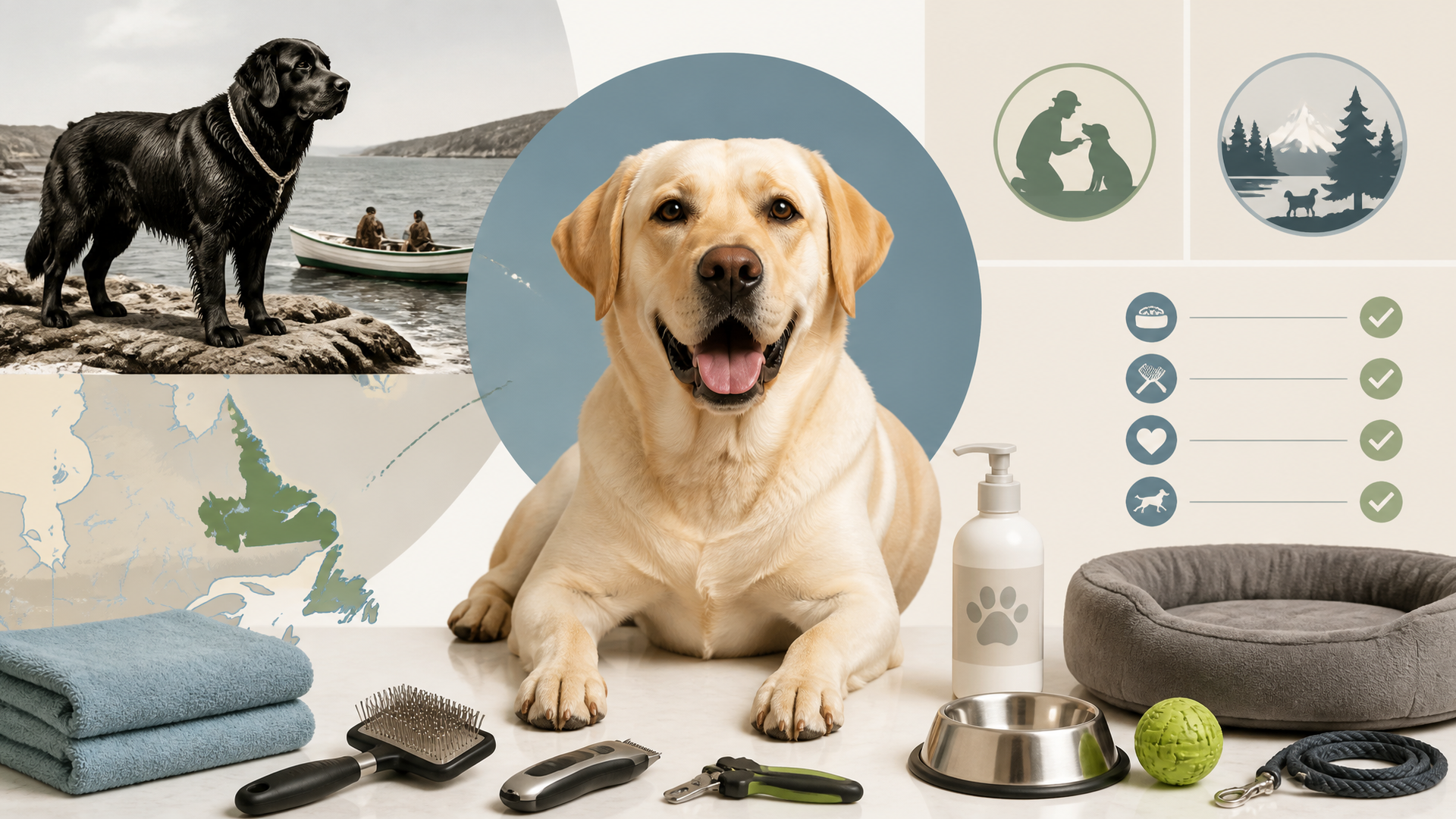
The Labrador Retriever takes its name from the Labrador region of Canada, but the breed actually originated in Newfoundland. The dogs that became today’s Labs were St. John’s Water Dogs – working retrievers used by Newfoundland fishermen. English noblemen imported them in the 1800s, refined the breed in Britain, and the “Labrador” label stuck because the dogs worked the waters off the Labrador coast. Knowing this history isn’t just trivia – it tells you exactly what your Lab needs to stay happy and healthy.

The Newfoundland Connection (Not Labrador)
The ancestors of today’s Labrador were the St. John’s Water Dog, now extinct. In the early 1800s, English sportsmen visiting Canada saw these dogs jumping into icy water to haul nets and retrieve lost gear. They brought several back to England and began selective breeding. The name “Labrador” was already in use by the 1830s, likely because the dogs worked the Labrador Sea. So while the breed’s birthplace is Newfoundland, the name honors the region where it proved its worth.
| Breed / Type | Origin | Primary Use | Key Traits |
|---|---|---|---|
| Labrador Retriever | Newfoundland (developed in England) | Water retrieving, family companion | Water-resistant double coat, otter-like tail, high endurance |
| Newfoundland Dog | Newfoundland | Heavy water rescue, draft work | Massive size, webbed feet, gentle temperament |
| St. John’s Water Dog (extinct) | Newfoundland | Fishing aid, general water work | Medium size, waterproof coat, retrieving instinct |
Many owners assume Labradors and Newfoundlands are closely related – they share an origin region but were bred for very different jobs. The table above shows the key differences at a glance.
What the Name Means for Your Owner Checklist
The etymology isn’t just a story – it’s a decision tool. Here’s how to apply it to your Lab’s daily life, with a practical boundary, a quick check, and the trade-offs to watch for.
Field vs. Show: One Name, Two Energy Levels
The “Labrador” name covers two distinct lines: field-bred (working) and show-bred (bench). Field Labs retain more of the original St. John’s dog drive – they can easily need 2+ hours of intense exercise daily. Show Labs are calmer but still need at least an hour of vigorous activity. Applicability boundary: If your Lab is from field lines, the heritage-driven exercise requirement is non-negotiable. If you have a show-line Lab, you can get by with slightly less, but the breed’s core retrieving instinct remains.
How to verify your Lab’s line: Check the pedigree papers or ask the breeder. Field lines often have titles like “Master Hunter” or “Working Certificate” in the ancestry. If you adopted a rescue, look for traits: a field Lab typically has a leaner build, a shorter, sleeker coat, and almost endless stamina.
Practical Implication: Your Next Step Based on Heritage
If you’re considering getting a Labrador, the etymology tells you that this is a working breed built for cold water retrieval. That means you need access to safe swimming water (lake, pool, or kiddie pool) and at least 60 minutes of exercise that includes retrieving and running – not just leash walks. Owners who can provide this get a calm, well-behaved dog. Owners who can’t often deal with destructive chewing, digging, and excessive barking.
Concrete verification step: Take your Lab to a safe body of water (or a large puddle) and see how they react. Most Labs will immediately wade in and try to retrieve something. If your Lab shows no interest in water, it may be a show-line dog or have a different background – adjust your expectations accordingly.
Trade-Offs: When the History Clashes with Your Life
The biggest mismatch happens when a Lab’s heritage meets a small apartment or a home without a yard. Even a calm show-line Lab needs ample retrieval play. Without it, the breed’s natural drive turns into unwanted behavior. Realistic mismatch example: You buy a Lab for a family with a tiny fenced yard and no nearby water. Despite daily walks, the dog becomes destructive after six months because its retrieving and swimming needs aren’t met. The safe alternative: invest in structured activities like dock diving classes, regular fetch sessions at a dog park, or a flirt pole. Or consider a lower-energy breed entirely.
Physical Signs of the Labrador’s Working Heritage
The breed’s original job shaped its body. A Labrador’s otter-like tail acts as a powerful rudder in the water. Its dense, water-resistant double coat insulates against icy temperatures and sheds water quickly. The webbed feet (yes, Labs have webbing between their toes) give them an edge for swimming. If your Lab lacks these traits – for example, a thin single coat or a skinny tail – it may not be purebred or may come from lines bred away from the working standard.
Quick checklist to assess your Lab’s heritage traits:
- Coat: thick, oily topcoat with soft undercoat; repels water
- Tail: thick at the base, tapering, otter-shaped
- Feet: noticeable webbing between toes
- Build: athletic, not bulky; deep chest for lung capacity
- Behavior: strong interest in retrieving and water
If your Lab checks all these boxes, you have a typical working-line or well-bred show-line dog. If several are missing, consider a DNA test to confirm breed composition.
Expert Tips: Three Practical Takeaways from the Breed’s History
1. Tap into the retrieving instinct. Because your Lab was bred to retrieve from cold water, games like fetch and swimming satisfy a deep need – not just a hobby.
- Actionable step: Mix in water retrieves (safe, clean water) to meet that drive. Use a floating bumper or a toy that doesn’t soak up water.
- Common mistake: Only playing fetch on solid ground. That misses the core purpose your dog was bred for.
2. Expect a high energy floor. These dogs worked long hours with fishermen. A couch-potato Lab is a recipe for destruction.
- Actionable step: Commit to at least 60 minutes of vigorous daily exercise (running, swimming, or retrieving). Add a second mental stimulation session like puzzle toys or nose work.
- Common mistake: Assuming two short walks count as enough – it rarely does for an adult Lab.
3. Use their history for training. Labs were bred to take direction from fishermen (barking, whistles). They respond exceptionally well to clear, consistent cues.
- Actionable step: Teach a strong “drop it” command early – it’s a lifesaver for a retriever. Use a consistent hand signal and reward with a high-value treat.
- Common mistake: Letting puppy mouthing slide because it’s “cute.” Reinforce retrieve/release discipline from day one.
When to Escalate
If your Labrador shows signs of excessive boredom – destruction, constant barking, or weight gain despite normal feeding – review whether their lifestyle matches their heritage. A dog bred to work 8+ hours in icy water cannot thrive on 20 minutes of leash walks. Consider a behavior consultation or structured activities (agility, nose work, dock diving) before it becomes a serious problem.
Save This Guide
- Key takeaway: The name “Labrador” comes from the Labrador Sea, but the breed’s roots are in Newfoundland’s St. John’s Water Dog. This history explains your Lab’s love for water, retrieving, and high energy. Use it to build a daily routine that meets those needs.
- What to do now: Check your Lab’s response to water and retrieving using the verification step above. If your dog shows strong drive, plan one retrieval-based exercise session daily. If not, adjust your activities to match a show-line or mixed-breed energy level.
This article contains affiliate links; as an Amazon Associate I earn from qualifying purchases.