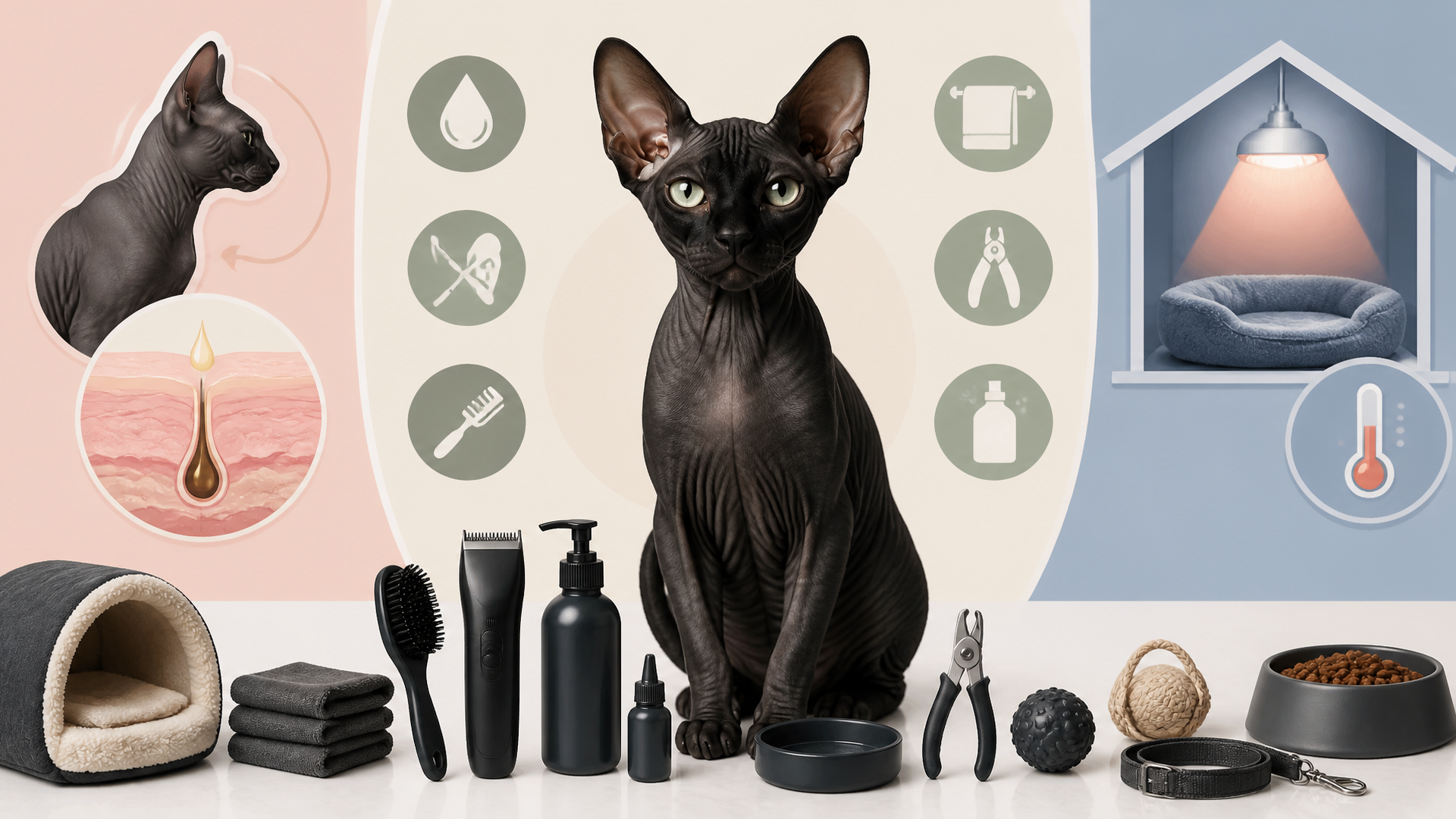
Black Sphynx Cat Care: Daily Routine & Expert Tips
Caring for a black Sphynx cat isn’t the low-maintenance experience many owners expect. This hairless breed demands a daily routine that covers skin oil control, ear cleaning, and temperature regulation. Here’s exactly what you need to do every day, plus the expert-backed tips that keep your black Sphynx healthy and comfortable.

The Counter-Intuitive Truth About Hairless Cat Care
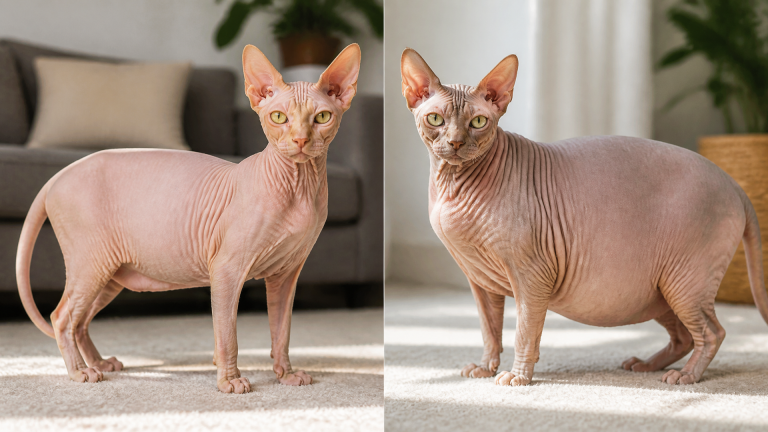
Most people assume a breed with no fur means less grooming. The opposite is true. Without a coat to absorb natural oils, a Sphynx’s skin produces sebum that builds up fast. A black Sphynx shows this more visibly – you’ll see greasy patches, dirt accumulation, and even brownish discoloration on furniture where they nap. Daily cleaning keeps their skin balanced and prevents stubborn acne, yeast overgrowth, and discomfort.
Your Daily Black Sphynx Care Routine Checklist
Print this checklist and keep it near their feeding station. Run through it once each morning or evening.
| Task | How Often | Quick Tip |
|---|---|---|
| Wipe down the body with a damp, soft cloth or pet-safe wipe | Daily | Focus on folds under legs, chin, and tail base |
| Check ears for wax buildup or redness | Daily | Use a vet-recommended ear cleaner with a cotton ball (not a Q-tip) |
| Inspect skin for new bumps, dry patches, or blackheads | Daily | Black Sphynx skin can hide irritation – run your fingers over the body |
| Check litter box for changes in urine or stool | Daily | Unusual odor or consistency means a vet visit |
| Provide fresh water and measure daily food portion | Daily | Sphynx cats have fast metabolisms and need consistent feeding times |
| Apply moisturizer if skin looks dry or flaky | As needed | Use a fragrance-free, cat-safe lotion (e.g., coconut oil in tiny amounts, only with vet approval) |
Affiliate disclosure: Some product links in this guide may earn us a commission at no extra cost to you.
Bathing & Skin Care: Step-by-Step Weekly Routine
Bathing a Sphynx every 1–2 weeks is non-negotiable, but the process matters more than the frequency. Follow these steps to avoid over-drying or under-cleaning.
What You’ll Need
- Hypoallergenic, cat-specific shampoo (oatmeal-based or Sphynx-formula)
- Warm water (around 100°F – test with your wrist)
- Soft washcloth
- Two towels (one for initial drying, one for final pat-down)
- Cat-safe ear plugs (optional, to prevent water in ears)
The 4-Step Bath Process
1. Pre-rinse and spot-clean. Wet the washcloth and wipe down the face, ears, and paws first. This prevents shampoo from irritating sensitive areas.
2. Lather the body. Apply a nickel-sized amount of shampoo, working into a gentle lather from neck to tail. Avoid the eyes and nose. Focus on the back of the neck, armpits, and groin – those are the oiliest spots.
3. Rinse thoroughly. Leftover shampoo residue causes itching and flaking. Run fresh water over the body until you feel no slickness.
4. Towel-dry completely. Pat – don’t rub – with a dry towel. Use a second towel to absorb moisture from the skin folds. Sphynx cats get chilly fast; a soft fleece blanket or heated bed afterward helps them warm up.
How to Verify the Bath Worked
After drying, run your clean hand over the entire body. The skin should feel smooth and slightly matte, with no greasy film or slippery spots. If you still feel residue, rinse again and re-dry. A good test: press a piece of clear tape against the skin – it should lift almost no oil.
Stop & Escalate Signal
If your black Sphynx develops a greasy, yellow-tinged film within 48 hours, or the skin looks red and irritated, stop using that shampoo. Try a dedicated Sphynx formula with benzoyl peroxide or salicylic acid (vet-recommended brands like Vet’s Best or DermAllay). If redness persists after two baths, see the vet – it could be a yeast infection or allergic reaction.
Ear, Eye & Nail Care Done Right
Ears – The Week’s Biggest Grooming Task
A Sphynx has large, open ears with no fur to wick away wax. Check them daily and clean every 3–5 days using these steps:
- Squeeze an ear-cleaning solution (like Virbac Epi-Otic) into the ear canal.
- Gently massage the base of the ear for 20 seconds.
- Wipe away loosened wax with a cotton ball.
Verification: After cleaning, the ear should be dry and free of black debris. If you see dark coffee-ground discharge or your cat shakes its head excessively, stop cleaning. That signals ear mites or an infection – schedule a vet visit within 48 hours.
Escalation: Never use Q-tips, and stop immediately if you see swelling, redness, or a foul odor. Those are signs of an advanced infection that needs prescription treatment.
Eyes – Watch for Black Tear Stains
Black Sphynx cats often show tear staining more visibly than lighter colors. Wipe the inner corner of each eye with a warm, damp cloth each morning. If staining is persistent, switch to a stainless steel water bowl and add a daily probiotic (check with your vet first).
Nails – Trim Every 2 Weeks
Hairless cats don’t wear down nails as naturally as furry breeds because they don’t scratch on rough surfaces as often. Use a guillotine-style or scissor nail clipper and cut only the transparent white tip. Dark nails on a black Sphynx can be tricky – shine a flashlight through the nail to see the quick, or have a vet show you the first time.
Diet & Hydration: Why This Breed Eats Like a Kitten
A Sphynx’s higher metabolism and lack of insulating fur mean they burn more calories just staying warm. Expect to feed 25–35% more food than a typical domestic shorthair of the same weight.
| Daily Feeding Guide (for an 8–12 lb adult black Sphynx) | Amount |
|---|---|
| High-quality wet food (70–80% of diet) | 1.5 – 2.5 cans (3 oz) per day |
| Dry kibble (20–30% of diet, for dental health) | ¼ – ⅓ cup per day |
| Fresh water (refill twice daily) | Unlimited |
Expert tip: Feed three smaller meals rather than two large ones. This helps regulate blood sugar and reduces the greasy skin flare-ups that come from rapid eating-digestion cycles.
Cold-weather adjustment: If your home drops below 70°F, your Sphynx’s energy needs jump. Offer a small extra meal or a calorie-dense treat (like freeze-dried chicken) to keep weight stable.
When to Call the Vet – 5 Warning Signs for Black Sphynx Owners
Because dark skin can hide early problems, rely on these specific signals:
1. A spot or bump that changes shape or color – Melanoma risk exists in Sphynx cats; any new growth warrants a vet check.
2. Sudden oily patches with a yeasty or sour smell – Could be Malassezia dermatitis (yeast overgrowth).
3. Lethargy and hiding more than normal – Sphynx cats are typically social and playful.
4. Scratching or head-shaking after ear cleaning – May indicate an ear infection or mite infestation.
5. Diarrhea or vomiting lasting more than 12 hours – Dehydration is more dangerous in hairless cats.
When you’re unsure: Schedule a wellness exam every 6 months instead of the standard yearly visit. Early detection matters.
Stop & escalate rule: If your cat stops eating for more than 24 hours, or you see oozing, open sores, or a fever (ears feel hot to the touch), go to the emergency vet. Do not wait.
Save This Guide
Daily skin wipes, weekly baths, ear checks every other day, and a high-calorie diet are the non-negotiable pillars of black Sphynx cat care. Print the checklist above, keep grooming supplies in a visible caddy, and trust your hands more than your eyes – running your fingers over the skin catches problems the dark coat hides.
Key takeaway: A well-cared-for black Sphynx thrives with consistent, gentle handling. Your daily routine is the best insurance policy against skin issues and discomfort.
Frequently Asked Questions
How often should I bathe a black Sphynx?
Start with once a week. If the skin stays clean and oil-free for 10 days, you can stretch to every two weeks. If you see greasy buildup between baths, go back to weekly.
Can I use baby wipes on my Sphynx?
No. Many baby wipes contain aloe, fragrance, or chemicals that irritate cat skin. Use only unscented, pet-safe water wipes (like Pogi’s or Nature’s Miracle) or a damp microfiber cloth.
What’s the best room temperature for a Sphynx?
Keep your home between 70–75°F. Anything below 68°F can make them uncomfortable, and they’ll seek out warm spots (heating vents, electronics, or your lap). Provide a heated cat bed or soft fleece blanket in every common area.