Newfoundland Provincial Flower: Guide: What Every Owner Should Know
The official provincial flower of Newfoundland and Labrador is the Pitcher Plant (Sarracenia purpurea). If you own a dog — especially a large, curious breed like the Newfoundland — this is not a plant you want in your yard. The Pitcher Plant is toxic to dogs, and ingestion can cause immediate oral irritation, drooling, and vomiting. Here’s how to identify it, what to do if your dog eats it, and which native plants are safe to grow instead.

What Is the Newfoundland Provincial Flower?
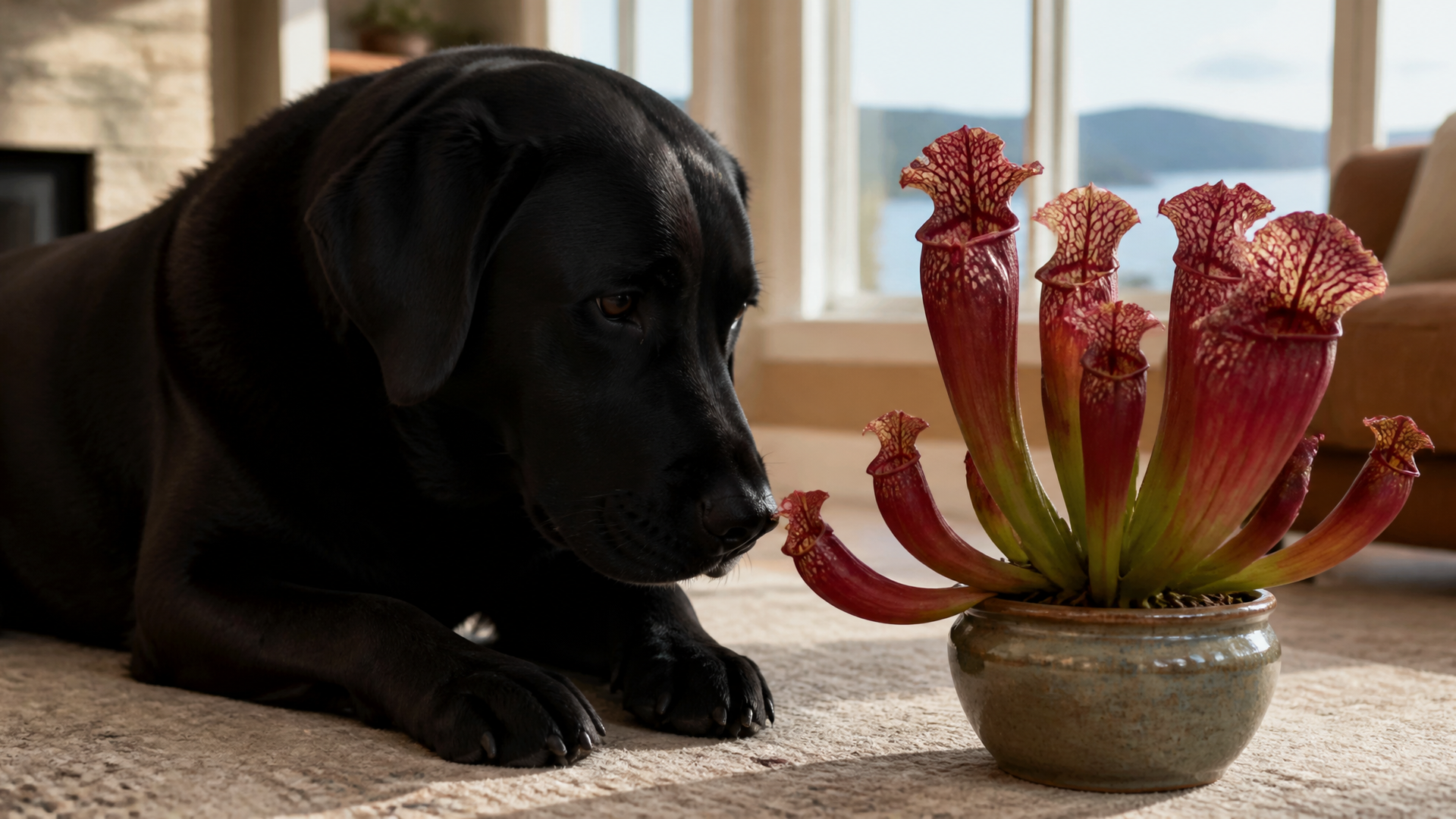
Adopted in 1954, the Pitcher Plant grows naturally in bogs and wetlands across the province. It’s easy to recognize: low rosettes of cup-shaped leaves that collect rainwater, with reddish-purple veining and a single nodding flower in summer. The plant traps insects for nutrients, but that’s not the danger for your pup. The real risk comes from soluble oxalates inside the leaves, which irritate the mouth, throat, and stomach.
| Feature | Detail |
|---|---|
| Scientific name | Sarracenia purpurea |
| Appearance | Hollow, pitcher-shaped leaves (2–6 inches tall), reddish-purple flower |
| Habitat | Bogs, fens, acid wetlands |
| Bloom time | June–July |
| Toxicity to dogs | Toxic – contains soluble oxalates and irritants |
Decision criterion: If you have a pet-free garden and want a unique native specimen, the Pitcher Plant is a fine choice. If you own a dog — especially a Newfoundland breed known for mouthing and exploring — avoid planting it entirely.
Is the Pitcher Plant Toxic to Dogs?
Yes. The plant contains soluble oxalates and other irritants that cause immediate discomfort. Common symptoms include:
- Drooling (within 30 minutes)
- Pawing at the mouth
- Vomiting
- Swelling of the lips or tongue (less common)
In most cases, symptoms are mild to moderate and resolve on their own. But large amounts can lead to more serious gastrointestinal upset. There is no specific antidote; treatment is supportive (fluids, anti-nausea medication if needed).
How to confirm it’s a Pitcher Plant: Look for the distinct cupped leaf that holds water, reddish-purple veins, and a single drooping flower. Keep a photo on your phone for quick reference. Compare it to images from trusted sources like the Newfoundland government’s flora guide or the ASPCA toxic plant list.
Trade-off to consider: Many dog owners mistake the Pitcher Plant for a harmless native fern or Venus flytrap. Ferns have flat, lobed fronds (no cups), and Venus flytraps have hinged leaves — the Pitcher Plant is different. If you’re unsure, snap a photo and run it through a plant identification app before letting your dog near it.
If Your Dog Eats a Pitcher Plant: Step-by-Step Response Plan
Follow this flow immediately. Each checkpoint helps you decide what to do next.
What to Have Ready (Preparation Checklist)
- Your vet’s phone number and closest emergency clinic
- A photo of the plant
- Pet poison hotline (ASPCA: 888-426-4435)
Checkpoint 1: Evaluate Right Away (First 5 Minutes)
- Can you see plant pieces in the mouth? Gently check (don’t force the mouth open).
- Is your dog drooling or pawing at the face? This is the most common first sign.
- Any breathing trouble? Swelling of the tongue or throat is rare but serious.
Ordered Steps to Take
| Step | Action | Why It Matters |
|---|---|---|
| 1 | Remove any visible plant pieces from the mouth (if safe) | Reduces further absorption |
| 2 | Offer a small amount of water or ice cubes | Dilutes irritants, soothes mouth |
| 3 | Call your vet or poison hotline | They need the plant name and amount eaten |
| 4 | Do NOT induce vomiting unless directed | Vomiting can worsen irritation |
| 5 | Monitor for 60 minutes | Most symptoms appear within 30 minutes |
Likely Causes of a Severe Reaction
- Large quantity eaten (multiple leaves or pitchers)
- Dog is small (under 15 pounds) – Newfoundland puppies can be at risk too, as they are still growing and more sensitive
- Pre-existing health issues (kidney problems, gastrointestinal sensitivity)
Friction Points to Watch For
- Dogs sometimes hide discomfort. Watch for subtle signs like lip licking, restlessness, or refusing treats.
- Multiple plants in the yard can be mistaken. Confirm it’s the Pitcher Plant, not a harmless native fern.
Escalation Signals — Call the Vet Now
- Vomiting more than twice in an hour
- Weakness, collapse, or trouble standing
- Swelling in the face or throat
- Your dog is a puppy, senior, or has a medical condition
Success Check
You can monitor at home if: your dog ate only one small piece, shows no symptoms after 1 hour, and is acting normal. Escalate immediately if any swelling or repeated vomiting occurs.
Safer Alternatives for Newfoundland Gardens
If you love the look of native plants but have a curious dog, swap the Pitcher Plant for these pet-safe options:
| Safe Plant | Why It Works | Notes |
|---|---|---|
| Bunchberry (Cornus canadensis) | Low ground cover; white flowers, red berries; native to bogs and forests | ASPCA non-toxic; easy to grow in moist, acidic soil |
| Lowbush Blueberry (Vaccinium angustifolium) | Edible berries (safe for dogs in small amounts); white bell-shaped flowers | Provides visual interest and a tasty snack for humans |
| Partridgeberry (Mitchella repens) | Evergreen ground cover; small white flowers, red berries; thrives in shade | Non-toxic; great for woodland gardens near wetlands |
Important: Always verify with your vet before planting, but all three are widely listed as non-toxic by the ASPCA. Unlike the Pitcher Plant, they won’t cause oral irritation if your dog takes a nibble. If you want a tall native shrub, consider American winterberry (Ilex verticillata) — it produces bright red berries (non-toxic to dogs, though berries can cause mild stomach upset if eaten in large quantities) and thrives in wet soils.
3 Practical Tips for Dog Owners
Tip 1: Identify Before You Panic
Actionable step: Take a photo of any suspicious plant in your yard and compare it to a reference image of the Pitcher Plant (cup-shaped leaves, reddish-purple veining). Keep that photo on your phone for vet visits.
Common mistake to avoid: Mistaking the Pitcher Plant for a common fern. Ferns have flat, lobed fronds, not hollow cups.
Tip 2: Fence Off Boggy Areas
Actionable step: If you live near wetlands where Pitcher Plants grow naturally, install a temporary garden barrier (2–3 feet high) or keep your dog on a leash during walks in those areas.
Common mistake to avoid: Assuming a leash alone is enough. Dogs can grab plants in seconds before you pull them away. A physical barrier is far more reliable.
Tip 3: Train a Solid “Leave It” Cue
Actionable step: Practice with low-value items (a piece of kibble) first. Reward your dog for looking away. Then graduate to toys, then to plants in your own yard.
Common mistake to avoid: Only training the cue when your dog is already near the toxic plant. Train it daily in neutral settings so it’s automatic in an emergency.
Frequently Asked Questions About the Pitcher Plant and Dogs
Q: Can I compost Pitcher Plant clippings?
A: No. Even dried or decaying plant material can still contain irritants. Dispose of it in sealed yard waste bags, away from dog areas.
Q: My dog ate a Pitcher Plant but seems fine after an hour. Do I still need to call the vet?
A: Yes, call anyway. Some dogs show delayed symptoms up to 4–6 hours post-ingestion. The vet can help you set a monitoring schedule.
Q: Is the Pitcher Plant the same as a Venus flytrap?
A: No. Both are carnivorous, but Venus flytraps have hinged “jaws” that snap shut, while Pitcher Plants have passive cup-shaped leaves. Toxicity is also different — Venus flytraps are generally non-toxic to dogs, but still not recommended.
Save This Guide
Key takeaway: The Newfoundland provincial flower, the Pitcher Plant, is toxic to dogs. If you’re a dog owner, skip planting it and choose pet-safe alternatives like Bunchberry, Lowbush Blueberry, or Partridgeberry. Keep a photo of the plant on your phone for quick vet reference. This guide covers identification, emergency steps, safe swaps, and training tips to keep your pup safe.
No affiliate links – just plain, honest advice for your pup.