Beagle Size: Guide: What Every Owner Should Know
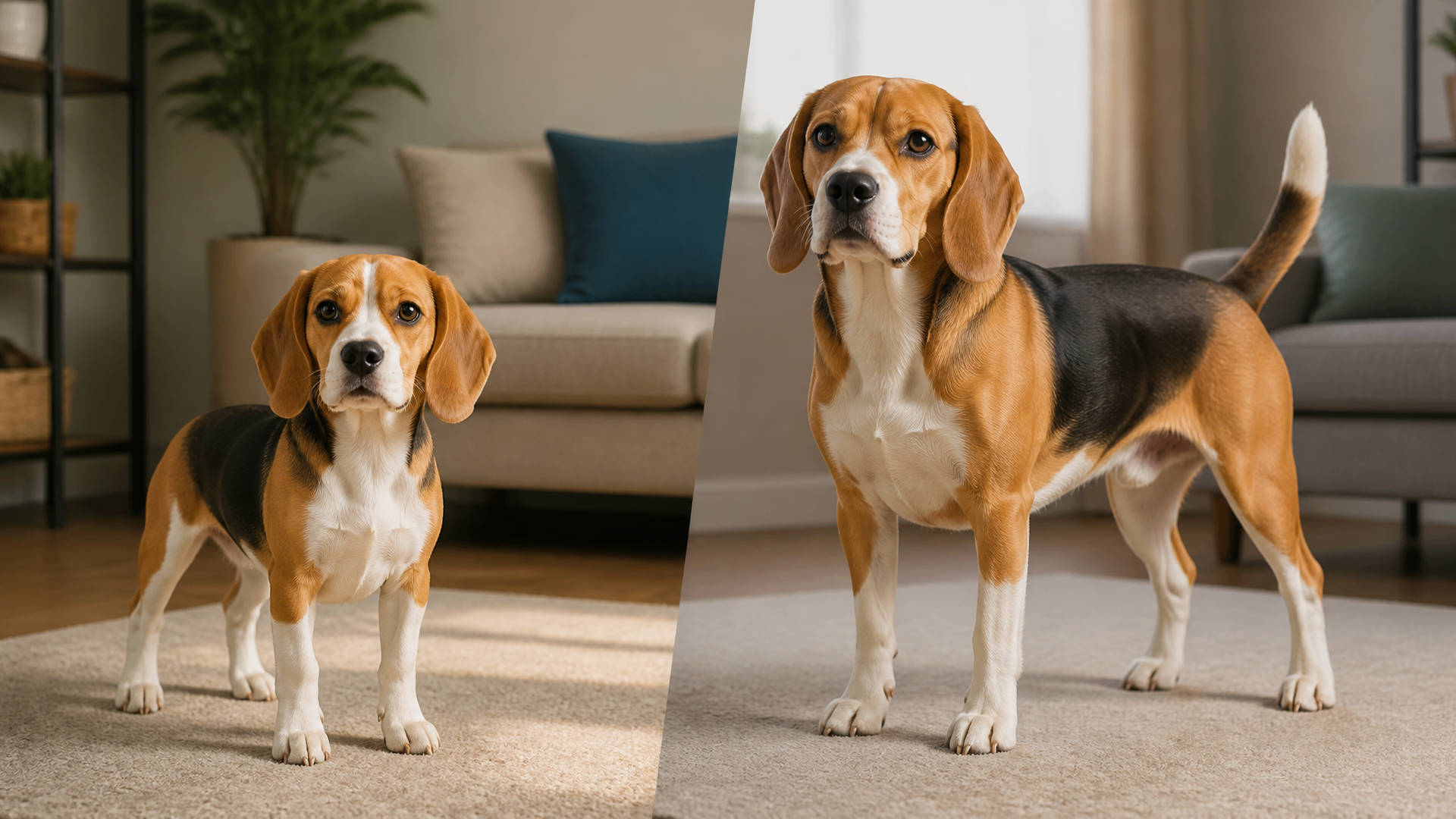
Short answer: A full-grown Beagle typically stands 13 to 15 inches tall at the shoulder and weighs 20 to 30 pounds. There are two official varieties (13-inch and 15-inch), and the size difference is not only height — it affects everything from crate size to feeding amounts.

If you’re trying to figure out whether a Beagle fits your home, or you’re planning gear for a new pup, here’s what you need to know about Beagle size — including the one thing most size guides get wrong.
Standard Beagle Size: Two Varieties, Two Weight Ranges
The American Kennel Club recognizes two varieties of the Beagle breed, separated by height at the shoulder.
| Variety | Height (at withers) | Typical Weight |
|---|---|---|
| Under 13 inches (13-inch) | Up to 13 inches | 18–22 lbs |
| 13 to 15 inches (15-inch) | 13 – 15 inches | 20–30 lbs |
These ranges are for healthy, well-conditioned adults. A Beagle that’s overweight can easily push 35+ pounds, which leads to joint strain and other health problems (more on that below).
13-Inch vs. 15-Inch: It’s Not Just a “Mini” Difference
Many owners assume the 13-inch variety is simply a smaller version of the 15-inch. That’s not quite right. The two varieties were historically bred for different hunting roles — smaller Beagles were better for dense cover and hare hunting, while the larger ones handled fox hunting. Today, the size difference also affects:
- Crate size: A 15-inch Beagle needs a 24-inch crate; a 13-inch can fit a 22-inch crate.
- Harness fit: Most adjustable harnesses work for both, but the 15-inch needs a wider chest strap.
- Food portions: The smaller variety typically eats 1–1.25 cups of high-quality kibble per day; the larger needs up to 1.5 cups.
Counter-intuitive angle: Many people think a 13-inch Beagle will be “more apartment-friendly,” but the truth is both varieties need the same amount of exercise and mental stimulation — size does not correlate with energy level. If you choose a 13-inch Beagle because you think it’ll be calmer, you’ll be disappointed.
Beagle Growth Timeline: From Puppy to Adult
Beagles are medium-sized dogs that reach their full height by about 8–10 months, but they continue filling out (adding muscle and mature body fat) until 12–18 months.
| Age | 13-Inch Weight | 15-Inch Weight |
|---|---|---|
| 2 months | 4–6 lbs | 5–7 lbs |
| 4 months | 10–13 lbs | 12–16 lbs |
| 6 months | 14–17 lbs | 17–22 lbs |
| 9 months | 17–20 lbs | 21–26 lbs |
| 12 months (adult reference) | 18–22 lbs | 22–28 lbs |
| 18 months (mature) | 18–22 lbs | 23–30 lbs |
Breed-specific detail: Beagles are notorious for slow filling out. Your 1-year-old may look lanky and “too skinny” — that’s normal. Resist the urge to increase food portions. Instead, ensure the ribs can still be felt under a thin layer of fat.
Factors That Influence Your Beagle’s Final Size
Genetics (Litter Lines)
Some lines are naturally larger or smaller. If you’re getting a Beagle from a breeder, ask about the parents’ sizes. A 13-inch Beagle from one line might weigh 20 lbs; from another, 16 lbs. The breed standard is a range, not a rigid target.
Gender
Males are generally bigger: a 15-inch male averages 25–30 lbs, while a female of the same variety averages 20–25 lbs. The difference is less pronounced in the 13-inch variety.
Neutering
Early neutering (before 6 months) can slightly affect adult size because growth plates close later. This isn’t a reason to delay neutering, but it’s worth noting — neutered Beagles may be slightly taller or have different body proportions. Always discuss timing with your vet.
Diet and Exercise
This is where most owners go wrong. Beagles are food-driven and will eat far more than they need. Overfeeding a puppy doesn’t make it grow taller — it makes it fat. Stick to the feeding guide on your puppy’s food bag, and measure every meal.
Expert tip #1: Use a kitchen scale to weigh your Beagle’s food, not a measuring cup. Kibble density varies by brand, and a 1-cup scoop can be off by 20%. Common mistake: guessing portions.
Expert tip #2: Weigh your Beagle every two weeks while it’s growing. Mark the weight on a chart. If the gain is faster than the table above, reduce food by 10%. Beagles don’t self-regulate — you have to control intake.
Expert tip #3: For adult Beagles, use a slow-feeder bowl or food puzzle. A standard bowl allows them to inhale a full meal in 30 seconds, which contributes to obesity and bloating risk.
How to Check if a Crate or Harness Actually Fits Your Beagle
Most owners buy gear based on the breed label and hope it works. That’s where the mismatch happens. Here’s a concrete verification step you can do before you bring anything home.
For a crate: Measure your Beagle’s length from the tip of the nose to the base of the tail (while standing). Add 4 inches. That’s the minimum crate length. Then measure height from the floor to the top of the head while sitting — add 2 inches. If the crate is shorter than either number, your dog will be cramped and may develop anxiety or pressure sores.
For a harness: Measure around the widest part of the chest (just behind the front legs) and around the neck where the collar sits. A harness that fits the chest but is loose on the neck means your Beagle can back out of it on a walk — a common escape route that leads to lost dogs.
What can go wrong: A 13-inch Beagle placed in a 30-inch crate (meant for a larger breed) may learn to eliminate in one corner and sleep in the other, making housebreaking impossible. A harness that’s one size too large can rub raw spots under the armpits after a 30-minute walk. Get the fit right before the first use, not after the damage is done.
Health Concerns Tied to Beagle Size
Obesity (the #1 health issue)
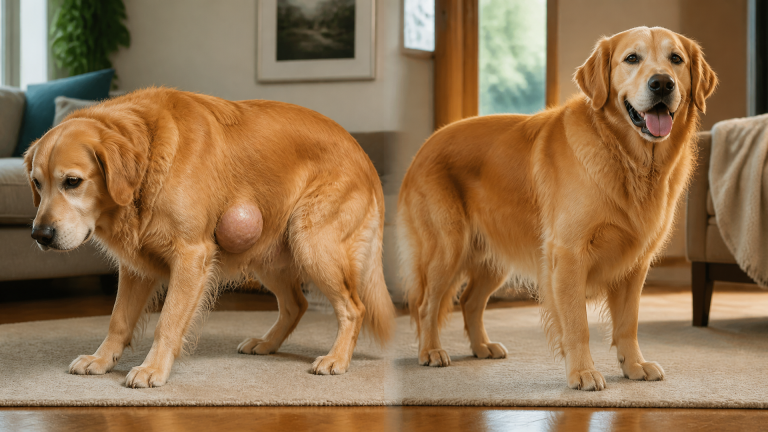
Because Beagles are built for endurance (not speed), they carry a low body fat percentage naturally when healthy. But they’ll easily become obese on a diet of free-feeding or too many treats. Extra weight is especially hard on their short legs and long backs.
- Weight check: You should be able to feel your Beagle’s ribs without pressing hard. If you can’t, it’s time to cut calories.
- Joint strain: Overweight Beagles are at higher risk for hip dysplasia, intervertebral disc disease, and arthritis. Even 2–3 extra pounds matters on a 25-lb frame.
Smaller Beagles = Increased Choking Hazards
A 13-inch Beagle’s smaller throat and esophagus mean that food, treats, or toys that are fine for a 30-lb dog can be choking hazards. Stick to treats no larger than a pea, and avoid round chew toys that can lodge in the back of the throat.
Actionable takeaway: For a 13-inch Beagle, choose crate toys that are specifically labeled for small breeds (Chuckit! Breathe Right mini balls, for example). For 15-inch Beagles, medium-small toys are typically safe.
Is a Beagle the Right Size for Your Home? (Quick Decision Checklist)
Use this 6-item checklist to decide if a Beagle’s size works for your lifestyle. Pass/fail each item honestly.
- [ ] Can you physically lift your adult Beagle? (13-inch: ~20 lbs; 15-inch: ~25–30 lbs) — If you have back issues or live in a second-floor walk-up, a 30-lb Beagle may be difficult to carry up stairs after a leg injury.
- [ ] Does your car’s cargo area fit a 24-inch crate? — Most sedans can, but something like a Mini Cooper may not. Measure first.
- [ ] Is your current home’s floor plan wide enough for a Beagle to run a short burst? — Beagles need a clear 6-foot path for zoomies.
- [ ] Do you have a fence that prevents a 15-inch Beagle from jumping over it? — A 13-inch Beagle can clear a 3-foot fence if motivated; a 15-inch can clear 3.5 feet. Plan for a 4-foot minimum.
- [ ] Are you prepared to adjust feeding portions as your Beagle ages? — Adult Beagles over 8 years old often need fewer calories. If you’re not willing to adjust, the dog will become overweight.
- [ ] Can you store dog food in a tall bin (not on the floor)? — Beagles are notorious counter-surfers and will open food bags. A lidded bin that’s at least 30 inches off the ground is recommended.
Pass all 6? A Beagle’s size is a good fit for you. Fail 2 or more? Consider a smaller breed (like a Miniature Dachshund) or be prepared to make changes.
Gear Recommendations Based on Beagle Size
These are general guidelines — always measure your specific dog before buying.
| Item | 13-Inch Beagle | 15-Inch Beagle |
|---|---|---|
| Crate | 22” (airline-compatible) | 24” (for home use, 22” for travel) |
| Harness | Small (chest 16–20”) | Medium (chest 20–24”) |
| Dog bed | 24” x 18” | 30” x 20” |
| Food bowl | Slow-feeder, 1-cup capacity | Slow-feeder, 1.5-cup capacity |
| Rain coat | Small (neck 12–14”) | Medium (neck 14–16”) |
We may earn a commission from purchases made through links in this section.
FAQ: Quick Answers About Beagle Size
Can a Beagle be smaller than 13 inches?
Yes, but these are typically from pet-breeding lines that don’t meet the standard. A Beagle under 13 inches is still a Beagle by ancestry, but may be less robust and more prone to injuries from larger animals. If you’re buying from a breeder, be cautious of “teacup” or “mini” Beagle claims — those are marketing terms, not breed varieties.
How big is a Beagle compared to a Beagle mix?
It depends on the mix. A Beagle-Basset Hound mix will likely be heavier and lower to the ground. A Beagle-Corgi mix may be shorter but stockier. Always estimate adult size by looking at both parent breeds’ standard ranges.
Why does my Beagle seem smaller than the breed standard?
Individual variation within the standard is normal. As long as your Beagle is healthy, active, and at a proper weight, a few inches or pounds off the standard range is nothing to worry about.
Save This Guide
Beagle size is not only a number — it affects crate fit, feeding amounts, exercise needs, and long-term health. Know the difference between the 13-inch and 15-inch varieties, track your puppy’s growth against the timeline, and use the checklist to confirm the size fits your home. Keep an eye on weight, and your Beagle will stay happy and healthy for years to come.