do Norwegian Forst Cats Shed
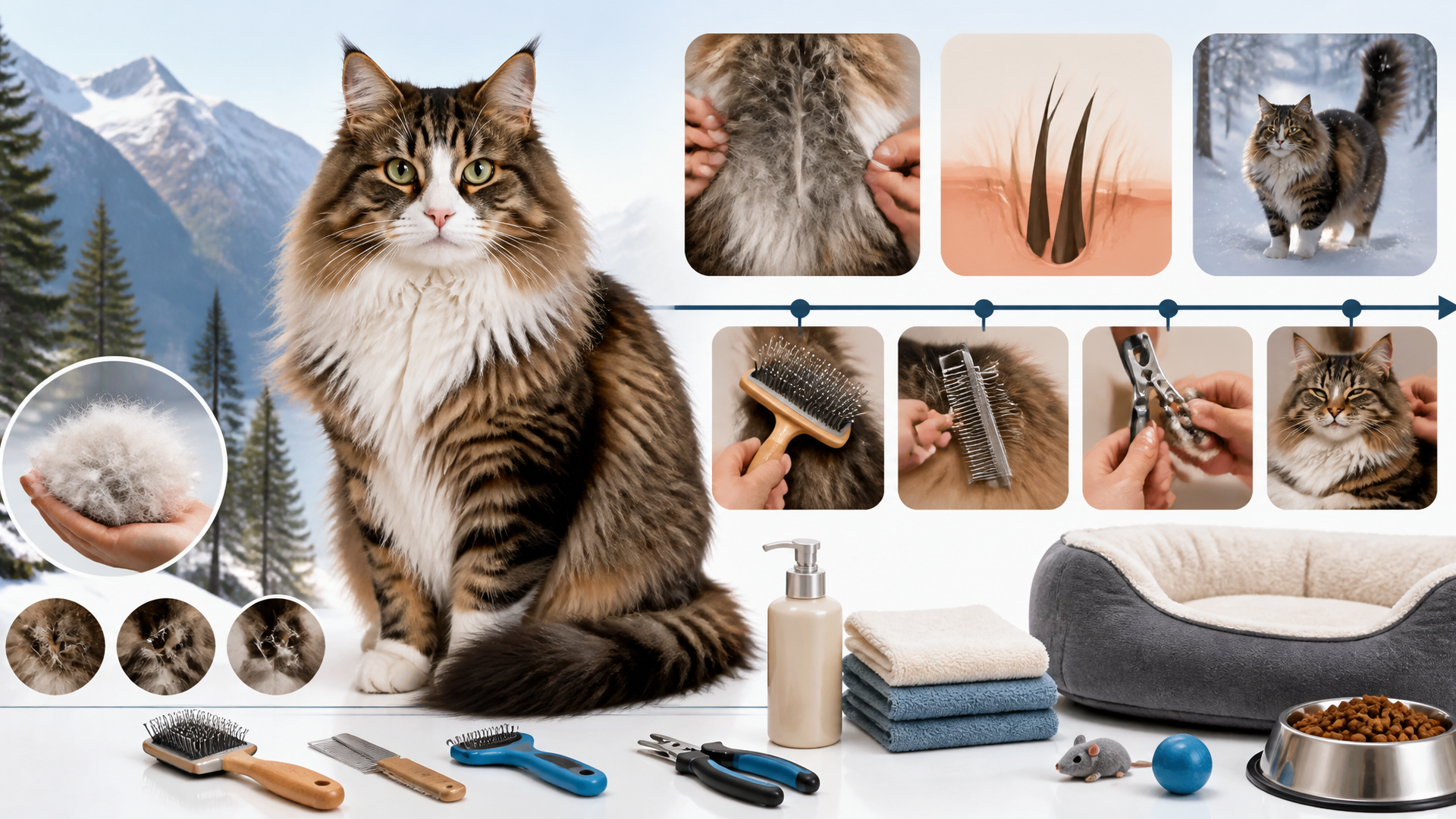
Yes, Norwegian Forest Cats shed – and it’s a lot. This breed has a dense double coat (woolly undercoat plus water-resistant guard hairs) that evolved to handle harsh Scandinavian winters. Their heaviest shedding happens twice a year: spring coat blow (March–May) and fall coat blow (September–November). Even between seasons, you’ll see moderate daily shedding from indoor cats due to artificial light and heating.

The good news? A smart grooming routine keeps the coat healthy and cuts way down on fur tumbleweeds around your home. Below you’ll find exactly what tools work, how often to brush, and when to call the vet.
Why This Breed Sheds So Much
The Norwegian Forest Cat’s coat is triple-layered in spots like the mane, breeches, and tail – more hair to manage than a typical domestic shorthair. Their undercoat provides insulation; guard hairs repel snow and rain. Twice a year they shed the old undercoat to adjust to the next season.
In low-shedding months (winter and summer), you still lose loose hair from normal turnover. Artificial lighting and indoor heating can trigger light year-round shedding, so expect some fuzz even in January.
Step-by-Step Grooming Routine (With a Realistic Branch)
Brush 2–3 times a week during low-shedding months, and daily during spring and fall coat blows. Use this sequence – but adjust based on your cat’s tolerance.
Step 1: Start with an Undercoat Rake
An undercoat rake with rotating stainless steel tines reaches the dense undercoat without snagging the topcoat. Gently rake in the direction of hair growth, focusing on flanks, belly, and the back of the rear legs.
Recommended tool: FURminator Undercoat Rake (large size for this breed). The long tines handle the thick mane and breeches effectively.
Branch – if your cat hates the rake: Skip straight to a rubber grooming glove (like Kong ZoomGroom). The glove collects loose hair with gentle rubbing and feels like a massage. Use it for 2–3 minutes daily, then follow with a slicker brush for finishing. Some cats accept the glove but not the rake – you’ll still remove most of the undercoat.
Step 2: Follow with a Slicker Brush
After loosening the undercoat, switch to a slicker brush to lift dead guard hairs and smooth the topcoat. Use light, short strokes around the mane and chest where tangles love to form.
Recommended tool: Chris Christensen Big G Slicker Brush – its curved head follows your cat’s body shape. The flexible pins glide through the coat without scratching the skin.
Step 3: Check for Mats Daily
Mats hide behind ears, under armpits, and on the pants (rear legs). Even well-brushed Norwegian Forest Cats can develop small mats during coat blow.
- If you find a small loose mat: spray with a detangling product (like Bioline Cat Detangling Spray), then gently work it apart with your fingers or a mat splitter.
- If the mat is tight against the skin: do not use scissors – cat skin is loose and easily cut. Instead, use a dematting comb or mat splitter. Stop DIY attempts if the mat is so tight you can’t see skin; that’s a sign to visit a professional groomer.
Step 4: Verify the Coat Is Tangle-Free
After brushing, run your hand over your cat’s body – you should feel smooth fur without any lumps or snags. Run a wide-tooth comb (like Andis Pinned Comb) through the mane, flank, and tail. If the comb glides with no resistance, you’re done. If it catches, go back to the slicker brush on that spot.
Step 5: Bathe Only When Necessary
Norwegian Forest Cats are excellent self-groomers. Bathing is rarely needed for shedding control – it’s more useful for reducing dander if someone in your home has allergies. If you bathe, use a cat-safe oatmeal shampoo and follow with conditioner. Overbathing strips natural oils and can increase shedding. Bathe no more than once every 2–3 months, and only if grooming alone isn’t enough.
How to Handle Seasonal Coat Blows Like a Pro
During spring and fall, your Norwegian Forest Cat will lose massive clumps of undercoat in a short window. Here’s how to stay ahead:
- Increase brushing to daily – no excuses. A skipped session can triple the hair on your furniture.
- Use a de-shedding tool after the undercoat rake. The FURminator deShedding Tool for long-haired cats grabs loose undercoat hairs that the rake might miss. Use it only during heavy shedding periods (2–3 times per week, not daily) to avoid over-grooming.
- Vacuum and lint-roll twice a day during peak weeks. Place a washable blanket on your cat’s favorite lounging spot to contain the mess.
- Add a slow-feed puzzle to occupy your cat while you brush. A lick mat with a dab of cat-safe tuna puree keeps them still longer.
Quick Checklist for Managing Your Norwegian Forest Cat’s Coat
Check these items off to keep shedding under control and your cat comfortable:
- [ ] Brush 2–3 times per week in normal seasons, daily during spring/fall.
- [ ] Use an undercoat rake first, then a slicker brush.
- [ ] Check for mats every grooming session (behind ears, armpits, back legs).
- [ ] Offer a rubber grooming glove for cats that resist the rake.
- [ ] Add an omega-3 fatty acid supplement (like Nordic Naturals Omega-3 Pet) – consult your vet for dosage; it supports skin health and can reduce excessive shedding.
- [ ] Keep a lint roller and vacuum handy for seasonal coat blows.
- [ ] Schedule a vet check if you see bald patches, redness, itching, or dull coat.
- [ ] Consider a high-fiber diet (e.g., Royal Canin Maine Coon formula or a similar long-hair breed diet) to help swallowed hair pass through the digestive tract and reduce hairballs.
- [ ] Provide fresh water daily in multiple bowls to help hydration – a hydrated coat sheds less and resists mats better.
When to Stop Grooming and See the Vet
Normal shedding leaves a consistent amount of hair on your brush and around the house. Stop your at-home grooming routine and contact your vet if you notice any of these red flags:
- Bare patches or thinning spots – not normal for a healthy Norwegian Forest Cat.
- Excessive itching – scratching more than a couple times in a row, head shaking, or licking paws.
- Red, flaky, or greasy skin under the fur.
- Sudden increase in shedding outside the two seasonal coat blows.
- Dull or brittle coat that won’t shine even with regular brushing.
These signs can point to allergies, parasites, thyroid issues, or skin infections. If you see bald patches or redness, stop all grooming on that area and let your vet examine it. Do not apply any topical treatments without your vet’s OK.
Frequently Asked Questions About Norwegian Forest Cat Shedding
Q: Can I shave my Norwegian Forest Cat to reduce shedding?
A: No – shaving damages the coat’s insulation and guard hairs, which may not grow back properly. It also exposes their skin to sunburn and temperature swings. Stick to brushing.
Q: How do I reduce hairballs during heavy shedding?
A: Brush daily to remove loose hair before your cat swallows it. Add a hairball-control diet (like Hill’s Science Diet Hairball Control) or a teaspoon of canned pumpkin (plain, no additives) to their wet food once a day. Consult your vet first.
Q: Are Norwegian Forest Cats hypoallergenic?
A: No. While they have a water-resistant topcoat, they still produce dander and saliva allergens. No cat breed is truly hypoallergenic.
Q: Should I use a shedding blade on my Norwegian Forest Cat?
A: Use caution – shedding blades can snag the topcoat. An undercoat rake is safer. If you try a blade, choose one with rounded teeth and use very gentle pressure only on the back and sides, avoiding the mane and tail.
Save This Guide
Norwegian Forest Cats shed heavily, especially during spring and fall coat blows. But with a consistent routine – undercoat rake, slicker brush, daily checks for mats – you can keep their coat healthy and your home mostly hair-free. Brush daily during peak seasons, use the right tools for your cat’s tolerance, and know the warning signs that mean it’s time for a vet visit. Add a high-fiber diet and omega-3 supplement to support skin health from the inside out.
This article contains affiliate links. If you purchase through them, we may earn a small commission at no extra cost to you.