Lemon Beagles Size Chart
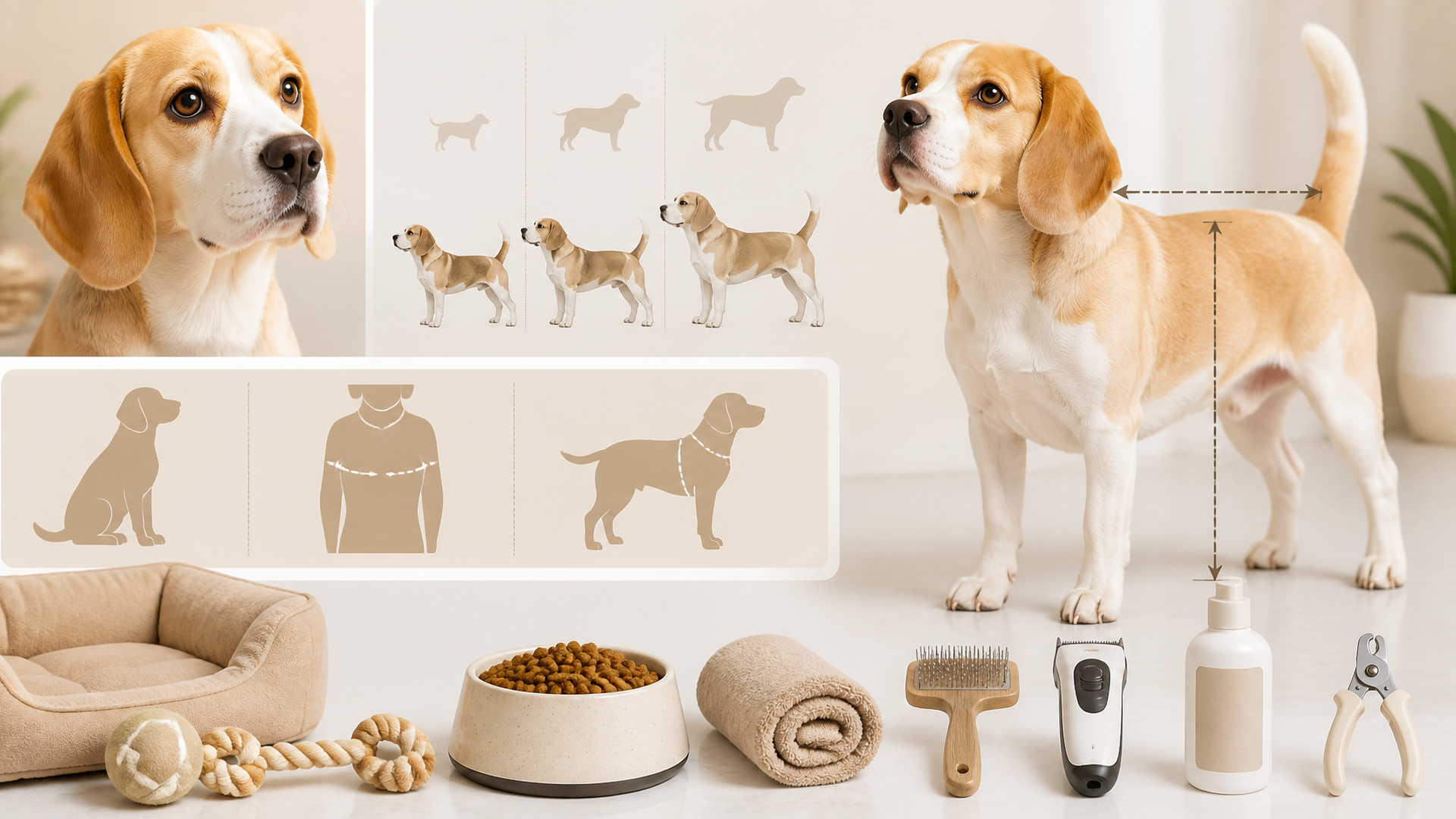
A lemon beagle isn’t a separate breed — it’s a Beagle with a pale lemon-and-white coat. Size follows the standard Beagle range, but owners routinely ask: How big will my lemon beagle get? Adult lemon beagles typically weigh 20–30 lbs and stand 13–15 inches at the shoulder. A smaller “pocket” variety (under 13 inches) is possible but less common. Use the chart below to track growth, choose the right gear, and know when to adjust food portions.

Beagles are one of the most popular scent hounds in the US, and their size variability catches many first-time owners off guard. A lemon beagle that measures 12 inches at the shoulder needs different gear, food portions, and exercise expectations than one that hits 15 inches. This guide gives you the exact measurements to watch and the practical steps to take at each stage.
Adult Lemon Beagle Size Ranges
| Height at Shoulder | Weight Range | Body Type | Common Gear Size |
|---|---|---|---|
| Under 13 inches (pocket) | 15–20 lbs | Small, compact | XS harness, small crate (24″L) |
| 13–15 inches (standard) | 20–30 lbs | Sturdy, muscular | S–M harness, medium crate (30″L) |
| Over 15 inches (rare) | 30–35+ lbs | Larger frame | M harness, large crate (36″L) |
Note: Most Beagles fall in the standard range. If you adopted a lemon beagle without knowing parent sizes, measure height at the shoulder and weigh your dog regularly to confirm which bracket they’re in. A dog that measures 12.5 inches at the shoulder should be treated as pocket-size for gear purchases.
What You’ll Need Before Measuring
Gather three items before you start:
- A flexible tape measure (the kind used for sewing)
- A kitchen scale if your dog is under 25 lbs, or a bathroom scale for larger dogs (weigh yourself first on the bathroom scale, then hold the dog and subtract your weight)
- A treat pouch or reward to keep your beagle still — they’ll squirm otherwise
Early checkpoint: If your beagle won’t stand still, try measuring after a walk when they’re tired, or have a second person hold the treat at nose level while you measure. If the dog keeps sitting down mid-measure, take a break and try again later. Forcing the measurement while the dog is anxious will give you wrong numbers.
How to Measure Your Beagle for the Perfect Fit
Accurate measurements prevent returns and keep your dog comfortable. Beagles have deep chests and sturdy bodies — a harness that fits a Labrador of the same weight will likely be too loose around your beagle’s neck. Follow these steps in order.
Step 1: Height — Have your dog stand square on a flat surface. Measure from the floor straight up to the top of the shoulder blades (withers). The tape must be vertical — any angle adds inches. If your dog shifts weight to one side, gently reset their stance and try again.
Step 2: Length — Measure from the base of the neck (where a collar sits) to the base of the tail. Keep the tape along the spine, not the side. Beagles have a slightly longer back than many dogs their weight, so this number matters more for crate sizing than for harness fit.
Step 3: Chest girth — Wrap the tape around the widest part of the ribcage, just behind the front legs. Pull snug but not tight — you should be able to slide one finger under. This is the most common measurement owners mess up: too loose gives you a harness that slips off during walks; too tight restricts breathing during exercise.
Likely cause of wrong measurements: Your dog is leaning, shifting, or you’re measuring over thick fur. Double-check each measurement twice. If two readings differ by more than half an inch, take a third.
Realistic branch based on what you see:
If your beagle’s chest girth equals or exceeds the next size up while height falls in the smaller range, don’t automatically size up the harness. Instead, look for a harness with independent chest and neck adjustments. Many standard beagles have deep ribcages but narrower necks — buying a larger harness for the chest will be dangerously loose around the neck. Brands like Ruffwear and PetSafe offer models with two separate adjustment points. If you’re between two harness sizes, go with the smaller one and extend the chest straps fully rather than the larger one cinched down tight.
Friction point to watch for: If your beagle paws at their chest or tries to back out of the harness during the first three wears, check strap tightness. A harness that seemed fine during a five-minute fitting can shift after twenty minutes of walking. Recheck after the first real walk.
Success signal — how to confirm fit before buying:
For a harness: after adjusting, slip two fingers under every strap — neck, chest, and belly. If you can’t, it’s too tight. If more than two fingers fit, it’s too loose. For a crate: your dog should be able to stand without their nose touching the door, turn around fully, and lie down with their tail not pressed against the back wall.
Escalation signal: If your beagle develops a persistent cough, gags during walks, or avoids wearing the harness entirely, stop using it immediately. A poorly fitted harness can press on the trachea, and Beagles with their deep chests are especially prone to this. Move to a front-clip design with a padded chest plate.
Lemon Beagle Growth Timeline (Puppy to Adult)
| Age | Average Weight | What to Expect |
|---|---|---|
| 8 weeks | 5–8 lbs | Starting solid food, need small harness |
| 4 months | 12–18 lbs | Rapid growth, begin transition to adult harness |
| 6 months | 18–24 lbs | Most height gained, may still fill out in chest |
| 12 months | 22–28 lbs | Near adult weight, chest may continue to broaden |
| 18 months | 24–30 lbs | Fully mature, weight stabilizes |
Pocket lemon beagles will be at the low end of each range; standard beagles hit the upper end. If your dog’s weight deviates significantly from this timeline — especially if your puppy is 10 lbs lighter than the 4-month low end — consult your vet. Beagles are prone to obesity, so stay on top of portions every month rather than once at the start.
Why Beagles gain weight faster than other breeds: Beagles have a genetic drive to eat anything edible (and some things that aren’t). Their scent-hound wiring means they associate food with survival. A lemon beagle that looks slightly chunky at 6 months is already on a trajectory toward obesity at 2 years if portions aren’t adjusted now. Monthly weigh-ins are non-negotiable for this breed.
3 Expert Tips for Managing Your Beagle’s Growth
Tip 1: Adjust food portions every 4 weeks until 18 months.
Beagles grow in spurts. A puppy food portion that worked at 4 months may be too much at 6 months. Weigh your lemon beagle monthly and use the feeding guidelines on your food bag — but reduce by 10–15% if your dog is on the smaller end of the range. Use a measuring cup, not a scoop from the bag. Scoop sizes vary widely, and Beagles will convince you they’re starving even when they’ve already eaten.
Common mistake: Feeding the same amount from weaning to adulthood. This can lead to rapid weight gain and joint stress, especially on the front legs. A 10% weight increase per month is normal through 6 months; anything above 15% signals that portions are too high.
Tip 2: Choose an adjustable harness, not a collar, for walks.
Beagles are scent hounds and will pull. A harness that clips at the chest (front-clip) gives you more control and protects the trachea. Look for one with two points of adjustment (neck and chest). The neck adjustment is especially critical for lemon beagles because their head-to-neck ratio means a collar can easily slip off if too loose or choke if too tight.
Common mistake: Using a step-in harness on a beagle puppy. They often twist out of it. Go with an overhead style that buckles around the chest. Step-in harnesses work well for small, calm breeds — Beagles are neither of those during a walk.
Tip 3: Buy a bed that allows for the “Beagle curl.”
Beagles like to sleep curled in a ball with their nose tucked under their tail. A round or donut bed about 30 inches in diameter suits most standard lemon beagles. Avoid beds that are too large — they prefer being snug. A bed that’s 36 inches or wider will often go unused because your beagle will choose a smaller spot like a crate mat or your laundry pile.
Common mistake: Buying a bed that’s too big for a puppy “so they grow into it.” Beagles feel insecure in oversized beds. Buy the correct size now and replace when fully grown. For pocket beagles, an 18–24 inch donut bed works through adulthood. For standard beagles, start with a 24-inch bed and move to 30 inches once they reach 20 lbs.
Gear Sizing by Life Stage
| Life Stage | Harness Size | Crate Size | Bed Size | Collar Width |
|---|---|---|---|---|
| Puppy (under 10 lbs) | XS, 8–12″ girth | 24″L (airline) | 18–20″ round | 5/8″ |
| Adolescent (10–20 lbs) | S, 12–18″ girth | 30″L (medium) | 24″ round | 3/4″ |
| Adult standard (20–30 lbs) | M, 18–24″ girth | 36″L (large) | 30″ round or donut | 1″ |
| Adult pocket (15–20 lbs) | S, 14–20″ girth | 30″L (medium) | 24–26″ donut | 3/4″ |
All these sizes assume your lemon beagle is within the normal weight range. If your dog falls outside these brackets at any stage, measure twice and check with the manufacturer before buying.
When to Call the Vet
Most growth variations are normal, but these signs warrant a checkup:
- Weight gain of more than 10% in a month (possible fluid retention or obesity onset)
- Limping, bunny-hopping gait, or reluctance to jump (possible joint issues — common in Beagles with rapid growth)
- Visible ribs or spine after 6 months (underweight)
- Height doesn’t stabilize by 18 months (could indicate growth plate issues)
A quick weigh-in every month and a half with your vet helps catch problems early. Beagles are food-driven, so weight management is the most common health challenge owners face. If your beagle is gaining weight but you haven’t changed food, check for counter-surfing — Beagles are notorious for stealing food when you’re not looking. Also check any other pets’ food bowls, trash cans that aren’t secured, and child snack areas. A Beagle can inhale a week’s worth of extra calories in one counter-surfing session.
One more reason to track growth closely: Beagles are prone to hypothyroidism, which often shows up first as unexplained weight gain between 1 and 3 years of age. If your lemon beagle is gaining weight despite proper portions and regular exercise, ask your vet to run a thyroid panel. Early treatment is straightforward and prevents long-term metabolic damage.
Save This Guide
Lemon beagles follow standard Beagle size ranges: 15–20 lbs (pocket) or 20–30 lbs (standard) at maturity. Measure height and chest girth to buy the right gear, adjust food portions during growth, and use a front-clip harness for walks. Bookmark this chart to track your pup’s progress — monthly weigh-ins and a quick harness check after every size transition will keep your lemon beagle comfortable, healthy, and well-fitted at every stage.
We may earn a commission if you purchase through links on this page, at no extra cost to you. This helps support our ability to provide free, breed-specific guides.