How do Scottish Fold Cats Cartilage Compare to Normal Breed
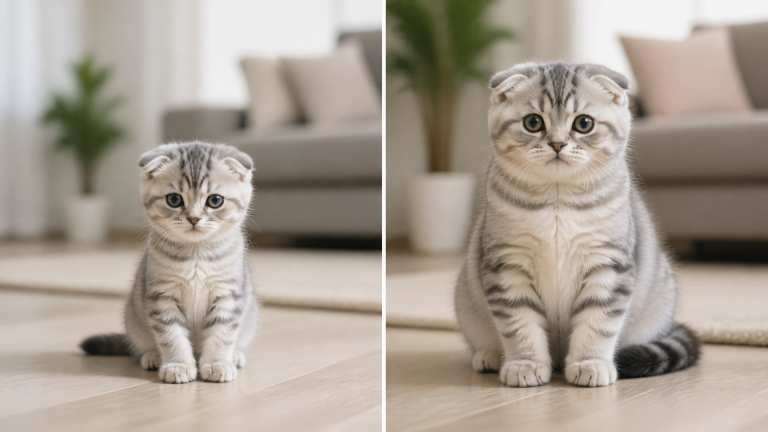
Scottish Fold cats carry a dominant gene mutation that affects cartilage throughout their entire body — not just in those adorable folded ears. While a normal cat’s cartilage is dense and resilient, a Scottish Fold’s lacks the structural integrity to handle everyday wear and tear. The result is osteochondrodysplasia, a condition that can lead to early arthritis, stiff joints, and pain that cats are masters at hiding.

Not all Scottish Folds develop the same severity. The degree of cartilage abnormalities depends on genetics, breeding practices, and individual variation. But every Fold with the folded-ear gene (Fd) has compromised cartilage — even cats with straight ears that come from Fold parents. If you currently own or are considering a Scottish Fold, the practical takeaway is simple: start monitoring joint health and supporting cartilage from kittenhood, not after symptoms appear.
How the Fold Gene Changes Cartilage
The Scottish Fold’s signature ears are a visible clue to a deeper skeletal issue. The same mutation that weakens ear cartilage also affects joints, bones, and connective tissue throughout the body.
What happens inside a Scottish Fold:
- Cartilage cells don’t mature correctly, leaving them soft and easily damaged
- Joint cartilage wears down faster than in normal cats
- Bone growth around joints can become abnormal, leading to swelling
- Inflammation sets in earlier than in non-fold breeds
A normal cat’s cartilage acts as a smooth shock absorber between bones. In a Scottish Fold, that cushion is compromised from birth. The result is accelerated joint degeneration that can begin before the cat’s second birthday.
Scottish Fold vs Normal Cat Cartilage: Side-by-Side
| Feature | Normal Cat | Scottish Fold |
|---|---|---|
| Cartilage structure | Dense, organized collagen fibers | Disorganized, weaker matrix |
| Joint cartilage wear | Gradual over 10+ years | Accelerated, often starting by 1–2 years |
| Ear cartilage | Firm, upright | Folded or semi-erect, varies by cat |
| Bone formation | Normal growth plates | Possible abnormal bone development |
| Arthritis onset | Typically senior years | Can begin as early as kittenhood |
| Pain management | Rare in young cats | Often needed early |
The difference isn’t subtle. Even straight-eared Scottish Folds from Fold parents carry the Fd gene and can develop joint issues. A common failure mode new owners hit is assuming a straight-eared Fold is “safe.” It’s not — the cartilage mutation is still present, and symptoms can emerge just as aggressively.
Early Warning Signs: What to Watch For (and When)
Cats hide pain instinctively. By the time you notice limping, the joint damage is often advanced. Detection needs to start earlier — between 6 and 12 months of age.
At-Home Observation Checklist
- Tail flexibility – Monthly gentle flex test from base to tip. Resistance or thickening is the earliest red flag.
- Jumping behavior – Reluctance to jump onto furniture or counters, or bracing before a jump.
- Gait changes – Shorter, stiffer stride; bunny-hopping rear legs; moving less overall.
- Grooming reduction – Inability to reach certain spots, leading to a matted or greasy coat on the lower back.
- Personality shifts – Irritable when handled, hiding more, or avoiding interaction.
Diagnostic Tools Your Vet Will Use
- X-rays – Detect joint changes and abnormal bone growth long before symptoms are visible at home
- Palpation – Physical exam of hocks, carpi, and tail checking for swelling and pain response
- Behavioral video – Bring a short video of your cat moving at home, since cats often freeze at the vet’s office
Verification Step: How to Check Tail Flexibility
Gently hold the base of your Fold’s tail with one hand and slowly move the tip side to side with the other. A normal cat allows full, pain-free movement without pulling away. If your Fold flattens the tail against its body, stiffens it, or vocalizes, schedule a vet visit. This simple test can spot cartilage issues months before x-ray changes appear.
Expert Tips: 3 Actions That Make a Real Difference
Tip 1: Start Joint Supplements by Six Months
Begin a high-quality omega-3 or glucosamine supplement (like Cosequin for cats or Antinol) even if your kitten seems perfectly healthy. The cartilage is already compromised — early nutritional support gives it the best chance to hold up longer.
Common mistake: Waiting until your cat shows obvious pain or stiffness. By then, inflammation is established and harder to reverse.
Tip 2: Run the Monthly Tail Check
Make the tail flexibility test part of your regular care routine. Do it the same day each month and note any changes in resistance or thickness. It takes 30 seconds and can catch progression before it becomes debilitating.
Common mistake: Assuming tail stiffness is just a breed quirk. A stiff tail is often the first outward sign of cartilage pain — don’t dismiss it.
Tip 3: Modify Your Home Before You See a Problem
Add soft, padded cat trees with low platforms, ramps to your bed and couch, and a low-entry litter box with no high sides. These small changes dramatically reduce daily impact on sensitive joints. Heated pet beds are especially helpful in colder months.
Common mistake: Waiting until the cat is older or already limping. Scottish Fold kittens can have cartilage damage before their first birthday — make accommodations early.
Managing Cartilage Health Through Your Fold’s Life
You can slow progression and keep your Fold comfortable without always jumping to heavy medication. Consistency matters more than intensity.
Daily Care Checklist (5 Actionable Items)
- Soft, padded surfaces at every jumping-off point — cat trees with thick platforms, ramps, memory-foam beds
- Low-entry litter box with no high sides — no jumping required to enter or exit
- Joint-friendly diet with glucosamine, chondroitin, and omega-3s from fish oil — ask your vet for a specific product
- Weight monitored monthly — extra pounds mean extra joint stress; keep your Fold lean
- Activity observed daily — any new stiffness, reluctance to jump, or change in gait means a vet call
Environmental Adjustments That Help Most
Use a heated cat bed or low-wattage pet-safe heating pad during cooler months. Cold weather stiffens already-compromised joints, and gentle warmth can dramatically improve your Fold’s comfort and mobility. Keep food and water bowls at ground level so your cat doesn’t have to stretch or strain.
Treatment Options When Cartilage Damage Progresses
If your Scottish Fold does develop painful arthritis, you have a ladder of options — you don’t have to live with it.
Common Treatment Ladder
1. Weight management and environmental adjustments (ramps, soft bedding, heated beds)
2. Joint supplements and omega-3 fatty acids
3. Anti-inflammatory medications (carprofen, meloxicam — vet prescribed only)
4. Adequan injections (disease-modifying osteoarthritis drug)
5. Acupuncture or physical therapy — some cats respond remarkably well
6. Surgical options in severe cases, though rare
What Not to Do
Never give your cat over-the-counter pain meds. Ibuprofen, acetaminophen, and naproxen are toxic to cats and can cause kidney failure or death. Always work with your veterinarian for prescription options. You can also ask your clinic about pricing or financing plans for ongoing care — many are willing to negotiate.
Ethical Considerations Before Bringing a Fold Home
All Scottish Fold cats have abnormal cartilage. The breed standard requires the folded ear, meaning every breeding Fold carries the mutation. Even so-called straight-ear Scottish Folds from Fold parents can have cartilage issues.
What Responsible Breeders Do
- Screen breeding cats for severe skeletal disease using x-rays
- Never breed two folded-eared cats together (that produces kittens with crippling deformities)
- Are transparent about health risks during the adoption process
- Provide health guarantees for genetic conditions
What Irresponsible Breeders Do
- Breed Fold to Fold, increasing the risk of severe bone deformities
- Claim their lines are “arthritis-free” without providing any x-ray evidence
- Fail to share veterinary records
- Avoid discussing cartilage health entirely
Concrete Verification Step for Buyers
Request x-rays of both parent cats’ joints and tail before committing to a kitten. A responsible breeder will have this documentation ready. If they can’t or won’t provide it, walk away. That single step saves you months or years of costly veterinary bills and heartache.
Decision Guide: Is a Scottish Fold Right for You?
| Factor | Feasible Owner | Better to Choose Another Breed |
|---|---|---|
| Vet bills for chronic joint care | Budget and willingness to manage lifelong care | Choose a breed without known skeletal issues |
| Home modifications (ramps, soft surfaces, heated beds) | Happy to adjust your home early | Standard cat owner can skip extensive mods |
| Knowledgeable vet who knows the breed | Already found one or will find one | Find a vet before bringing a kitten home |
| Lifelong medication or supplements | Prepared for ongoing cost and routine | A low-health-risk breed may suit you better |
| Realistic life expectancy (12–15+ years with care) | Ready for the commitment | Consider whether the extra care fits your lifestyle |
Frequently Asked Questions
Do straight-eared Scottish Folds still have cartilage problems?
Yes. Straight-eared Folds from Fold parents still carry one copy of the Fd gene, and the cartilage mutation is present even when ears remain upright. They can develop the same joint issues as folded-eared cats.
At what age do Scottish Fold joint issues typically start?
Cartilage changes can begin as early as 6–12 months, though symptoms may not be obvious until 2–4 years. Regular monitoring from kittenhood gives you the best chance to slow progression.
Can medication reverse cartilage damage in Scottish Folds?
No medication reverses the underlying cartilage defect. Anti-inflammatories and joint supplements manage pain and slow further degeneration, but the structural weakness is permanent. Lifelong supportive care is the standard approach.
Save This Guide
A Scottish Fold’s cartilage is never fully normal, but early detection, smart home modifications, and consistent joint support can give your cat a long, comfortable life. The monthly tail check, supplements by six months, and a vet who knows the breed are the three cornerstones of proactive care. Early intervention makes the difference between managing symptoms and reacting to advanced disease.
This guide contains affiliate links. If you purchase through them, we may earn a small commission at no extra cost to you.