8 Week Scottish Fold Weight
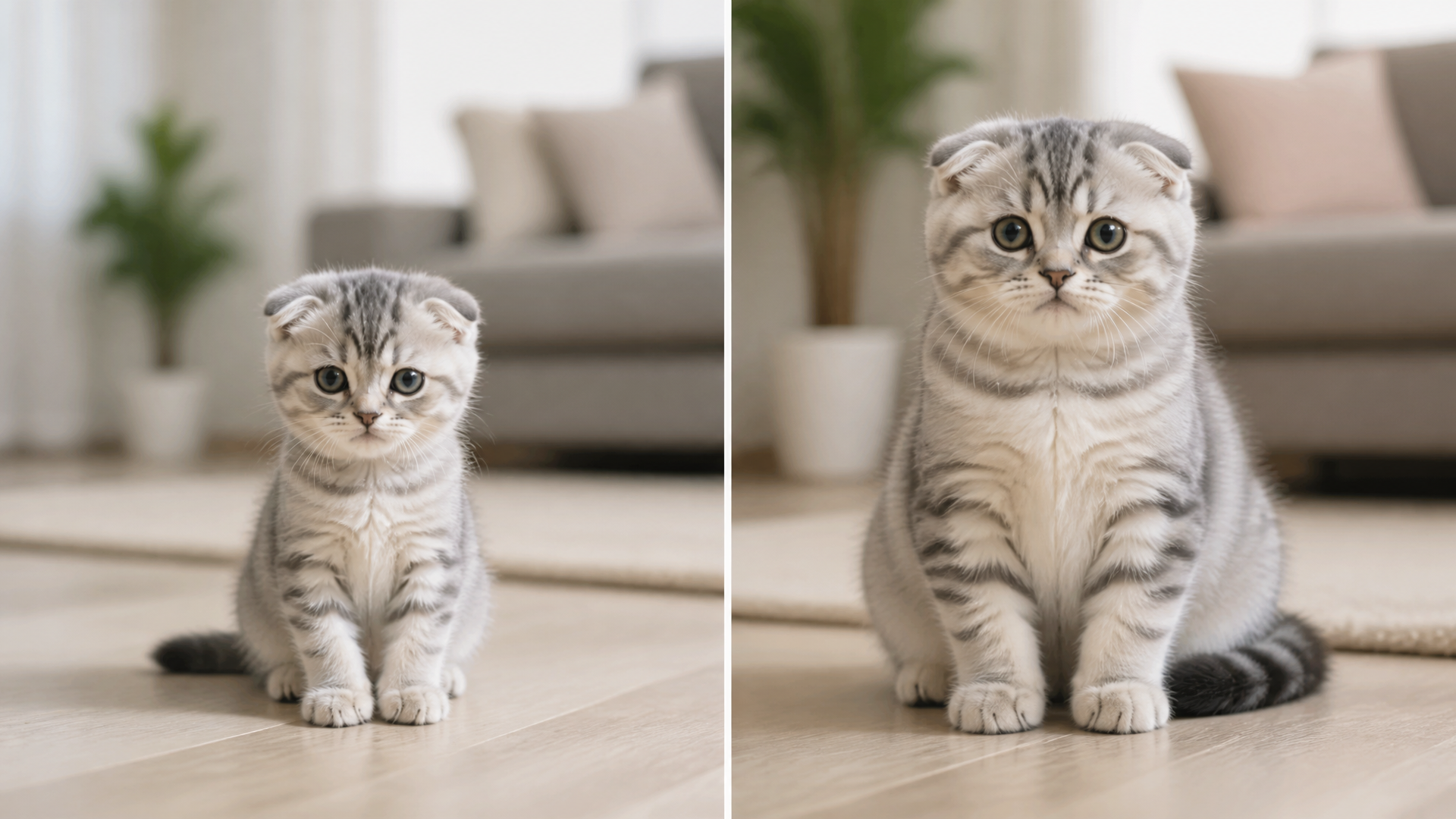
Most 8-week-old Scottish Fold kittens weigh 2 to 3 pounds (32–48 oz). That’s the sweet spot. If your kitten is significantly below 2 pounds or over 3.5 pounds, check with your vet. But weight alone isn’t the whole story — body condition matters just as much. Here’s exactly how to assess your fold’s growth and what to do if things seem off.

Quick Answer: How Much Should an 8 Week Scottish Fold Weigh?
A healthy 8-week Scottish Fold weighs 2 to 3 pounds (32–48 oz). Males average slightly more (2.2–3.2 lbs) than females (1.8–2.8 lbs). Use the five-point checklist below to confirm your kitten is on track — not just the scale.
Tools and Prerequisites
You don’t need a vet visit for a quick weight check, but the right tools help.
- Digital kitchen scale – Accurate to 0.1 oz. Place a bowl on the scale, zero it out, then gently put your kitten inside. A baby or pet scale works even better.
- Body condition score (BCS) chart – Look up a 9-point BCS for cats (your vet uses this). For an 8-week-old, aim for a 4 or 5 out of 9.
- Measuring cup – For portioning kitten food. Scottish Fold kittens need high-quality kitten food with DHA and taurine. Measure each meal to avoid guesswork.
- Weight log – A simple notebook or phone note to track weekly changes. Sudden drops or stalls are red flags.
Step-by-Step Flow: Weekly Weight Check for Your Scottish Fold
When This Advice Changes
This guidance applies to healthy, weaned Scottish Fold kittens eating solid food on their own. If your kitten is still nursing exclusively, recovering from illness, or has a known health condition like osteochondrodysplasia, the normal weight range shifts. Nursing-only kittens may weigh less (1.6–2.2 lbs at 8 weeks) because they’re not getting calorie-dense solid food yet. Kittens with diagnosed joint issues may grow more slowly and need a vet-designed feeding plan — don’t compare them to the standard range.
Step 1: Weigh Your Kitten Weekly on the Same Day
Weigh before feeding, at the same time of day. Expect a gain of 0.5–1.5 ounces per week during this growth spurt. Record the exact number.
Checkpoint: Did your kitten gain at least 0.5 oz this week? If yes, proceed. If no, skip to Troubleshooting.
Step 2: Perform a Body Condition Check
After weighing, move to a flat, calm surface. Use these five checks:
- Visible waist from above – Look for a slight indentation behind the ribs. No waist = overweight; severe pinch = underweight.
- Ribs feel like the back of your hand – Run palms along the ribcage. You should feel a light layer of fat, not bones sticking out. If you can count the ribs easily, kitten is too thin.
- Belly tuck from the side – The belly should tuck up behind the ribs. A rounded sag could mean overfeeding or parasites.
- Active and playful – A healthy 8-week-old should be energetic and curious. Lethargy or hiding is a red flag.
- Good coat and clear eyes – Dull fur or runny eyes often accompany poor weight gain. Bright eyes and soft coat mean your kitten is getting what it needs.
Checkpoint: Does your kitten pass all five checks? If yes, continue with normal feeding. If one or more fail, move to Step 3.
Step 3: Compare to Breed Norms
Scottish Folds are a medium-sized, cobby breed. At 8 weeks, they look round and soft — not skinny like a Sphynx or lean like a Siamese. If your fold passes the checklist and the weight is 2–3 pounds, you’re fine. If the weight is right but the build seems off, have your vet check for osteochondrodysplasia (a cartilage condition that can affect growth).
Step 4: Adjust Feeding Based on Findings
If underweight (below 2 lbs or ribs prominent):
- Offer more food: free-feed high-quality wet kitten food (3–4 meals per day) and add a small amount of dry food for extra calories.
- Likely causes: Genetics (runt), parasites, or insufficient nursing from mom.
- Check for worms if weight gain stalls despite increased food.
If overweight (above 3.5 lbs with no waist):
- Reduce portions slightly and ensure plenty of active play.
- Likely causes: Overfeeding, too many treats, or leaving dry food out all day.
- Avoid drastic cuts – growing kittens still need ample nutrition.
If on target (2–3 lbs and passes all checks):
- Keep doing what you’re doing. Continue weighing weekly and maintain same portion sizes.
Escalation signal: Call your vet if:
- Weight loss of more than 1 oz in a week
- No weight gain for two consecutive weeks
- Vomiting or diarrhea lasting more than 24 hours
- Lethargy combined with poor appetite
What Your Kitten’s Weight Actually Means for You
Here’s the practical takeaway: if your 8-week Scottish Fold is between 2 and 3 pounds and passes all five body condition checks, you can confidently continue your current feeding routine. No need to switch food, add supplements, or visit the vet. If the weight falls outside that range but the kitten is energetic, eating well, and has a good coat, the safest move is to adjust portions gradually and monitor for one more week before escalating. The most common mistake owners make is rushing to change food brands when a simple portion tweak would fix the trend. Trust the body condition score more than the scale number alone.
Troubleshooting Common Weight Concerns
“My 8 week Scottish Fold weighs 1.5 pounds – is that okay?”
Probably not. Most healthy kittens in this breed are at least 2 pounds. Very small size can be due to genetics (the runt), poor nutrition, or an underlying health issue. Visit the vet for a full checkup, a fecal test for parasites, and a feeding plan.
“My kitten is 3.8 pounds at 8 weeks. Should I worry?”
A little heavy, but not alarming yet. The bigger concern is rapid weight gain – if your kitten gained more than 2 oz in a week, scale back portions slightly and increase active play. Overweight kittens are more likely to develop joint problems later, and Scottish Folds already have a predisposition to arthritis.
How to Confirm Your Kitten’s Weight Is on Track
Here’s a quick at-home verification you can do right now: place your kitten on a flat surface and run your palms along both sides of the ribcage. You should feel a thin layer of padding — roughly the same feel as the back of your hand. Then look at your kitten from above while it stands. You should see a slight waist indentation behind the ribs. If both checks are good, your kitten’s weight is almost certainly fine regardless of what the scale says.
A Realistic Limitation: When the Scale Lies
Here’s the trade-off most charts don’t mention: a kitten can be within the “normal” weight range but still be growing poorly. For example, a Scottish Fold at 2.5 pounds sounds perfect — until you realize it gained almost nothing in the last two weeks and is getting rounder without growing longer. That’s a red flag for bloat, overfeeding of low-quality food, or a hidden health issue. Conversely, a kitten at 1.9 pounds that’s lean, active, and gaining steadily each week is often perfectly healthy — just a slower grower. Never use the scale as your only check. The body condition score catches what the number misses.
“What type of food should I feed my 8 week Scottish Fold?”
Use a high-quality kitten formula (labeled for “growth” or “kittens up to 12 months”). Wet food is great for hydration and calorie density. Popular choices include Royal Canin Kitten, Hill’s Science Diet Kitten, and Blue Buffalo Baby Kitten. Always have fresh water available and avoid cow’s milk (it can cause diarrhea).
Disclosure: This article contains affiliate links. If you purchase a product through these links, we may earn a small commission at no extra cost to you. We only recommend products we trust for your Scottish Fold.
Related Questions
Q: How much should an 8 week old Scottish Fold eat per day?
A: Most 8-week-old kittens need about 1/3 to 1/2 cup of dry food per day, divided into 3–4 meals, or about 3–4 ounces of wet food if using only wet. Adjust based on your kitten’s appetite and weight trend. Check the food label for specific guidelines.
Q: Do male and female Scottish Folds weigh differently at 8 weeks?
A: On average, males are slightly larger, but the difference is small (2–3 ounces) at this age. A male under 2.2 pounds or a female under 1.8 pounds should still raise a red flag. Use the body condition checklist as your primary guide.
Q: Can a Scottish Fold kitten be overweight at 8 weeks?
A: Yes. Overfeeding or too many treats can cause early obesity. Stick to portioned meals and avoid leaving dry food out all day unless your vet recommends it for a very active kitten.
Save This Guide
Key takeaway: A healthy 8-week Scottish Fold weighs 2–3 pounds and shows a visible waist, light rib coverage, and an active, playful demeanor. Weight alone isn’t enough — use the five-point checklist weekly, and if anything seems off, contact your vet right away. For the best start, offer high-quality kitten food, measure portions, and track weight trends until your kitten reaches 12 weeks.