Munchkin Cat Grooming: Complete Guide for Pet Owners
Munchkin cats need brushing 2–3 times per week and a bath every 4–6 weeks. Their short legs don’t change the coat-care basics, but they do change how you handle bath slips, nail trims, and ear cleaning. Your Munchkin’s coat type — short or long — changes your brushing schedule more than the leg length does. Here’s the routine that actually works for these low-to-the-ground cats.

What Makes Munchkin Grooming Different
Munchkins come in both short-haired and long-haired varieties. A short-haired Munchkin sheds moderately and needs weekly brushing. A long-haired Munchkin needs brushing 3–4 times per week to prevent matting behind the ears, under the armpits, and along the belly — spots that sit closer to the ground and pick up debris faster.
Decision branch: If you run your fingers through the coat and feel any bumps, your next action depends on the mat’s density. A small, loose mat can be worked out with a stainless steel comb and detangling spray. If the mat is tight and sits close to the skin — meaning you can’t slide a comb under it without the cat flinching — stop and call a professional groomer. Do not try to cut it out with scissors. One slip can cut the cat’s skin.
The short legs also mean bath time is trickier. Standard cat bathing setups (high counter, deep sink) don’t work well. A shallow tub with a non-slip mat is safer because the cat has less distance to panic-jump, and you have better control.
Essential Grooming Tools
| Tool | Purpose | Best For |
|---|---|---|
| Stainless steel comb | Remove loose undercoat, check for mats | Long-haired Munchkins |
| Slicker brush | Daily detangling, remove surface dirt | Both coat types |
| Rubber grooming mitt | Gentle weekly brushing, bond time | Short-haired Munchkins |
| Nail clippers (guillotine-style) | Quick, clean nail trims | All Munchkins |
| Curved grooming shears | Trim paw pads, face, sanitary area | Long-haired Munchkins |
For trimming around the face, paw pads, and sanitary areas, a quality pair of curved shears gives you better control on a small cat. The GLADOG Professional 5 in 1 Dog Grooming Scissors Set includes curved, straight, and thinning scissors that work well for cats — the safety round tips reduce the risk of nicks on a wiggly Munchkin.
Step-by-Step Grooming Routine
Step 1: Set Up Your Space
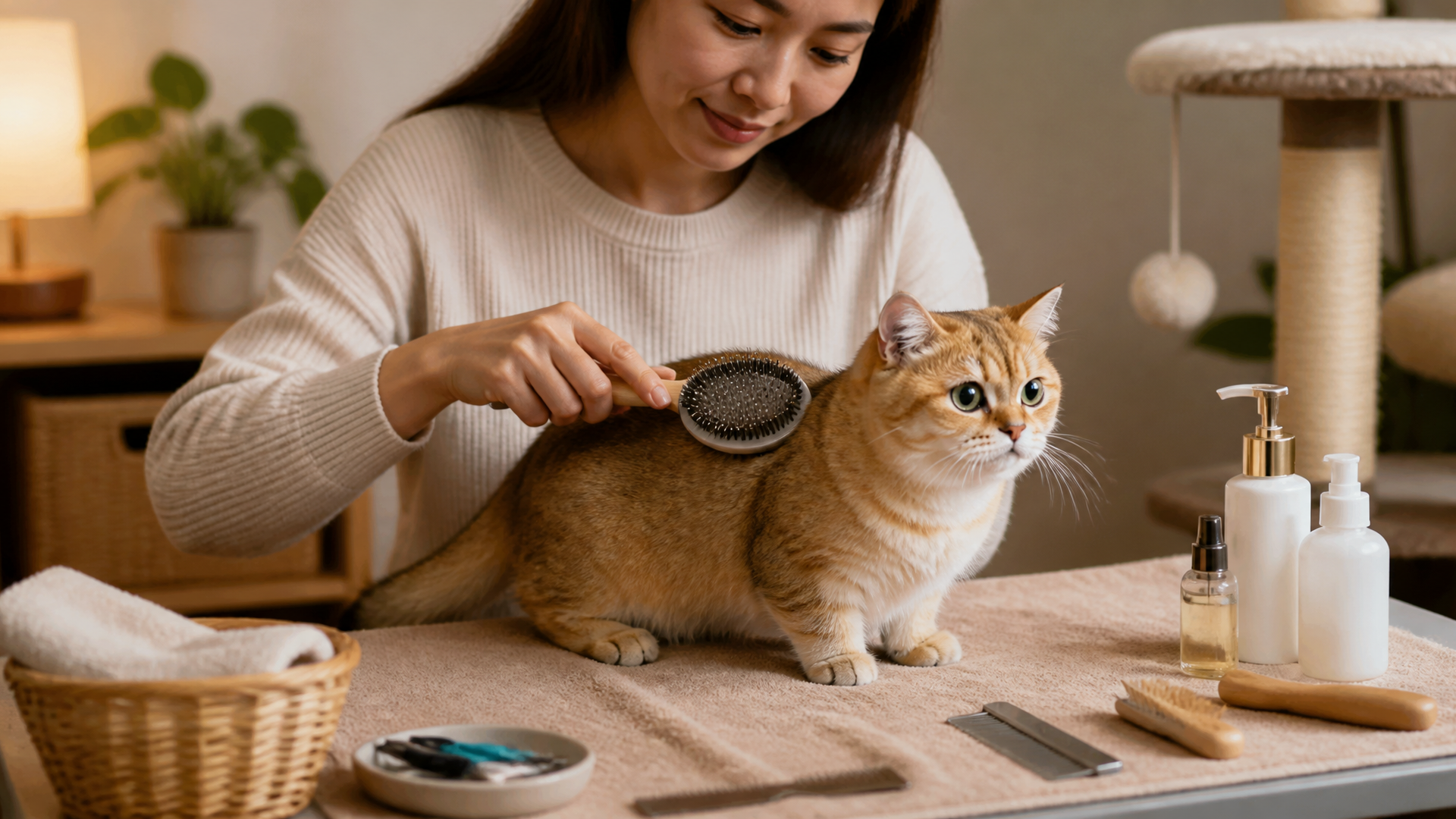
Use a low table or the floor with a non-slip mat. Keep treats within reach. Have all tools laid out before you bring the cat over — a Munchkin won’t wait patiently while you search for a comb.
Early checkpoint: If the cat is showing stress signals (flattened ears, tail thrashing, dilated pupils), stop and try again later. Never push through a fear response. If this happens two sessions in a row, try a shorter session with more treats or switch to a different grooming surface.
Step 2: Brush in Layers
Start with the rubber mitt or slicker brush. Work in the direction of hair growth, then against it to lift loose undercoat. For long-haired Munchkins, follow up with the stainless steel comb to catch mats the brush missed.
Likely causes of fussing: You hit a mat, you’re pulling too hard, or the brush tip is scratching the skin. Check your technique and tool quality before blaming the cat.
Step 3: Check and Trim Nails
Munchkin cats are less likely to wear down their nails naturally because they don’t climb or jump as high as long-legged breeds. Trim every 2–3 weeks. Look for the quick (the pink vein inside the nail) and clip only the clear tip. If your Munchkin has dark nails, clip tiny amounts at a time.
Step 4: Clean Ears and Eyes
Munchkin ears are standard-sized but sit closer to the ground, so they collect more dust and debris. Use a vet-approved ear cleaner and a cotton ball (never a Q-tip). Wipe eye corners with a damp cloth — many Munchkins have tear staining, especially the lighter-colored ones.
Step 5: Bath (Every 4–6 Weeks, or When Dirty)
Use lukewarm water (around 100°F) and a cat-safe shampoo. A shallow plastic bin or baby bathtub works better than a sink. Wet the cat from the neck down — avoid the face. Rinse thoroughly; leftover soap causes skin irritation.
Success check: After the bath, wrap the cat in a towel and dry in a warm, draft-free room. If the cat is shivering or excessively stressed, keep future baths brief and reward heavily.
Stop/escalate signal: If you notice redness, flaking, or excessive scratching within 24 hours of a bath, stop bathing at home. The cat may have a skin sensitivity to the shampoo. Switch to a hypoallergenic cat shampoo or consult your vet.
Step 6: Sanitary Trim (Long-Haired Munchkins)
Use curved shears to trim the fur around the rear, under the tail, and between the back legs. This prevents dingleberries and keeps the area clean. Hold the scissors parallel to the skin and trim small sections at a time.
Grooming Session Checklist
Run through these items before every grooming session. A “no” means you need to fix something before proceeding:
- [ ] Grooming surface is low and non-slip
- [ ] All tools are within arm’s reach
- [ ] Cat has used the litter box within the last 30 minutes
- [ ] Treats are ready for positive reinforcement
- [ ] You can clearly see the quick on at least one nail (test clip)
- [ ] No visible skin redness, bumps, or tender spots
- [ ] Room is warm, quiet, and free of other pets
- [ ] You have a towel nearby for a quick end to the session
Common Grooming Mistakes to Avoid
Over-bathing
Bathing more than once every 3 weeks strips the natural oils from a Munchkin’s coat and can cause dry, flaky skin. Unless the cat rolled in something sticky, stick to 4–6 week intervals. If you bathe more often than that, watch for signs of dry skin like dandruff or excessive licking.
Wrong Brush for the Coat
Using a slicker brush on a short-haired Munchkin every single day can irritate the skin. Switch to a rubber mitt for most sessions and only use the slicker for shedding season.
Skipping the Mat Check
Munchkins are stoic. A cat won’t yelp when a small mat is forming — it will just start avoiding the brush. Run your fingers through the coat before every session. If you feel bumps, work them out gently with a comb before they tighten.
When to Call a Professional or Vet
Call a professional groomer if:
- A mat is so tight that you cannot slide a comb under it without the cat flinching
- You find multiple mats that are close to the skin
- The cat is aggressive or too stressed for you to handle safely
- You need a full sanitary trim and don’t have curved shears or steady hands
Call the vet if:
- Nail trimming caused bleeding that won’t stop after 5 minutes of continuous pressure
- You find lumps, bumps, or scabs while grooming — especially if they are warm to the touch or oozing
- The cat’s ears are red, swollen, or have a bad odor
- You see excessive tearing, eye discharge, or squinting that lasts more than one day
FAQ
How often should I brush my Munchkin cat?
Short-haired Munchkins need brushing once per week. Long-haired Munchkins need brushing 3–4 times per week to prevent matting.
Do Munchkin cats need their nails trimmed more often?
Yes. Because they jump and climb less than other cats, their nails don’t wear down naturally. Trim every 2–3 weeks.
Save This Guide
Keep these grooming tips where you can find them fast. The two most important takeaways: brush according to coat length (weekly for short, 3–4 times weekly for long) and always check for mats before each session. A consistent routine keeps your Munchkin comfortable and your grooming tools ready to go.
Disclosure: Some product links in this article are affiliate links. If you purchase through them, we may earn a small commission at no extra cost to you.