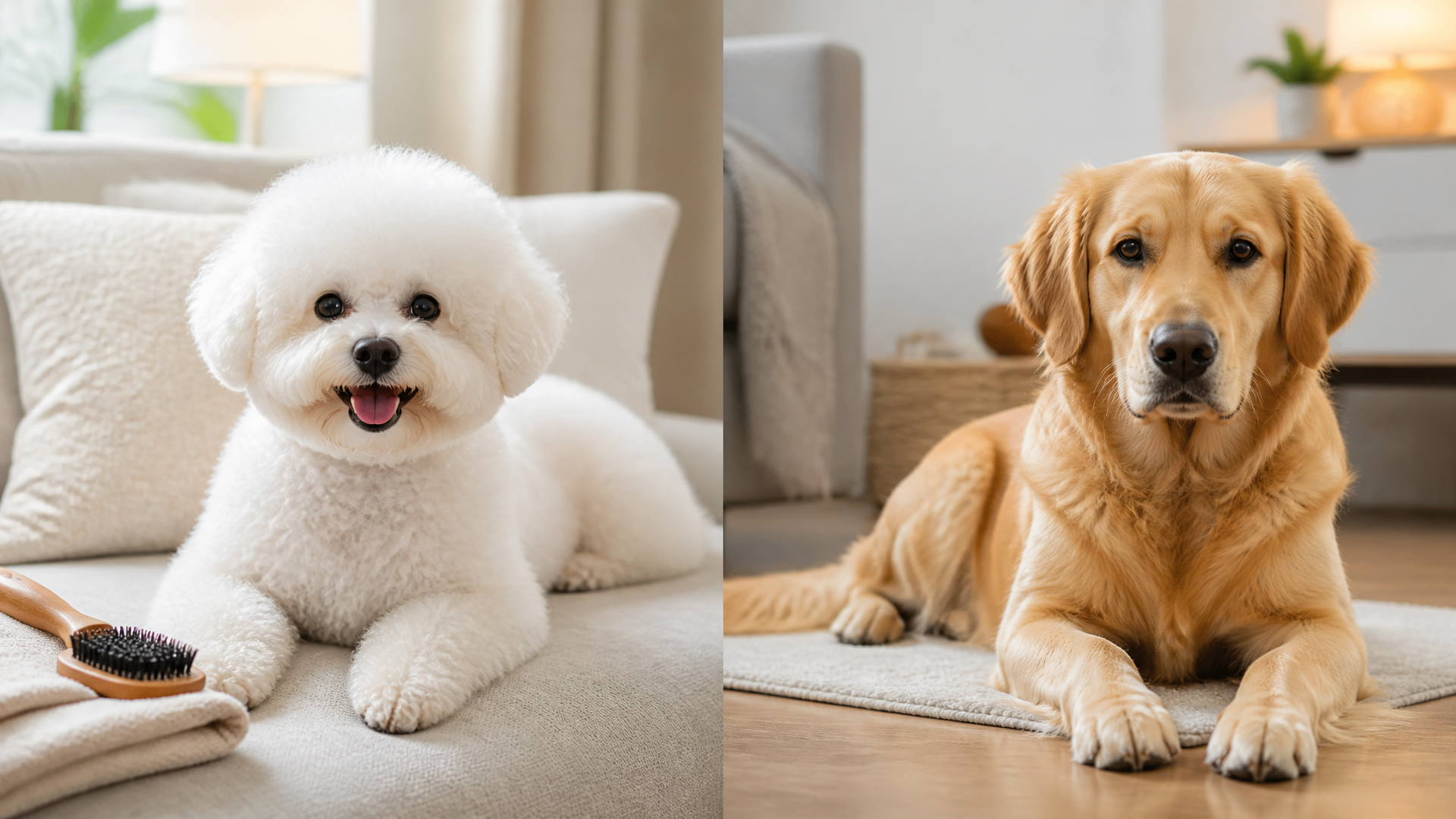
Bichon Care: Daily Routine & Expert Tips
A Bichon Frise needs daily brushing, consistent feeding, and regular grooming to stay healthy and happy. Their double coat mats within 24 hours, and their small size makes them sensitive to temperature extremes and household hazards. If you want a hypoallergenic, cheerful companion, the Bichon fits — but only if you commit to a care routine that keeps their coat and skin in top shape. Here’s exactly how to do that.

Your Daily Bichon Care Routine (That Actually Works)
A predictable schedule helps your Bichon feel secure and prevents common problems like matting or weight gain. Bichons thrive on routine, so stick to the same times each day.
Morning (5–10 minutes)
- Brush thoroughly with a slicker brush and metal comb — focus on armpits, behind ears, and tail. These are the hot spots for mats.
- Check eyes for tear stains; wipe with a warm, damp cloth if needed. Bichons are prone to tear staining, and daily wiping prevents the reddish-brown buildup.
- Feed ¼ to ⅓ cup of high-quality small-breed dry food (split into two meals for adults).
Midday (15–20 minutes)
- Short walk or indoor play session. Bichons need exercise but burn energy fast — think fetch in the hallway or a quick romp in the yard. They don’t need miles of walking, but they do need consistent movement.
Evening (10 minutes)
- Second meal — same portion as morning.
- Quick brush if you skipped morning brushing (but don’t skip more than one day in a row).
- Nail check — if you hear clicking on the floor, trim or file. Bichons’ quick (the blood vessel inside the nail) can be hard to see on white nails, so use a nail grinder with a guard for safety.
Before Bed
- Potty break — Bichons have small bladders and need a last trip outside. A consistent evening potty schedule prevents overnight accidents.
End-of-Day Review
Run through these 5 quick pass/fail checks each evening. They take 30 seconds and catch problems before they escalate:
- [ ] Brushed entire coat (including behind ears and under legs) with metal comb
- [ ] Eyes wiped and no new tear-stain buildup
- [ ] Measured meals given (no free-feeding — Bichons gain weight easily)
- [ ] At least 20 minutes of exercise (walk + play combined)
- [ ] Quick body scan — no lumps, heat, or flinching when you run your hands over them
How to confirm your routine is working: After a week on this schedule, your Bichon should settle into a calm rhythm — waiting at their bowl at mealtime, sleeping through the night without accidents, and not scratching or matting between brushes. If you see resistance (reluctance to eat, whining at night, or excessive scratching), adjust the timing or quantity of meals first, then check for skin irritation.
Grooming: The Make-or-Break Task
Bichon coat care is non-negotiable. Their fine, curly hair mats within 24 hours if left unbrushed. The biggest decision point: If you live in a humid climate, bathe every 1–2 weeks and blow-dry fully to prevent skin infections. In dry climates, every 3–4 weeks is fine. Humidity changes the game — don’t follow a generic bathing schedule.
Step-by-Step Grooming Flow
1. Brush first (always before bathing). Use a slicker brush to remove loose hair and surface tangles, then a metal comb to check for mats near the skin. The metal comb is the only tool that reaches the undercoat — don’t skip it.
2. Early checkpoint: If you hit a mat, don’t force it. Apply a detangling spray (look for one with aloe or oat extract) and work it apart with your fingers, then comb gently. If it’s skin-tight, clip it out with rounded-tip scissors. If the mat is larger than a quarter or the skin underneath looks red or moist, stop and see a groomer — attempting to comb out a deep mat can tear the thin Bichon skin.
3. Bathe with a mild, hypoallergenic dog shampoo. Rinse thoroughly — soap residue irritates Bichon skin and causes itching. Double-rinse: run your fingers through the coat while rinsing; if you feel any slickness, rinse again. A second rinse cycle prevents residue buildup.
4. Blow-dry on low heat while brushing upward. This prevents tangles and gives the coat its signature fluffy appearance. Verification step: Take a section of chest or leg fur between your thumb and finger. If any strand feels damp or tacky, dry another minute. A fully dry coat should feel soft and separate, not sticky or clumpy.
5. Trim every 4–6 weeks (or visit a groomer). Focus on the face (round Bichon head shape), paw pads (to prevent slipping on floors), and sanitary area. If you’re not comfortable trimming the face yourself, let a professional handle it — Bichons squirm, and scissors near eyes need steady hands.
6. Final success check: Run the metal comb through the chest and behind the ears. If it glides without resistance, the coat is mat-free. If it catches anywhere, stop and work that spot with detangling spray before the dog moves off the table. Don’t leave even a small mat — it will grow larger by morning.
Likely Causes of Matting
- Skipping brushing for two days — in a Bichon, that’s enough for tight mats to form
- Not drying completely after bathing — damp fur plus movement equals tangles
- Using a brush that doesn’t reach the undercoat — only a metal comb does this job effectively
- Rain or snow walks without a coat — moisture speeds up matting dramatically. Consider a lightweight dog raincoat for wet days
Health Watch: When to Call the Vet
Bichons are prone to specific issues. Watch for these signs and know exactly when to act:
- Excessive tearing with reddish-brown stains — often allergies or blocked tear ducts. Try wiping daily with a warm cloth for two weeks. If staining worsens or the eye looks red, see your vet. Bichons commonly need tear-duct flushing under sedation.
- Sneezing, wheezing, or reverse sneezing — common in small breeds with compact faces. If persistent for more than a few minutes or paired with blue gums, go to the emergency vet immediately (this signals oxygen trouble).
- Limping or skipping — patellar luxation (knee dislocation) is very common in Bichons. A skip that resolves after a few steps may be mild, but if it lasts longer than one day or your dog refuses to put weight on the leg, a vet visit is essential to prevent arthritis.
- Scaly or red skin — could be allergies, yeast, or mites. Try a gentle oatmeal shampoo once. If redness doesn’t improve within 48 hours or your dog is scratching to the point of hair loss, don’t wait — Bichons develop secondary infections fast.
- Sudden weight loss or vomiting — Bichons are sensitive to diet changes and may develop pancreatitis. If vomiting happens more than twice in 24 hours or your dog seems lethargic, see your vet the same day.
Daily Body Scan (30 seconds)
Run your hands over your Bichon from nose to tail every evening. Any lump, heat, or flinch means a vet visit. What normal feels like: smooth skin with no bumps, no temperature difference between body parts, and no flinching when you gently press along the spine, hips, and knees.
Escalation signal: If you find a lump that is hard, attached to deeper tissue, or growing over two weeks, schedule a vet appointment within days — not months. Soft, movable lumps under the skin (lipomas) are common in older Bichons but still need a professional check to rule out other issues.
Feeding: Breed-Specific Guidelines
Bichons can be picky eaters but also prone to obesity — a tricky combination. Use a measuring cup for every meal. Free-feeding leads to weight gain, which puts stress on their small joints and knees.
| Age | Meals per day | Total daily dry kibble |
|---|---|---|
| 8–12 weeks | 4 | ½ cup |
| 3–6 months | 3 | ¾ cup |
| 6–12 months | 2–3 | 1 cup |
| Adult (1+ yr) | 2 | ½–⅔ cup |
Best food type: Small-breed formulas with omega-3 fatty acids (for skin and coat health) and glucosamine (for joint support). Look for brands that list a named protein source (chicken, lamb, or fish) as the first ingredient. Avoid foods with corn, wheat, or soy as fillers — Bichons can develop food sensitivities to these ingredients over time.
Warning: Bichons are prone to bladder stones (struvite and calcium oxalate). If your dog has had stones before, your vet may recommend a prescription diet that controls mineral levels. Don’t switch to a high-mineral “all-natural” food without checking with your vet first.
Save This Guide
Bookmark this page for quick reference. A Bichon’s daily care comes down to three non-negotiables: brush every single day with a metal comb, measure every meal to prevent obesity, and do a 30-second body scan each evening. Skip any of these for more than two days, and you’ll deal with mats, weight gain, or a health issue that could have been caught early. Stick to the routine, and your Bichon will stay fluffy, healthy, and happy for years to come.
This article contains affiliate links to products we recommend. As an Amazon Associate, we earn from qualifying purchases.