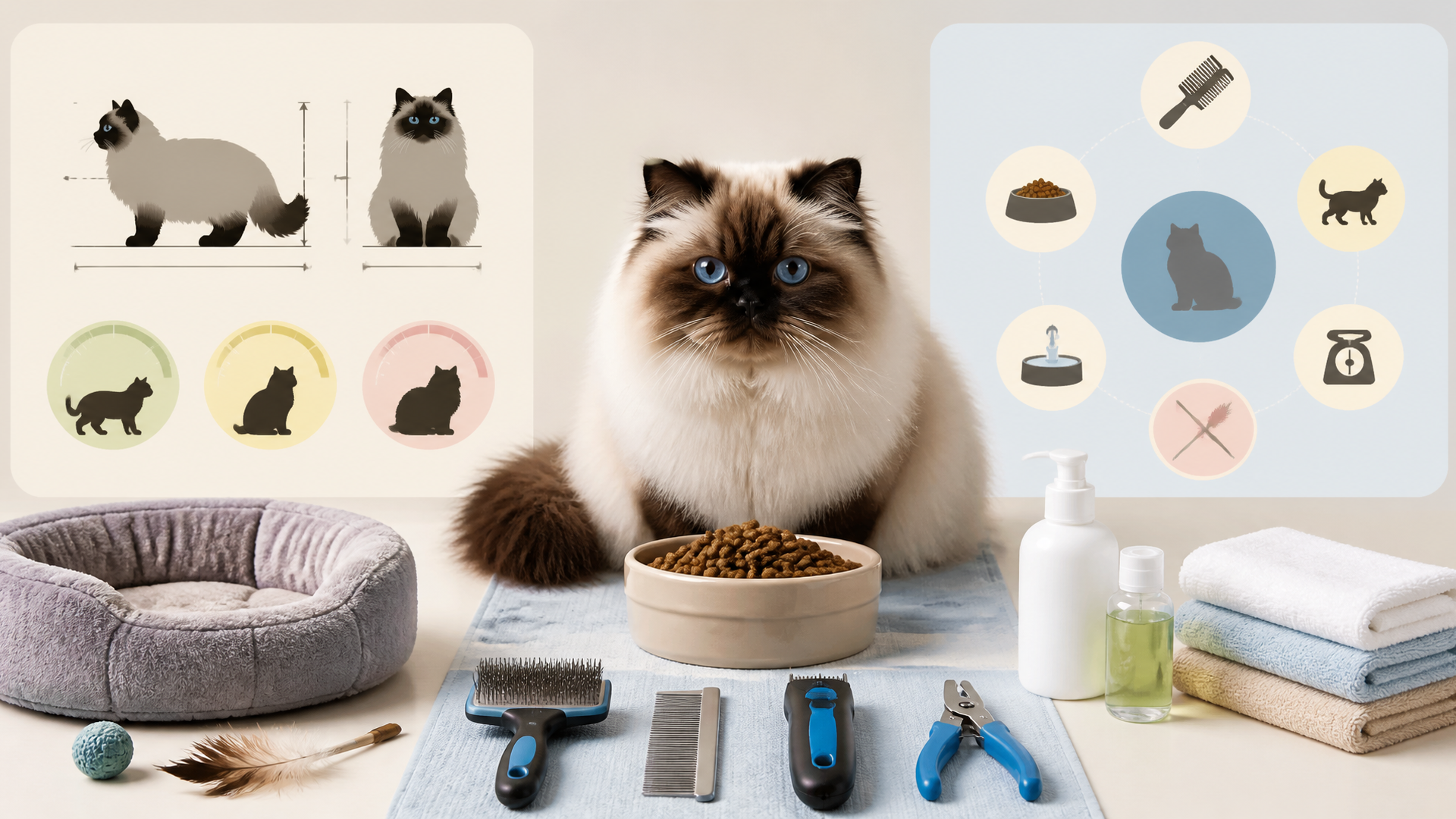
Himalayan Cat Average Weight: Daily Routine & Expert Tips
A healthy adult Himalayan cat typically weighs 7–12 pounds, with females ranging 7–10 lbs and males 9–12 lbs. Their stocky, cobby body makes even a normal-weight cat look rounder than leaner breeds, so don’t rely on eyes alone — you need to use touch. If you can’t feel your cat’s ribs with light finger pressure, or the belly sags noticeably when standing, it’s time to adjust diet and activity before health problems start.

What a Healthy Himalayan Should Weigh
| Factor | Female (lbs) | Male (lbs) |
|---|---|---|
| Healthy adult range | 7–10 | 9–12 |
| Underweight | Under 6 | Under 8 |
| Overweight | Over 10 | Over 12 |
Himalayans are naturally low-energy and love to lounge, which puts them at high risk for obesity. Excess weight above these ranges increases the risk of diabetes, arthritis, and breathing problems — already a concern due to their flat face (brachycephalic conformation). Weigh your cat monthly using a baby scale or by holding them on a bathroom scale and subtracting your weight.
Quick body check: Stand over your cat while it’s standing. You should see a visible waist tuck behind the ribs. If the belly hangs straight down or swings when they walk, that’s excess weight.
The visual trap: Many Himalayan owners assume their cat is normal weight because the long, thick coat hides the body shape. By the time you notice a rounded silhouette, weight gain is already significant. This is the failure mode to catch early — you must feel, not just look.
Daily Routine That Prevents Weight Creep
Himalayans thrive on predictability. A consistent daily schedule prevents stress-related overeating and keeps their coat in good condition. Stick to this routine even when you’re busy.
Morning (15 minutes)
- Fresh water change — use a stainless steel fountain to encourage drinking
- Portioned breakfast (wet food first for hydration)
- Quick 5-minute play session with a wand toy or laser pointer
Midday (5 minutes)
- Check water level; refill if needed
- Offer a puzzle feeder or treat ball if you’re away all day
Evening (20 minutes)
- Second meal (same measured portion as morning)
- Full brushing session — daily is non-negotiable to prevent mats
- 10-minute interactive play before bedtime
Key tip: Use a timed feeder if you work long hours. Himalayans will beg, but stick to the schedule to prevent weight creep.
Feeding Portions That Fit the Breed
Most adult Himalayans need 200–250 calories per day, split into two meals. That’s roughly:
- 3 oz of high-quality wet food twice daily, or
- ¼ cup of dry kibble twice daily (with wet food as a supplement)
What to feed:
- Wet food first — helps with hydration and urinary health (Himalayans are prone to FLUTD)
- Dry kibble only if needed — choose a grain-free or limited-ingredient formula
- Avoid free-feeding — Himalayans will overeat if given the chance
Product recommendations (we may earn a commission on purchases):
- Stainless steel water fountain — encourages drinking and reduces urinary issues
- Elevated feeding bowls — reduces neck strain and helps with breathing
- Digital food scale for exact portions — measuring cups are often inaccurate
Treat limit: No more than 10% of daily calories. Use catnip or freeze-dried chicken as low-calorie options.
Branch point: If your cat finishes every meal and still acts hungry within 30 minutes, don’t add more food. First check that you’re measuring accurately — many owners over-pour dry food by 20–30%. If portions are correct and hunger persists for more than a week, ask your vet to check for hyperthyroidism or diabetes.
Grooming: Your Early Warning System
Daily brushing isn’t optional with a Himalayan — it’s the #1 way to spot weight changes early. When you brush, you’ll feel ribs, spine, and hip bones more easily than you can see them through all that fluff.
Brush type needed: Slicker brush for the top coat, then a metal comb for the undercoat and face.
Step-by-Step Daily Groom
1. Part the fur and brush in sections, starting at the skin.
2. Pay special attention to the armpits, belly, and behind the ears — mat hot spots.
3. Check for mats. If you find one, don’t cut it with scissors near the skin; use a dematting tool or see a groomer.
4. Wipe eye corners daily with a warm, damp cloth to prevent tear staining.
5. End with a quick ear check and nail trim if needed (every 2–3 weeks).
Mat warning: A mat that hides a patch of lost fur could mean your cat is licking that spot due to pain or stress — a vet check is warranted.
Verification step: After brushing, run your hands over the cat’s entire body. You should feel a thin layer of fat over the ribs — about the same as the padding on the back of your hand. If the ribs feel like your knuckles, your cat is underweight. If you can’t feel ribs at all, your cat is overweight. Write down what you feel so you can compare week to week.
Health Watch: Weight Red Flags
Because Himalayans are brachycephalic (flat-faced), excess weight amplifies breathing difficulties. Watch for these signs that your cat might be above a healthy weight:
- Belly visibly sags when standing (no waist tuck)
- Ribs can’t be felt with light pressure
- Cat pants after mild play
- Difficulty jumping onto furniture
- Lethargy or sleeping more than 18 hours a day
When to call the vet:
- Sudden weight loss (more than 0.5 lb in a month)
- Urinating outside the litter box (possible diabetes or UTI)
- Constant hunger despite normal portions
- Any breathing changes (wheezing, open-mouth breathing)
- Sudden increase in drinking paired with weight loss
Branch point: If you notice your cat is suddenly losing weight but eating normally, check its water intake. Excessive drinking with weight loss is a classic sign of diabetes or kidney disease. Track water consumption for 2–3 days and report to your vet.
Daily and Weekly Checklist
Print or save this quick reference to keep your cat on track.
Daily ☐
- Measure and serve two portioned meals (no free-feeding)
- Fresh water in a clean bowl or fountain
- Full-body brush — check for mats and feel rib condition
- Eye wipe
- 10–15 minutes of interactive play
Weekly ☐
- Weigh your cat on the same scale, same day each week
- Trim nails (or check if needed)
- Inspect ears for redness or odor
- Wash food and water bowls thoroughly
- Run hands over body to feel for weight changes since last week
Monthly ☐
- Check that weight falls within the breed’s healthy range
- Replace toothbrush and start or continue tooth brushing
- Schedule a vet check if weight has shifted 0.5 lb either way
Frequently Asked Questions
Is my Himalayan overweight if I can’t feel its ribs?
Yes. You should be able to feel ribs with a light touch — like pressing your knuckles against your own hand. If you need to press firmly, your cat is overweight.
How much should I feed a Himalayan kitten?
Kittens need 3–4 small meals daily until 6 months, then 2 meals. Follow the package guidelines for kitten food, but weigh weekly to avoid rapid growth. Adult weight is usually reached by 12–18 months.
Can Himalayans eat a raw diet?
Some owners do, but it requires careful balance and vet supervision. The biggest risks are nutritional deficiency and bacterial contamination — especially for a breed prone to kidney issues. Stick with commercial, AAFCO-approved food unless your vet recommends a specific home-cooked plan.
Save This Guide
Consistent routine is the key to keeping your Himalayan at a healthy 7–12 pounds. Daily portion control, brushing, and playtime catch small problems before they become health issues. Use this guide as your quick reference for feeding amounts, grooming checks, and weight monitoring.