How Often to Feed 2 Month Old Beagle
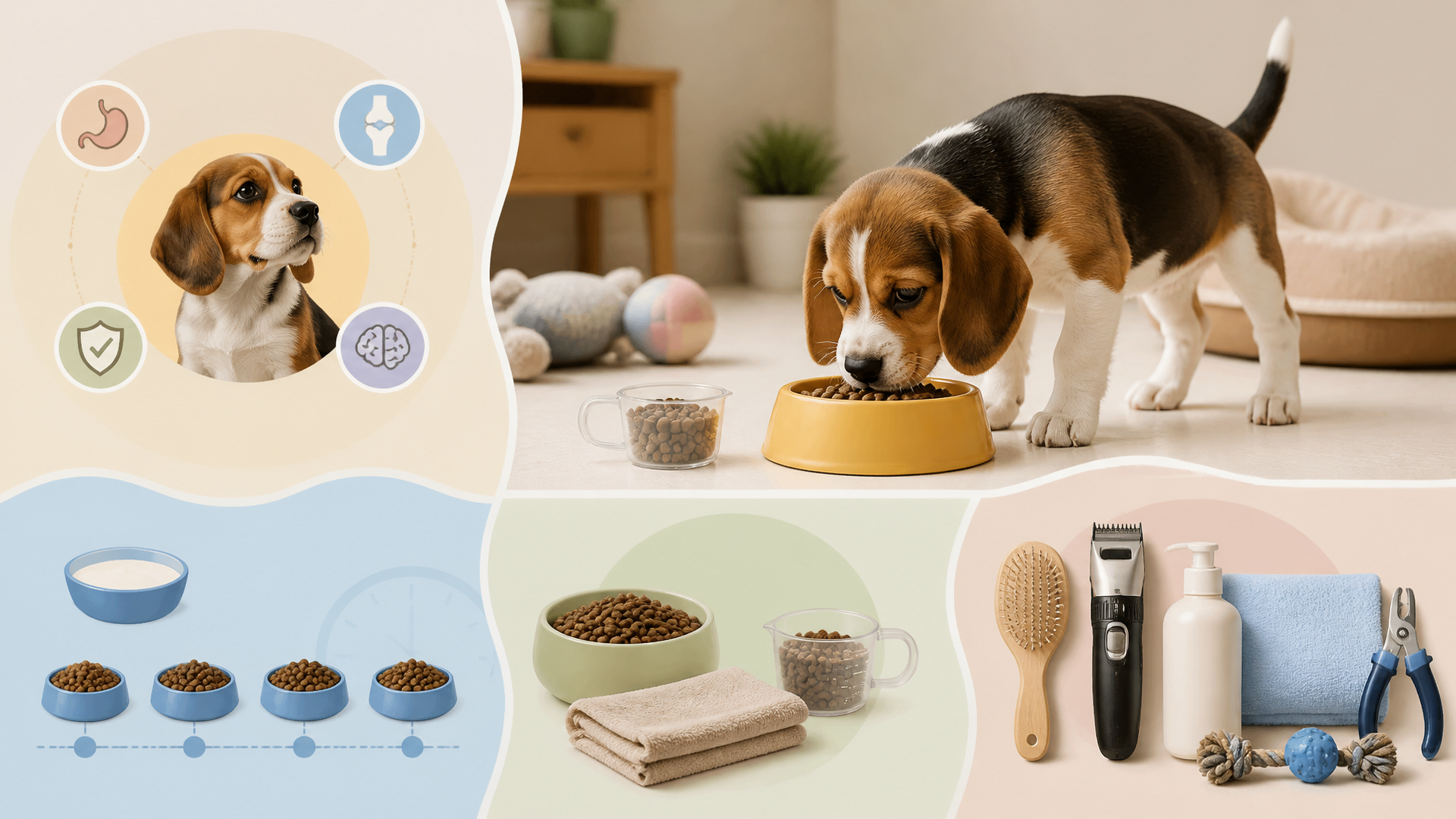
A 2-month-old Beagle puppy needs four meals every day — roughly every 4 to 5 hours — with a measured portion based on their current weight. For most Beagle puppies at this age, that means about ⅓ to ½ cup of high-quality puppy kibble per meal, split from a daily total of around 1½ cups. But here’s the truth most articles skip: your Beagle will act like they’re starving, and that’s the breed talking, not real hunger. Beagles are genetically wired to obsess over food, so stick to the schedule — not the pleading eyes.

Why Beagles Are Different From Other Puppies
Your 2-month-old Beagle isn’t actually hungry every time they cry at the bowl. This breed was developed as a scent hound, which means their brain prioritizes food-seeking above almost everything else. A Beagle puppy at this age will eat until they vomit if given the chance — that’s not an exaggeration.
What this means for you: Follow the feeding chart, not the whining. If your puppy finishes their bowl in 10 seconds and stares at you like you’ve betrayed them, that’s normal Beagle behavior. Overfeeding at this age leads to rapid weight gain that stresses developing joints and sets up lifelong obesity habits.
Feeding Schedule for a 2-Month-Old Beagle
| Time | Meal | Portion (approximate) |
|---|---|---|
| 7:00 AM | Breakfast | ⅓ cup |
| 12:00 PM | Lunch | ⅓ cup |
| 5:00 PM | Dinner | ⅓ cup |
| 9:00 PM | Last meal | ¼–⅓ cup |
This four-meal schedule supports their small stomach (about the size of a tennis ball at this age) while keeping blood sugar stable. Drop to three meals around 12–16 weeks, then transition to two meals around 6 months.
Portion rule of thumb: ½ to ¾ cup of puppy food per 10 pounds of body weight per day, split across all meals. Weigh your Beagle weekly — they should gain about ½–1 pound per week at this age.
Choosing the Right Food for Your Beagle Puppy
Beagle puppies do best with a large-breed puppy formula labeled for growth. Wait — aren’t Beagles medium-sized? Yes, but large-breed puppy foods have carefully controlled calcium and phosphorus levels that help all puppies grow at a safe rate. Regular puppy food can cause Beagles to grow too fast, putting stress on their cartilage and joints.
What to look for:
- AAFCO statement for “growth” or “all life stages”
- DHA for brain development
- Kibble size small enough for a Beagle’s muzzle (look for “small breed” or “toy breed” kibble within a large-breed formula)
- Named protein source first (chicken, lamb, salmon — not “meat meal”)
Recommended products:
- Hill’s Science Diet Puppy Small Bites
- Royal Canin Beagle Puppy (breed-specific formula)
- Purina Pro Plan Puppy Small Breed
Daily Feeding Success Checklist
Use this checklist every day to stay on track:
- [ ] Four meals at the same times — no skipping or free-feeding
- [ ] Measured portion — use a standard dry measuring cup, not guessing
- [ ] Fresh water available all day — change it at each meal
- [ ] Food bowl down for 15 minutes only — pick up uneaten food (Beagles learn to eat promptly)
- [ ] No table scraps or human food treats — this teaches begging and can cause pancreatitis
- [ ] Weekly weight check — record it to track growth rate
- [ ] Puppy eats in their crate or a quiet spot — prevents resource guarding and establishes routine
How to Know Your Feeding Routine Is Working
Verification is simple but easy to overlook. After three days on a consistent four-meal schedule, your Beagle puppy should show these signs of success:
- They finish their meal within 5–10 minutes but don’t immediately vomit or bloat afterward
- Stool is firm and well-formed — not runny, not rock-hard. Check once per day for consistency
- Energy levels are steady — your puppy plays actively between meals but doesn’t crash or seem sluggish
- Weight gain is predictable — about ½ pound per week. If your puppy gains more than 1 pound in a week, reduce portions slightly
Quick test: After the morning meal on day four, your puppy should settle down for a nap within 30 minutes instead of pacing, whining, or searching for more food. If they’re still frantic, the portions may be too small — but if they’re lethargic or bloated after eating, the portions are likely too large.
What to Do If Your Beagle Puppy Won’t Eat
Beagles are typically enthusiastic eaters, but a 2-month-old might skip a meal if they’re teething (their baby teeth are coming in), overtired, or stressed from a new environment.
Try these fixes:
- Warm the food slightly (10–15 seconds in the microwave, stir well) to release smell
- Add a tablespoon of warm water to soften kibble
- Hand-feed a few pieces to get them started
- Feed in a quiet area away from household activity
When to call the vet:
- Skipping two meals in a row
- Vomiting or diarrhea
- Lethargy or hiding
- Refusing water for more than 12 hours
A Beagle that won’t eat is unusual — don’t wait more than 24 hours to get veterinary advice.
The One Mistake That Derails Most Owners
The most common failure pattern with Beagle puppies isn’t underfeeding — it’s giving in to the “starving” act between scheduled meals.
How it looks: Your puppy finishes breakfast, then two hours later sits by the bowl and whines. You assume they’re still hungry, so you toss in a handful of kibble or a treat. Within a week, your Beagle learns that whining = extra food. Meal times become meaningless, portions become unpredictable, and you lose all control of their calorie intake.
Why it’s dangerous: Beagles gain weight easily — a 2018 study found that over 50% of Beagles in the US are overweight by age 3. Each extra handful adds up fast, and a 2-month-old puppy that gains too quickly is at higher risk for hip dysplasia and cruciate ligament injuries later in life.
The safer move: If your puppy whines between meals, take them out for a bathroom break, offer a chew toy, or do a 5-minute training session with kibble from their next meal portion. Do not add extra meals or treats outside the schedule. If the whining continues for more than a week despite adequate portions, ask your vet to rule out intestinal parasites.
Common Feeding Mistakes Beagle Owners Make
Mistake #1: Free-feeding (leaving the bowl full all day)
Beagles will eat everything immediately and then beg for more. Free-feeding makes portion control impossible and teaches your puppy to gorge.
Mistake #2: Switching food brands too fast
Beagles have sensitive stomachs. Always transition over 5–7 days by mixing old food with new food in increasing amounts. Sudden switches cause loose stool and gas (and Beagle gas is potent).
Mistake #3: Using treats as training rewards too freely
Treats count as calories. At 2 months old, your Beagle puppy should get no more than 10% of their daily calories from treats. Use a portion of their kibble as training rewards instead.
Mistake #4: Not adjusting portions as they grow
Your Beagle’s weight will double between 2 and 4 months. Check the feeding chart on the food bag and adjust portions every 2 weeks. Feeding the same amount for two months straight guarantees under- or overfeeding.
Products That Make Feeding Easier
- Slow feeder bowl — Beagles inhale food. A slow feeder bowl with maze-like ridges forces them to eat at a normal pace, which reduces gulping, bloat risk, and regurgitation.
- Digital kitchen scale — Weighing food is more accurate than measuring cups. Target about 5–6 ounces of food per day total for a 10-pound Beagle puppy.
- Kibble-dispensing puzzle toy — Beagles need mental stimulation. A Kong Wobbler or Nina Ottosson toy turns meal time into a game and slows down eating.
- Portion control container — Pre-portion each meal into separate containers or bags so you’re not measuring on the fly.
Affiliate disclosure: Some links in this guide are affiliate links. We may earn a small commission if you purchase through them, at no extra cost to you.
Save This Guide
Your 2-month-old Beagle needs four meals a day, measured portions, and a schedule you stick to despite the begging. Overfeeding is the biggest risk at this age — Beagles are food-obsessed by nature, and a chubby puppy grows into an overweight adult with joint problems and a shorter lifespan. Feed the schedule, not the whining. Weigh your puppy weekly, check their stool daily, and adjust portions as they grow. A consistent routine now sets up your Beagle for a healthy, happy life.