Shih Tzu Drinking a Lot of Water
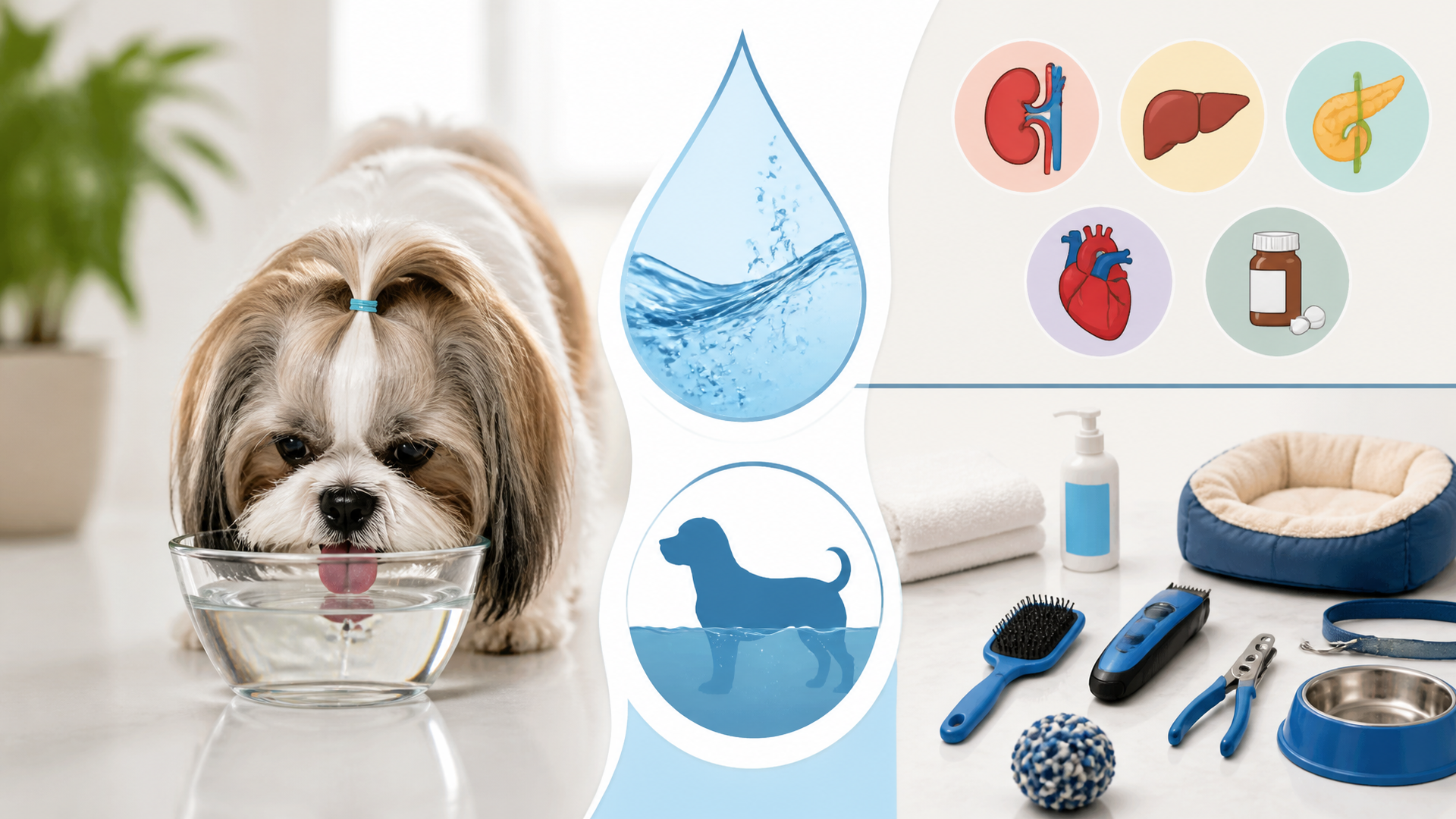
A Shih Tzu drinking more than usual isn’t always a heat issue. For a 10–16 lb Shih Tzu, normal daily intake is about 5–8 ounces (¾ to 1 cup) . Anything over 1.5 cups daily warrants attention.

The counter-intuitive part most pet sites skip: your Shih Tzu’s flat face makes breathing harder, which increases water loss through panting — even when they’re not hot. But excessive thirst can also signal real medical trouble. Here’s how to tell the difference and what to do next.
How Much Water Is Normal for a Shih Tzu
Healthy adult Shih Tzus typically drink ½ to 1 ounce per pound of body weight each day. For a 14 lb dog, that’s 7–14 ounces — roughly one standard measuring cup.
| Shih Tzu Weight | Normal Daily Water Intake | When to Raise an Eyebrow |
|---|---|---|
| 10 lb | 5–10 oz (⅔ to 1¼ cups) | Over 1½ cups daily |
| 14 lb | 7–14 oz (¾ to 1¾ cups) | Over 2 cups daily |
| 16 lb | 8–16 oz (1 to 2 cups) | Over 2½ cups daily |
These numbers apply to healthy adult Shih Tzus eating dry kibble. Puppies, seniors over 10, dogs on medications (steroids, diuretics), and those on wet food will have different baselines. Track your own dog’s pattern for at least 3 days before worrying.
5 Medical Reasons Your Shih Tzu’s Thirst Is Up
Shih Tzus are predisposed to several conditions that cause excessive drinking (polydipsia). These five are the most common — and breed-specific.
Cushing’s Disease (Pituitary-Dependent)
Shih Tzus are overrepresented in Cushing’s cases. The classic combo: drinking more + urinating more + a pot-bellied appearance + hair thinning on the flanks. Cushing’s develops slowly — owners often miss it until the thirst becomes extreme. Look for your dog’s skin getting thinner or bruising easily.
Chronic Kidney Disease
Especially common in Shih Tzus over 8 years old. The kidneys lose ability to concentrate urine, so the dog drinks more to compensate. Watch for dilute, clear urine and subtle increases in indoor accidents. A senior blood panel catches this early.
Diabetes Mellitus
Shih Tzus are among the breeds most prone to diabetes. Key sign: drinking + peeing + eating more but losing weight. If your Shih Tzu is suddenly ravenous while dropping pounds, get a blood glucose test this week. Untreated diabetes can progress fast.
Urinary Tract Infection
A UTI can make a Shih Tzu feel constantly thirsty. Their low-hanging bellies and female anatomy increase risk. Look for frequent squatting, licking the genital area, or blood-tinged urine. A simple urine test can confirm.
Brachycephalic Breathing Effort (the one most articles skip)
This is the overlooked cause. Shih Tzus’ flat faces mean narrowed nostrils and an elongated soft palate. Every breath takes extra work, and panting moisture loss adds up fast. If your Shih Tzu drinks heavily after mild exercise or excitement but checks out fine on bloodwork, the problem may be structural, not medical. A vet can assess airway obstruction and may recommend surgery (soft palate resection, nares widening) for severe cases.
Your Next Steps
If you’ve ruled out simple causes (hot weather, recent exercise, diet change) and your Shih Tzu still drinks over 1.5 cups daily, don’t wait. Book a vet appointment for a senior blood panel and urinalysis. In the meantime, switch to a low-sodium diet, offer ice chips instead of free water to slow intake, and consider a humidifier (like the Levoit LV600S) if your home humidity is under 30%. These steps won’t fix a medical issue, but they’ll reduce unnecessary drinking and help you gather better data for the vet.
Expert Tips to Track Your Shih Tzu’s Thirst Like a Pro
Tip 1: Measure, Don’t Guess
Actionable step: Use a marked water bowl or a standard measuring cup to track exactly how much you pour. Fill to the same line each morning. If you have multiple dogs, separate them at water time or use a bowl with a built-in measurement scale, like the PetSafe Healthy Pet Gravity Waterer which shows approximate remaining volume.
Common mistake: Letting the bowl run dry and filling without tracking. Thirsty Shih Tzus drink whatever’s available, and you lose the data.
Tip 2: Compare Pee Patterns, Not Just Bowl Level
Actionable step: Observe how often your Shih Tzu urinates over 12 hours. A healthy dog goes every 4–6 hours. If they’re asking out every 2 hours, that’s polydipsia-polyuria even if the bowl looks normal.
Common mistake: Thinking only water volume matters. Pee frequency is equally important and easier to spot — especially for house-trained dogs.
Tip 3: Test the “Water Station” Theory
Actionable step: If your Shih Tzu drinks heavily after panting (post-walk, post-play, after barking at the mailman), try offering ice chips instead of a full bowl. They’ll slow down intake, and you’ll see if it’s genuine thirst or just habit.
Common mistake: Assuming heavy panting always means they’re overheated. With brachycephalic dogs, it often means they’re working to breathe — offer water, but also check their airway. A humidifier in the room can reduce panting-driven water loss by keeping airways moist.
When Increased Thirst Becomes an Emergency
You don’t need to rush to the vet for every extra lap at the bowl. But these red-flag combos mean call your vet today, not next week:
- Drinking + vomiting or diarrhea (risk of dehydration or pancreatitis)
- Drinking + sudden weakness or collapse (possible Addisonian crisis or heat stroke)
- Drinking + blood in urine or straining to pee (bladder stone or obstruction)
- Drinking + tremors or seizures (electrolyte imbalance or toxin exposure)
- Drinking in a puppy under 6 months that is also not growing well (kidney dysplasia or diabetes)
One trade-off to keep in mind: Tracking water intake is useful but not foolproof. If your Shih Tzu drinks from puddles, toilets, or other bowls in the house, your measured data will be incomplete. Also, some Shih Tzus drink more when bored or anxious. If bloodwork looks normal but thirst continues, ask your vet about a behavior consult or environmental enrichment.
Quick Decision Aid: When to Call the Vet
Run through this 5-item check. If you check 3 or more, call your vet this week.
- [ ] Water intake exceeds 1.5x the normal range for 3+ days
- [ ] Urinating more frequently or having accidents despite being housebroken
- [ ] Coat looks thinner, or you see bald patches on tail or back
- [ ] Appetite changed (increased or decreased) without weight stability
- [ ] Breath smells sweet or like acetone (possible diabetes)
If you checked 0–2 and your Shih Tzu is otherwise playful and eating well, try measuring for 3 more days. If 3+, bloodwork and a urinalysis are the next step.
FAQ
How can I tell if my Shih Tzu is drinking too much or just panting a lot?
Watch the context. If heavy drinking happens right after exercise or excitement, it’s usually normal. If they’re drinking heavily at rest or overnight without clear panting, that points to a medical cause.
Can changing my Shih Tzu’s food make them thirstier?
Yes. Switching from wet food to dry kibble, or to a high-sodium diet, will increase thirst. If the change aligns with the new drinking pattern, that’s likely the cause — but verify the food’s sodium content first. If you’re feeding a dry food with more than 0.3% sodium, consider a lower-sodium option.
Is it true that Shih Tzus drink more in winter because of dry indoor air?
Some do, but it’s not a major factor. If your home is under 30% humidity, a humidifier can help reduce panting-driven water loss. But always rule out medical causes before blaming the furnace.
Should I limit my Shih Tzu’s water at night to prevent accidents?
No. Never restrict water for a dog showing increased thirst. Restricting water can worsen underlying conditions and lead to dehydration. Instead, manage night accidents with a potty break right before bed and a waterproof pad on the floor.
Save This Guide — Shih Tzus’ flat faces make them prone to breathing-related thirst, but excessive drinking can also signal Cushing’s, kidney disease, or diabetes. Measure their intake for 3 days, compare pee frequency, and use the 5-item checklist above. If three or more fit, schedule bloodwork this week. Your Shih Tzu can’t tell you something’s off — but their water bowl can.
Some links in this guide are affiliate links. We only recommend products we trust for Shih Tzu owners.