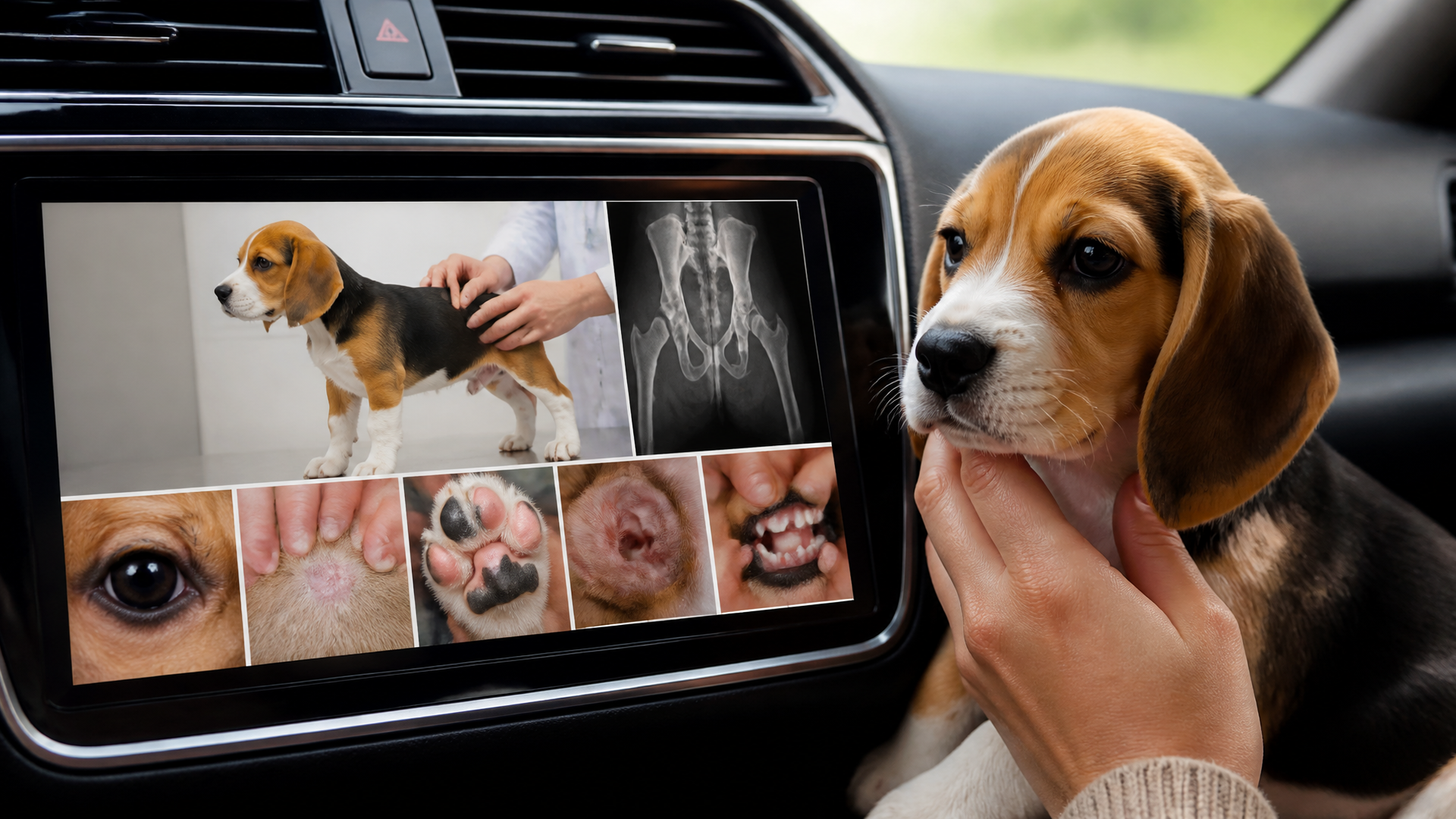
Hip Dysplasia in Young Beagle
Hip dysplasia in young Beagles is a joint condition where the hip socket doesn’t fully cover the ball of the thigh bone. This causes looseness, pain, and eventually arthritis. While large breeds like Labradors get more attention, Beagles are at real risk—about 15–20% show signs on OFA screenings. The good news? Catch it before 12 months and you have far more treatment options.

What Hip Dysplasia Looks Like in a Beagle Puppy
The hip joint should fit like a ball in a deep socket. In dysplastic Beagles, that socket is too shallow. The ball slips partially out, grinding cartilage every time your dog moves. Over time, this creates inflammation and arthritis.
Beagles don’t always limp. Because they’re tough, food-driven animals, they often push through pain until you notice subtle changes. Watch for these specific signs between 4 and 18 months of age.
7 Warning Signs to Watch For
1. Bunny-hopping gait – Both hind legs move together when running instead of alternating.
2. Reluctance to jump – Your Beagle hesitates before hopping onto the couch or into the car.
3. Stiffness after rest – Takes several stiff steps before moving normally.
4. Activity drop-off – Your Beagle stops wanting long walks, fetch, or playtime.
5. Intermittent limping – Favors one hind leg, then seems fine the next day.
6. Stair trouble – Hesitates, whines, or tries to climb stairs differently.
7. Thigh muscle loss – Back legs look thinner compared to the front.
BLOCKQUOTE_0
How the Vet Confirms It (and Why Timing Matters)
Your vet will perform a physical exam checking for hip looseness and pain. The gold standard is hip X-rays under sedation. For Beagles under 2 years, ask about the PennHIP method — a more precise X-ray technique that measures joint laxity before arthritis develops.
Why timing matters: The best surgical options require a healthy joint. Triple pelvic osteotomy (TPO) only works if there’s no arthritis yet. Juvenile pubic symphysiodesis (JPS) must be done before 5 months old. Wait too long, and those options disappear.
A Trade-Off Most Owners Miss
PennHIP screening costs more upfront ($200–$400) but tells you exactly where your Beagle stands. The alternative—waiting for clear symptoms—means you may miss the window for less invasive surgery. If you’re on a tight budget, the trade-off is real: skip early screening and you may face more expensive treatment (like total hip replacement at $3,500–$7,000 per hip) later.
Treatment Comparison: Which Path Fits Your Beagle?
| Severity | Best Option | Key Constraint |
|---|---|---|
| Mild — no arthritis, puppy under 5 months, high laxity | Juvenile pubic symphysiodesis (JPS) | Must catch before 5 months |
| Mild to moderate — no arthritis, under 1 year | Triple pelvic osteotomy (TPO) | No arthritis yet — confirmed by X-ray |
| Moderate — some arthritis, intermittent pain | Conservative management | Requires daily owner consistency |
| Severe — constant pain, advanced arthritis | Total hip replacement (THR) | High cost but best outcome |
| Severe, limited budget, Beagle under 30 lbs | Femoral head ostectomy (FHO) | Less predictable gait; pain-free |
Conservative Management (for mild to moderate cases)
Most Beagles with hip dysplasia are managed without surgery. Here’s what works:
Weight control – This is non-negotiable. An extra 5 pounds on a 25-pound Beagle is like carrying a 15-pound backpack on a small frame. You should be able to feel ribs with light pressure.
Controlled exercise – Three short leash walks daily (10–15 minutes) on grass or dirt. No off-leash park time where they overdo it. Avoid hard surfaces like concrete.
Joint supplements – Glucosamine and chondroitin support cartilage. Omega-3 fatty acids reduce inflammation. Look for veterinary-grade supplements; human versions can contain xylitol or harmful doses of vitamin D.
Anti-inflammatory medication – NSAIDs prescribed by your vet (carprofen, meloxicam) help during flare-ups. Never use human painkillers like ibuprofen — they’re toxic to dogs.
Physical therapy – Canine hydrotherapy or underwater treadmill work strengthens the muscles supporting the hip without pounding the joint.
3 Practical Tips for Managing Hip Dysplasia at Home
Tip 1: Keep Your Beagle Lean and Muscular
Actionable step: Feed measured portions using a kitchen scale. Aim for body condition score 4–5 out of 9 (ribs easily felt, visible waist from above). Weekly weigh-ins catch gains before they add up.
Common mistake to avoid: Free-feeding or unlimited treats. One extra ounce of food per day adds nearly two pounds in a year — a significant load for an already unstable hip.
Tip 2: Choose Low-Impact Exercise Routines
Actionable step: Do three short, structured walks on soft surfaces daily. Add 10 minutes of nose work or puzzle toys — Beagles are scent hounds and need mental stimulation as much as physical exercise.
Common mistake to avoid: Letting your Beagle run off-leash. Pain-tolerant dogs often overexert before you notice anything wrong. Stick to controlled activity and check for limping afterward.
Tip 3: Invest in Joint-Friendly Home Setup
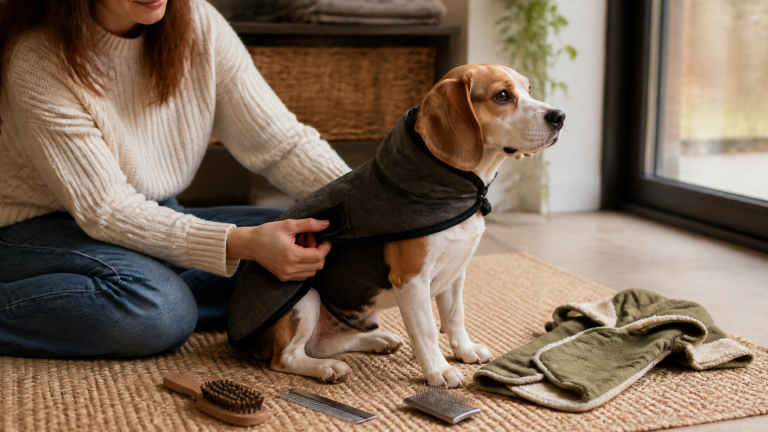
Actionable step: Use an orthopedic memory foam bed with raised edges. Place it in a draft-free, easily accessible area. Add non-slip rugs on slippery floors — Beagles with hip dysplasia struggle on tile or hardwood.
Common mistake to avoid: Buying cheap flat dog beds. Thin cushions provide no relief. Also avoid ramps that are too steep — a gentle incline helps more than a steep ramp that requires extra effort to climb.
Hip Dysplasia Home Monitoring Checklist
Use this checklist weekly. A “Yes” to any item means it’s time to call your vet.
| Check | Question | Yes/No |
|---|---|---|
| 1 | Does your Beagle bunny-hop or skip when running? | |
| 2 | Is there reluctance to jump onto furniture or into the car? | |
| 3 | Does stiffness last more than 5 minutes after lying down? | |
| 4 | Has your dog lost interest in walks or playtime? | |
| 5 | Is limping noticeable after exercise but better after rest? | |
| 6 | Have you noticed thigh muscle loss compared to the front legs? | |
| 7 | Is your Beagle at or above ideal weight (ribs hard to feel)? |
If you checked “Yes” to items 1–6: Pause exercise and contact your vet.
If you checked “Yes” to item 7: Review your feeding routine and schedule a weight check.
Frequently Asked Questions
Is hip dysplasia common in Beagles?
It’s less common than in large breeds, but it does occur. The Orthopedic Foundation for Animals grades about 15–20% of Beagles as dysplastic. Reputable breeders screen both parents through OFA or PennHIP to reduce risk.
Can a young Beagle with hip dysplasia live a normal life?
Yes. Most Beagles with mild to moderate hip dysplasia remain comfortable with weight management, joint supplements, and adjusted exercise. Severe cases often need surgery, but outcomes are generally good with proper care.
At what age does hip dysplasia show up in Beagles?
Symptoms can appear as early as 4 months, though many dogs don’t show clear signs until 1–2 years old. PennHIP screening at 16 weeks can identify risk before symptoms start.
Should I still walk my Beagle with hip dysplasia?
Yes — but adjust the walk. Shorter duration, slower pace, and soft surfaces only. Regular movement maintains muscle mass and joint lubrication. Avoid hills and stairs.
Is there a cure for hip dysplasia in Beagles?
There is no cure, but it’s highly manageable. Total hip replacement comes closest to restoring normal function. For most owners, conservative care combined with consistent home monitoring keeps the dog happy and active for years.
This article contains affiliate links. If you purchase through these links, we may earn a small commission at no extra cost to you.
Save This Guide
Bookmark this page so you can spot the first signs early. Catching hip dysplasia before 12 months gives you more treatment options, and keeping your Beagle at a healthy weight is the single most effective thing you can do every day. Share this with other Beagle owners so they know what to watch for too.