Sounds Bichon Barking: Step-by-Step Training Guide
Bichon Frises were bred to be companion dogs, and barking is how they talk to you. Your Bichon isn’t trying to be difficult — they’re communicating. The trick is teaching them when to stop and what to do instead.

Here’s the short answer: You can’t train a Bichon to never bark. But you can teach them to bark on cue and stop on cue. This guide shows you how, starting with what you need before the first session.
What You’ll Need Before You Start
Skip the guesswork. Gather these before your first training session:
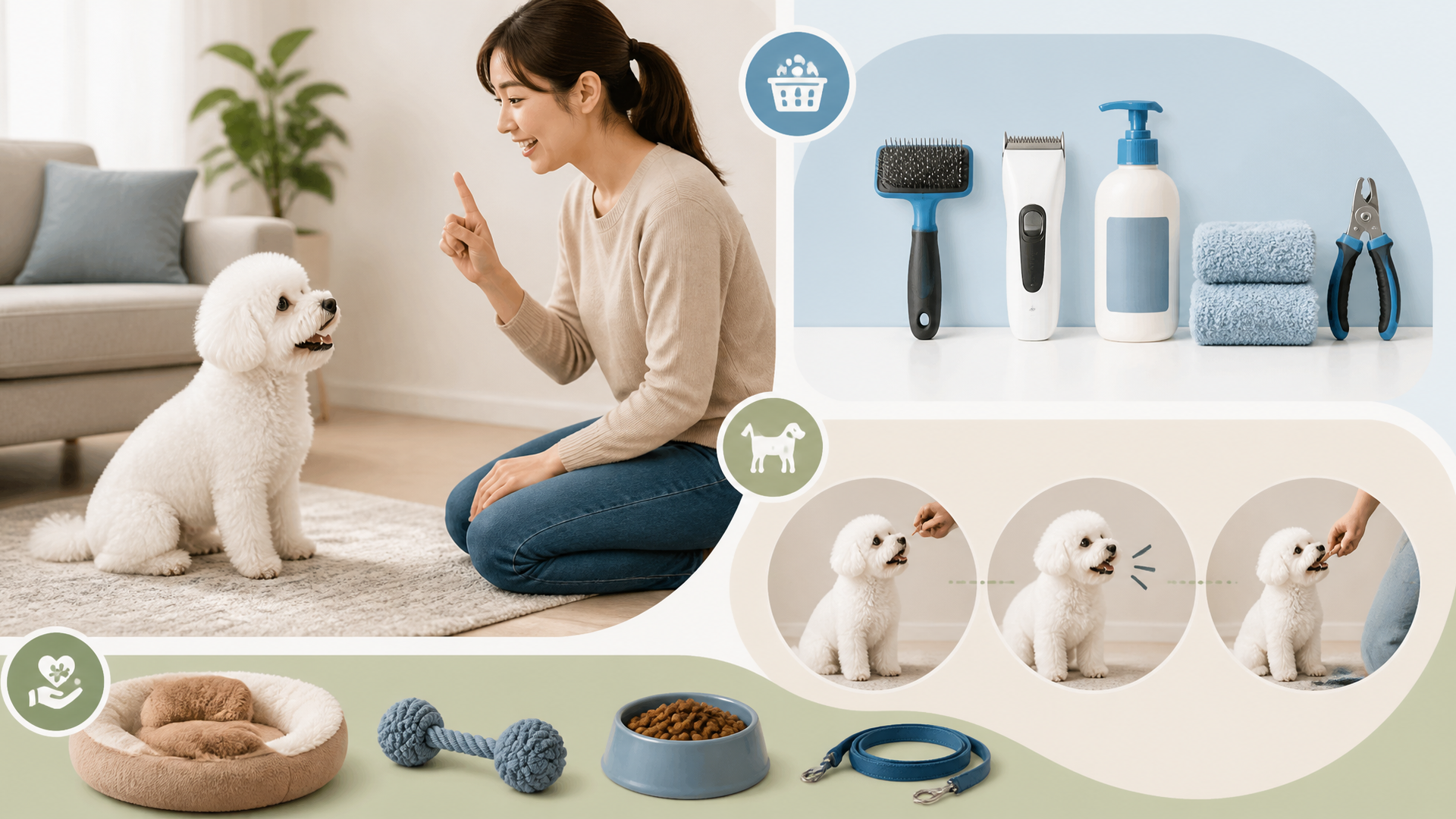
- High-value treats – cut into pea-sized pieces. Bichons respond best to soft, smelly rewards (freeze-dried liver, tiny cheese cubes, or boiled chicken).
- A quiet training space – your living room or kitchen, away from windows and doors where triggers are visible.
- A consistent verbal cue – pick one word: “Quiet,” “Enough,” or “Hush.” Everyone in the household uses the same word, every time.
- 10–15 minutes per session – two sessions per day work better than one long session. Bichons lose focus after 15 minutes.
- Patience and a calm tone – Bichons are sensitive to your mood. Yelling or frustration teaches them to bark louder, not stop.
Why this matters for Bichons specifically: Unlike some breeds that need firm correction, Bichons shut down with harsh treatment. Positive reinforcement gets faster, more reliable results.
Step 1: Teach “Speak” First (Yes, Really)
This sounds backward, but it’s the fastest path to a quiet Bichon. You can’t teach “Quiet” until your dog understands that barking is a behavior you control.
1. Trigger a bark naturally. Ring the doorbell, knock on a counter, or hold a favorite toy just out of reach.
2. The moment your Bichon barks, say “Speak” clearly and immediately give a treat.
3. Repeat 5–7 times until your Bichon starts looking at you when they hear the trigger, expecting the reward.
4. Phase out the trigger. Say “Speak” without the doorbell. Reward the first bark. Within a few sessions, most Bichons will bark on cue.
Success checkpoint: Your Bichon barks once when you say “Speak” and looks at you for a treat. If they’re still barking multiple times without looking at you, go back to step 2 and use a higher-value treat.
Step 2: Teach the Off-Switch
Now that barking is a controlled behavior, you can teach your Bichon to stop on command.
1. Say “Speak” and let your Bichon bark once.
2. Show a treat held at nose level. Most Bichons will stop barking to sniff it — that’s the moment you’re looking for.
3. The instant they stop (even for one breath), say “Quiet” calmly and give the treat.
4. Gradually stretch the silence. Wait one second before treating, then two seconds, then three. Build to a five-second quiet pause before rewarding.
| Session | Goal | Treat timing |
|---|---|---|
| Days 1–3 | 1–2 seconds of quiet | Immediate after stop |
| Days 4–6 | 3–5 seconds of quiet | After the pause |
| Days 7–10 | 10+ seconds of quiet | Variable reward (not every time) |
Common friction point: Your Bichon barks more when you show the treat. If that happens, hold the treat at nose level and wait silently. Don’t repeat “Quiet.” Most dogs stop within 3–5 seconds once the treat is within sniffing range. If they still don’t stop, lower the treat slightly below nose level — this naturally encourages a head-down position that makes barking harder.
Step 3: Train in Real-Life Settings
Your Bichon mastered “Quiet” in the kitchen. Good. Now make it stick where it actually matters.
Week 1 – Indoor distractions: Practice near a window while someone walks past outside. Keep a 6-foot distance from the trigger at first. Reward quiet watching, not barking. If your Bichon barks, calmly move farther from the window and try again.
Week 2 – Doorbell simulation: Have a family member ring the doorbell or knock while you practice “Quiet” at a distance. Reward calm behavior — don’t rush to the door. The goal is a Bichon who stays quiet while you decide to answer.
Week 3 – Outside practice: Work in your yard or on a quiet sidewalk. Use a long leash. When your Bichon notices a person or dog at a distance, reward them for not barking before they have a chance to start. This builds the habit of looking to you instead of reacting.
What success looks like: Your Bichon sees a trigger, looks at you, and waits for a cue before reacting. If they’re still barking at every trigger after three weeks, see the escalation section below.
Is Your Bichon’s Barking a Problem? Quick Decision Aid
Run through this checklist to decide whether training will work or you need to escalate:
- [ ] Barks at every sound (door, mail, footsteps) — train “Quiet” as described. Most Bichons improve within two weeks.
- [ ] Barks only when excited (greeting, play, walks) — this is normal Bichon behavior. Redirect with a toy or ask for “Sit” before greeting.
- [ ] Barks when left alone — possible separation anxiety. Check for pacing, drooling, panting, or destructive behavior. Training alone won’t fix this. See a vet or certified trainer.
- [ ] Barks with lunging, growling, or tucked tail — fear-based behavior. Stop training immediately. Consult a positive-reinforcement behaviorist before continuing.
- [ ] Barks at night despite daytime training — may need more physical exercise or mental stimulation. Add a 20-minute evening walk and a puzzle toy before bed.
Escalation signal — when to stop DIY training: If your Bichon doesn’t respond to “Quiet” after three full weeks of consistent daily training, or if barking is accompanied by any of these signs, stop home training and see your veterinarian or a certified trainer:
- Sudden increase in barking without an obvious trigger
- Barking paired with pacing, panting, or hiding
- Signs of pain (flinching when touched, reduced appetite, avoiding stairs)
- Barking that started after a change in routine or environment
Why this matters for Bichons: Dental pain, arthritis, and age-related hearing loss are common in Bichons and can cause excessive barking that no amount of training will fix. If your Bichon seems confused by your cues or suddenly barks more at night, a vet check should come before more training sessions.
How to Prevent Problem Barking Before It Starts
Training is easier when you set your Bichon up to succeed from the start.
- Exercise first. A tired Bichon barks less. Aim for 30 minutes of combined walks and active play per day, split into morning and evening sessions.
- Mental stimulation matters. Bichons are smart. Boredom barking is real — they’ll bark at shadows, leaves, or nothing at all if they’re under-stimulated. Use puzzle feeders, snuffle mats, or hide-and-seek with treats to tire their brain.
- Manage the environment. Close blinds during busy times. Use a white noise machine or calming music to mask trigger sounds. Bichons are alert little dogs — don’t make them work harder than they need to.
- Don’t inadvertently reward barking. If your Bichon barks to go outside, don’t open the door until there’s a pause. If they bark for attention, turn away and wait for quiet. Even one accidental reward can strengthen the barking habit.
When Training Backfires (And How to Fix It)
Some Bichons learn that “Quiet” means “bark once, get a treat, then bark again to get another treat.” You’ll recognize this pattern: your dog barks, looks at you, barks again, looks again. It feels like a shakedown — and in a way, it is.
How to detect it early: Watch for the “bark-look-bark-look” cycle. If your Bichon is offering barks and checking for your reaction, the pattern has started.
How to fix it: Switch to a continuous quiet challenge. Instead of rewarding each individual stop, reward your Bichon for staying quiet over longer periods. Toss treats randomly while your dog is calm — not immediately after a bark. This teaches that quiet itself pays off, not just the act of stopping.
Real talk: This failure mode is more common with Bichons than many breeds because they’re so treat-motivated and quick to learn patterns. If you see it, don’t get frustrated — just switch to random rewards and it usually resolves within 3–4 sessions.
Your First Week Training Plan
| Day | Training focus | Duration |
|---|---|---|
| 1–2 | Teach “Speak” in quiet room | Two 10-minute sessions |
| 3–4 | Teach “Quiet” in quiet room | Two 10-minute sessions |
| 5–6 | “Quiet” with mild distraction (TV, window) | Two 10-minute sessions |
| 7 | Practice in real-world low-distraction setting | 15 minutes total |
Signs of progress by day 7: Your Bichon responds to “Quiet” within 3–5 seconds in a calm environment and needs fewer than three repetitions per session. By the end of week three, you should see reliable quiet in most indoor situations with mild triggers.
Signs you need to adjust: If there’s no improvement by day 7, check your treat value (are they still exciting?), your consistency (does everyone use the same cue?), and whether your Bichon might be barking from pain or anxiety rather than learned behavior.
Save This Guide
Bichons will always have a voice — that’s part of what makes them such engaging companions. The goal isn’t silence. It’s control. Teach “Speak” first, then “Quiet,” and use the checklist above to spot when normal barking turns into a deeper problem. Stay consistent for three weeks, and you’ll have a Bichon who still barks at the doorbell but stops when you say the word — and that’s a dog you can take anywhere.