Sphynx Cat With Hair
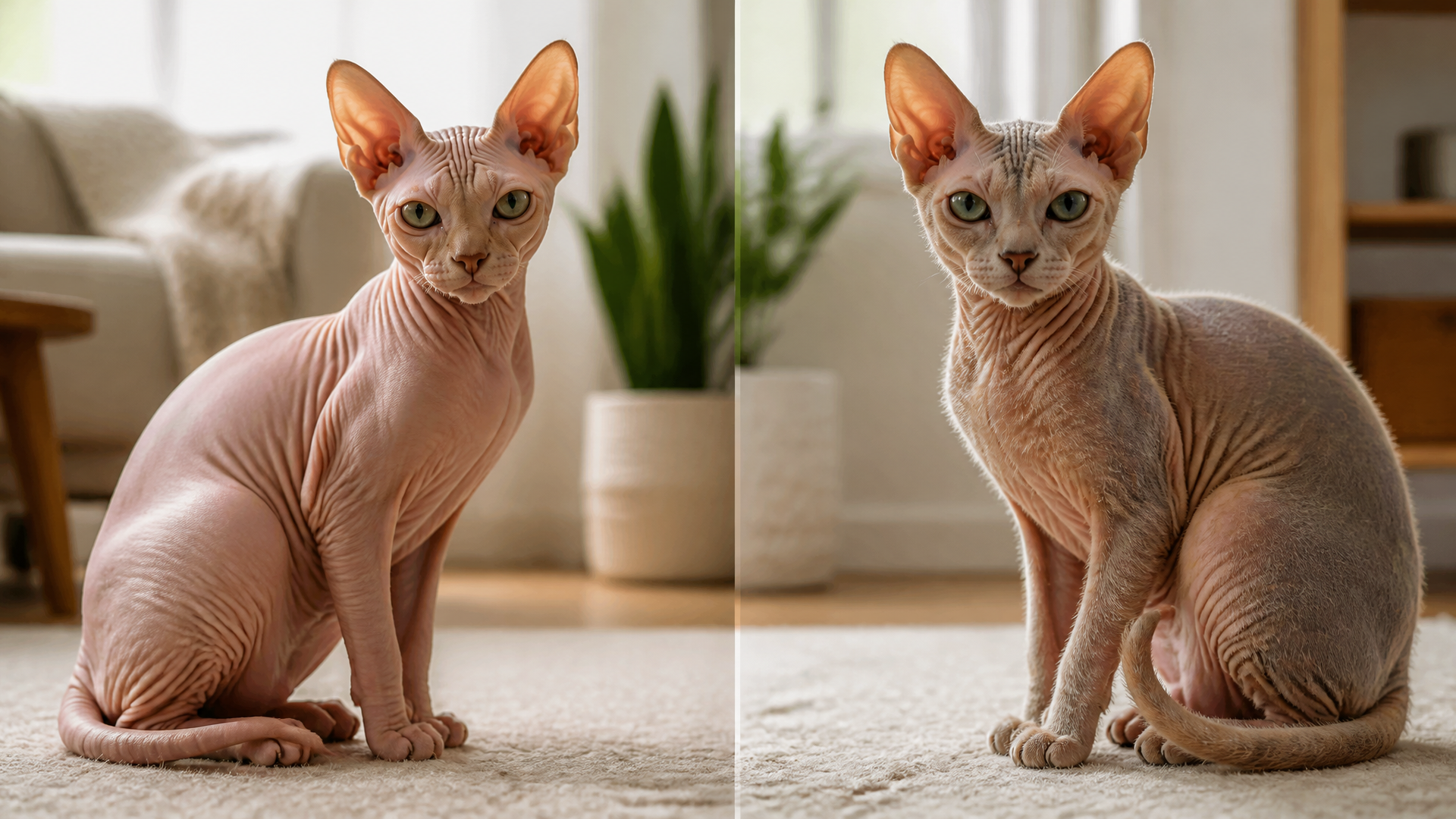
Yes, a Sphynx cat can have hair. Most Sphynx grow a fine, peach-fuzz layer of down hair on their ears, nose, tail, and paws. Some develop short fur patches on their back or shoulders. This is normal variation caused by the breed’s recessive hairless gene — not a sign of mixed breeding or a health defect. That fuzz does not change the core care routine: you still bathe weekly, moisturize, and protect their skin from sun and cold.

The amount of hair varies by individual genetics, age, and even season. Kittens often have more visible fuzz that thins as they mature. Older cats may develop patchy hair due to hormonal shifts. As long as your cat lacks a full protective coat, the care routine in this guide applies exactly.
What Does “Hair” on a Sphynx Look Like?
The amount and feel vary from cat to cat. Use this table to identify what you are seeing:
| Hair type | Where it appears | How it feels |
|---|---|---|
| Downy fuzz (common) | Face, tail, paws, ears | Like warm suede — barely noticeable |
| Short body hair (less common) | Back, shoulders, thighs | Soft, light undercoat — often seasonal |
| Patchy hair (rare) | Irregular spots on body | May be slightly coarser; can signal hormonal changes |
Key point: Even a Sphynx with visible hair still lacks a full protective coat. Their skin remains oily, sun-sensitive, and prone to chafing. The fuzz does not reduce skin care needs.
Caring for a Sphynx With Fuzz: 4 Practical Tips
Bathe Weekly
The down hair does not absorb natural oils the way a full coat would. Sebum builds up just as fast and can lead to acne, greasy patches, or skin infections. Sphynx produce more oil than furred cats because there is no hair to wick it away. The fuzz actually traps oil closer to the skin, so skipping a bath can cause buildup faster than on a completely bald cat.
Action: Bathe once a week with a gentle, hypoallergenic cat shampoo — never human soap or dish detergent. Use a soft silicone scrub brush or grooming glove to loosen oil without scratching the skin. Focus on the back, chin, and tail base where oil collects most.
Common mistake: Assuming less hair means fewer baths. The fuzz holds oil against the skin, making weekly washing mandatory. If you skip, you will see greasy patches and a musty smell within days.
Moisturize After Every Bath
Sphynx skin dries quickly after washing, especially in winter. The fuzz can hide dryness until cracks or flakes appear. Because the coat is minimal, moisture evaporates faster than on a furred cat.
Action: Apply a vet-recommended cat-safe moisturizer after each bath while the skin is still slightly damp. A pea-sized amount of coconut oil rubbed onto the ears, nose, tail, and paw pads works for most cats. For cats with sensitive skin, use a fragrance-free pet lotion designed for hairless breeds.
Common mistake: Using human lotions, baby oil, or products with essential oils. These can irritate or be toxic if licked off. Always check the ingredient list — avoid alcohol, fragrances, and lanolin.
Use a Carrier That Protects Their Skin
Even with fuzz, Sphynx have no insulation. Hard plastic carriers can rub their skin raw, especially on the nose, elbows, and tail tip. The fuzz does not provide padding or temperature regulation.
Action: Choose a soft-sided, insulated carrier like the GAPZER Pet Carrier for Large Cats. Line it with a fleece blanket or a low-heat pet-safe heating pad when traveling in cold weather. For a Sphynx up to 20 lbs, the 18.1″L x 11.8″W x 11.8″H size usually works — measure your cat from nose to tail base and compare to the interior dimensions.
Verification step: Before buying, place your cat in the carrier at home. There should be 1–2 inches of clearance above the head and room to turn around. Too tight chafes; too roomy causes the cat to slide during travel.
Common mistake: Assuming the fuzz provides enough warmth. It does not. Sphynx need extra bedding and clothing when the temperature drops below 70°F. The carrier’s insulation is your first line of protection.
Check the Skin Under the Fuzz Weekly
Hair can hide early signs of irritation, yeast overgrowth, or sunburn. Sphynx are prone to fungal infections in skin folds, and the fuzz can make these hard to spot until they become odorous.
Action: Run your hands over your cat daily — feel for bumps, greasy spots, matted fuzz, or rough patches. Once a week, part the fuzz with your fingers and look at the skin underneath, especially the armpits, belly, and tail base. Check ears and nose — they sunburn easily even with fuzz.
Common mistake: Assuming the fuzz protects from UV rays. It does not. Limit direct sun exposure between 10 a.m. and 4 p.m., or apply a cat-safe sunscreen to the ears, nose, and any thin-haired areas.
Are Sphynx With Hair Less Work?
No. The care checklist is identical regardless of hair amount. Here is your weekly maintenance routine:
- Bathe with a gentle cat shampoo (1x per week)
- Clean ears with a vet-approved ear cleaner — Sphynx produce more ear wax than other breeds (weekly)
- Trim nails (every 10–14 days)
- Brush fuzz with a soft silicone grooming glove (1x per week) if the hair is long enough to trap dirt
- Moisturize after baths (weekly)
- Apply sunscreen before outdoor time (as needed)
- Provide warm bedding — fleece or heated pads below 70°F
The only minor difference: a Sphynx with more body hair may trap dirt and oils in the fuzz. You might need to gently brush once a week with a soft grooming glove to remove debris. That adds 2–3 minutes to the weekly routine.
Practical implication: If you are choosing between a Sphynx with visible fuzz and one that appears completely bald, the workload is the same. The fuzz does not reduce bathing, moisturizing, or sun protection. Expect the same commitment and budget. Sphynx with heavier fuzz may actually need slightly more brushing to prevent matting, but no less bathing.
Real Trade-Offs to Know
- Brushing versus skin irritation: A Sphynx with heavier fuzz benefits from weekly gentle brushing to prevent matting, but brushing too hard can irritate the skin. Use a soft silicone grooming glove, never a wire brush or slicker brush. If you see red marks, stop and use just your hands.
- Oil buildup: The fuzz can trap oils against the skin faster than bare skin would. If you notice greasy patches between baths, use a damp microfiber cloth to spot-clean affected areas rather than bathing the whole cat more often (which can dry the skin).
- Product fit: Shampoos and moisturizers labeled “for hairless cats” work perfectly on fuzzed Sphynx — just ensure they are fragrance-free, alcohol-free, and pH-balanced for cats. Avoid products with oatmeal if your cat has known allergies.
- Seasonal hair changes: Some Sphynx grow slightly more fuzz in winter and shed it in summer. This is normal. If you see bald patches with redness or flaking, that signals a skin issue — get a veterinary exam.
Decision Aid: Is a “Hairy” Sphynx Right for You?
Use this quick checklist before adopting:
- I am prepared to bathe my cat weekly regardless of hair length.
- I have budgeted for hypoallergenic shampoo and cat-safe moisturizer ($15–$30 per bottle, lasting 2–3 months).
- I will limit sun exposure or apply cat-safe sunscreen on exposed skin.
- I can provide warm, soft bedding and a heated carrier for travel.
- I plan to check the skin weekly even if fuzz hides problems.
If you check all five, a Sphynx with visible fuzz is a fine choice. If you expected less maintenance because of the hair, this breed is not for you. The fuzz does not reduce the work — your willingness to do weekly maintenance determines whether the breed fits your lifestyle.
Quick Reference: Weekly Care Card
- Bath day: Monday or any fixed day. Shampoo with gentle, fragrance-free formula.
- Ear cleaning: Same day as bath. Use cotton ball with ear cleaner — never cotton swabs.
- Nail trim: Every 10–14 days. Use guillotine or scissor-style cat nail clippers.
- Skin check: After bath. Look for redness, bumps, flaking, or greasy spots.
- Moisturize: After bath. Rub coconut oil or pet lotion on ears, nose, tail, paw pads.
- Sunscreen: Apply 15 minutes before any outdoor time. Reapply every 2 hours.
Summary: Caring for a Sphynx With Hair
This guide covers the essentials for keeping a Sphynx with fuzz clean, moisturized, and protected. The care routine is the same as for any Sphynx — weekly baths, ear cleaning, nail trims, and skin checks. The fuzz adds a minor brushing step but no reduction in overall commitment. Use this reference for your weekly maintenance schedule.
This article contains affiliate links. We may earn a small commission if you purchase through them, at no extra cost to you.