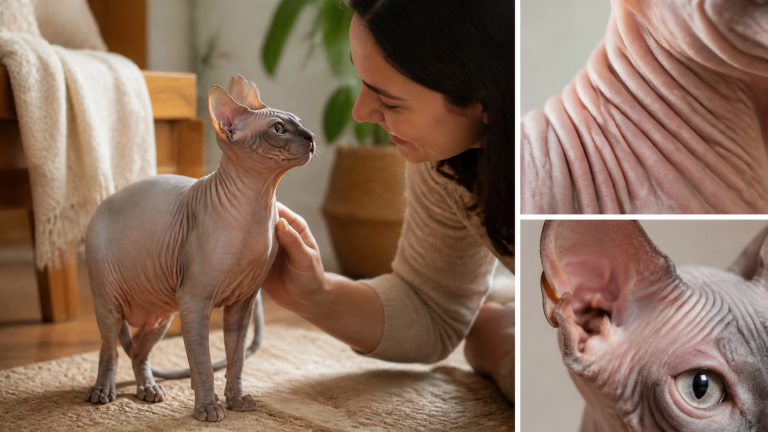
Sphynx Cat Diet: Daily Routine & Expert Tips
Your Sphynx cat needs about 20–30% more calories than a typical domestic shorthair of the same weight. That bare skin means their metabolism runs hot just to stay warm. Feed 3–4 small meals daily, prioritize wet food over dry, and adjust portions based on body condition — not the bag’s feeding chart.

The counter-intuitive truth most generic guides skip: Sphynx cats do better on wet food as their primary diet, even though dry kibble is more convenient for owners. The extra moisture prevents urinary tract issues, which this breed is prone to because they tend not to drink enough on their own. Read on for the exact routine, portion sizes, and what to watch for.
Some links in this guide may be affiliate links. We may earn a small commission at no extra cost to you.
What You’ll Need Before Starting
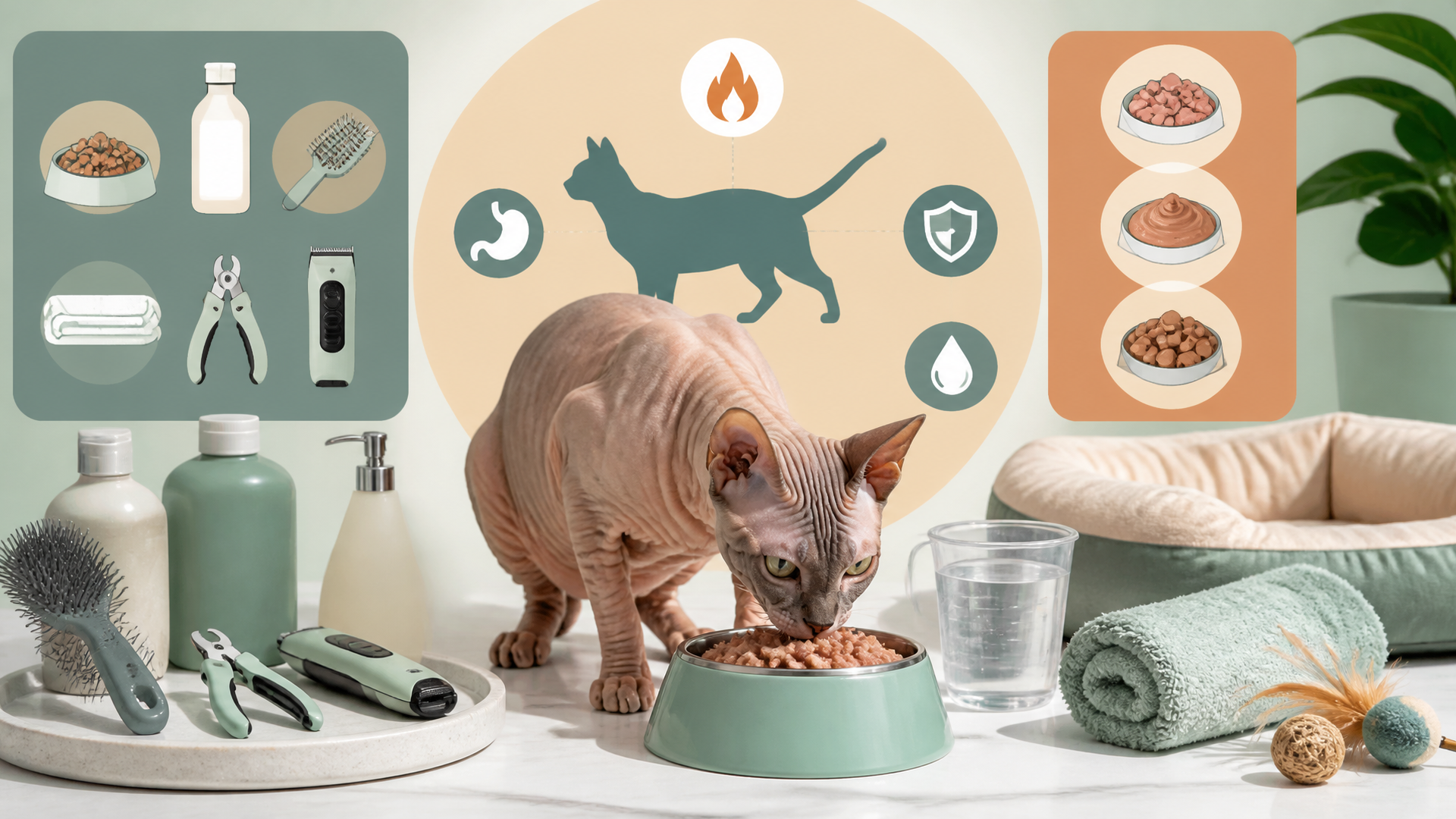
Gather these essentials before setting up your Sphynx’s daily feeding routine:
- Digital kitchen scale — measuring cups are too inconsistent for accurate portions.
- Ceramic or stainless steel bowls — plastic bowls trigger chin acne in Sphynx cats more often than in other breeds because their skin oils trap bacteria.
- Cat water fountain — Sphynx cats are picky about water and often refuse stale bowls; a fountain increases intake by up to 50%.
- High-protein wet and dry food — look for 40%+ protein on a dry matter basis with a named meat as the first ingredient.
- Fish oil supplement — omega‑3s support skin health and prevent the greasy coat that plagues many Sphynx cats.
Quick Check: Is Your Current Diet Actually Working?
Run through these five signs before making any changes. Each is a simple pass/fail check:
- Skin feel — Should be warm and soft, not greasy or flaky. (Pass / Fail)
- Stool quality — Firm and formed logs, not loose or crumbly. (Pass / Fail)
- Weight — Ribs felt with light pressure but not seen; waist visible from above. (Pass / Fail)
- Energy level — Steady throughout the day, not lethargic or hyperactive right after meals. (Pass / Fail)
- Skin condition — No blackhead buildup on chin, tail, or between skin folds. (Pass / Fail)
If two or more are fails, move directly to the routine below. If all five pass, your current plan is working — just re-check every two weeks.
Step-by-Step: Build Your Daily Feeding Routine
Step 1: Calculate Daily Calories
A typical 8–10 pound Sphynx needs 280–350 calories per day. Start at 300 calories and adjust based on body condition. Use a food scale, not measuring cups — kibble density varies significantly between brands, and a ¼-cup scoop can be off by 30 calories or more.
Step 2: Choose Your Food Base
| Food Type | Best For | Key Requirement |
|---|---|---|
| Wet food (canned or pouch) | Primary diet | 40%+ protein, named meat as #1 ingredient |
| Dry food (kibble) | Complement only | 35%+ crude protein, small kibble size for easier eating |
| Raw or freeze-dried | Experienced owners | Commercially balanced formula only — no DIY raw |
Preferred brands for Sphynx: Tiki Cat After Dark, Wellness CORE Grain-Free, and Royal Canin Sphynx Adult (breed-specific kibble size). The Royal Canin option is one of the few kibbles shaped specifically for a Sphynx’s jaw structure.
Step 3: Set Your Meal Schedule
| Age Group | Meals Per Day | Daily Total |
|---|---|---|
| Kitten (8–12 weeks) | 4 | 1–1.5 oz wet per meal + free-feed dry between meals |
| Kitten (3–6 months) | 3 | 2–3 oz wet per meal + limited dry |
| Adult (1–7 years) | 2–3 | 2–3 oz wet per meal + ¼–⅓ cup dry |
| Senior (8+ years) | 3 small meals | 1.5–2 oz wet per meal + easily digestible dry |
Step 4: Serve Properly
- Wet food: Warm to room temperature — cold food can upset a Sphynx’s sensitive stomach.
- Dry food: Weigh each portion on your kitchen scale.
- Water: Refresh twice daily in a clean bowl or fountain.
- Transitions: Mix 25% new food with 75% old food for 2 days, then 50/50 for 2 days, then 75/25 for 2 days, then 100% new.
Step 5: Verify It’s Working
After two weeks, re-run the Quick Check above. Here’s how to confirm success: Your Sphynx should have firm, dark brown stools that hold their shape when picked up. Skin should feel warm and dry, not greasy to the touch. If you see these two signs plus steady energy, your portions are correct.
Hang onto your food scale log — it prevents guessing and makes it obvious when something changes.
Common Diet Problems and the Mistake Pattern That Trips Up Owners
| Problem | Likely Cause | Fix |
|---|---|---|
| Greasy or dull skin | Low omega-3 intake | Add fish oil or switch to food with flaxseed |
| Loose stools | Food intolerance or rushed transition | Switch to a single-protein diet; extend transition to 10 days |
| Weight gain | Overfeeding or too many carbs | Cut portion by 10%; switch to a lower-carb food |
| Constant begging | Not enough calories or too many treats | Check total daily calories first, then reduce treats to 10% of intake |
| Chin acne | Plastic bowls or greasy food residue | Switch to ceramic or steel; wipe chin gently after meals |
The most common mistake pattern: Owners switch to a high-protein wet food but keep free-feeding dry kibble. The result is a cat that eats the kibble first (leaving wet food to spoil), then begs for more because the kibble is lower in moisture and protein. Fix this by removing dry food between meals. Offer wet food on a set schedule, and only offer dry as a measured portion at mealtime — not as a buffet.
When to Call Your Vet — The Concrete Stop Threshold
These signs mean it’s time to stop at-home diet changes and talk to your vet:
- Sudden weight loss of more than 5% of body weight in two weeks (for a 10-lb cat, that’s 8 oz lost).
- Vomiting more than once per week.
- Blood in stool or persistent diarrhea beyond three days.
- Lethargy that lasts more than 24 hours after a meal change.
- Skin sores or rashes that don’t improve after 7 days of diet adjustments.
One clear escalation signal your vet needs to know immediately: If your Sphynx stops eating entirely for 12 hours (half a day), call your vet — not a food brand’s customer service. Sphynx cats have a high metabolic rate, and going without food for even a full day can trigger hepatic lipidosis (fatty liver disease), which is serious and requires medical intervention.
Save This Guide
Your Sphynx’s diet is the single biggest factor in their health and comfort. Feed wet food as the primary diet, supplement with omega‑3s for skin health, and check body condition every two weeks rather than relying on the bag’s feeding chart.
Key takeaway: Sphynx cats need 20–30% more calories than other breeds, thrive on wet food, and need consistent portion control using a kitchen scale. Keep this guide handy when adjusting your cat’s meals — it prevents guesswork and helps catch problems early.