Fawn Abyssinian Cat: Guide: What Every Owner Should Know
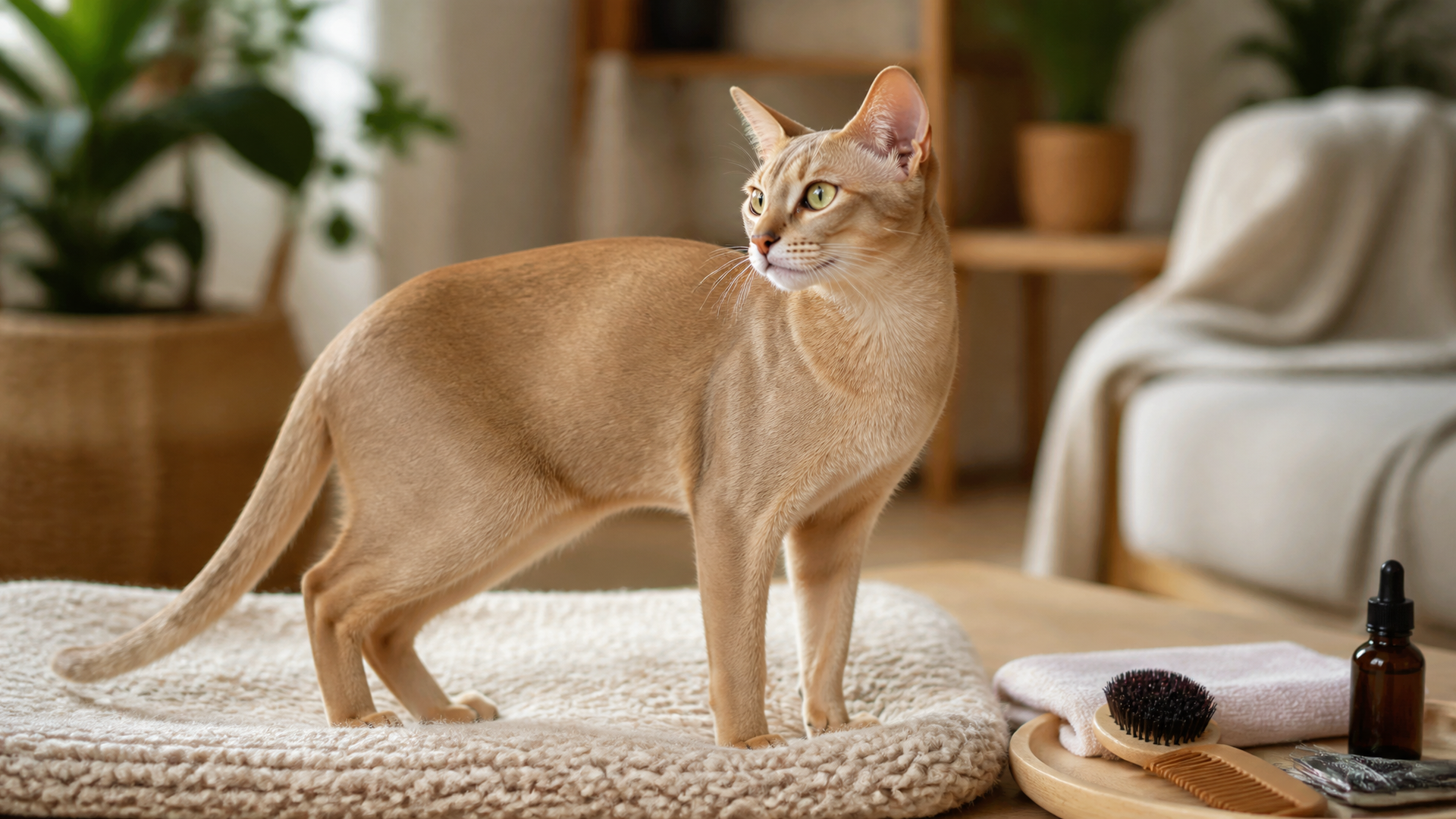
A fawn Abyssinian is a rare, warm golden-beige version of the active and intelligent Abyssinian breed. Their coat color comes from a recessive gene, and finding a breeder who prioritizes health testing over color is the single most important step you can take. If you’re considering one, start by verifying the breeder’s genetic test results — not just for the kitten, but for both parents.

What this means for your next step: If you’re buying a kitten, invest in a health-tested line rather than a color-focused breeder. A fawn kitten from parents cleared for PRA, renal amyloidosis, and patellar luxation will save you thousands in vet bills and heartache later. If you adopt an adult, budget for annual kidney and eye screenings starting at age 3.
How to Recognize a True Fawn Abyssinian
Many cats labeled “fawn” are actually diluted reds or poorly bred mix-colors. Real fawn Abyssinians have distinct markers that separate them from other accepted colors.
| Feature | Fawn | Ruddy | Red (Sorrel) | Blue |
|---|---|---|---|---|
| Base coat | Warm pale beige, creamy ivory undercoat | Warm brown with black ticking | Coppery orange with chocolate ticking | Soft blue-gray with darker blue ticking |
| Ticking color | Warm fawn-brown | Black or dark brown | Chocolate brown | Dark blue-gray |
| Nose leather | Pinkish-beige | Brick red | Pinkish-coral | Slate blue |
| Paw pads | Pinkish-beige | Black or dark brown | Pink | Slate blue |
| Tail tip | Fawn-brown | Black | Chocolate | Dark blue |
| Eye color | Gold to green with dark ring | Gold to green with dark ring | Gold to green with dark ring | Gold to green with dark ring |
A concrete verification step: Ask the breeder for a photo of the kitten’s nose leather and paw pads taken in natural light. If the nose has a gray tint or the pads are dark, the cat may not be a true fawn. Request the genetic color result from the breeder’s testing (PawPrint Genetics offers a color panel) to confirm both parents carry the fawn allele.
Temperament: High Energy Meets High Affection
Fawn Abyssinians are not lap cats in the traditional sense — they want to be near you, participating in everything you do. Expect a cat that follows you room to room, climbs to high perches, and “helps” with laundry or desk work.
- Activity level: Minimum 30–45 minutes of active play daily. Without it, they’ll invent their own entertainment — often on countertops, curtains, or inside cabinets.
- Social needs: They do poorly with long alone hours. If you work outside the home, adopting two active cats or a second Abyssinian is strongly recommended.
- Trainability: They learn fetch, high-five, and leash walking quickly. Many owners train their Abyssinian to walk on a harness — safer than outdoor roaming and satisfies their curiosity.
Realistic trade-off: If you travel frequently or work 10-hour days, an Abyssinian may develop separation anxiety, destructive scratching, or excessive vocalization. Consider a lower-energy breed like a British Shorthair, or commit to adopting a bonded pair.
For vet visits or travel, a secure carrier is essential. The GAPZER Pet Carrier for Large Cats is escape-resistant and roomy enough for an active Abyssinian to stand and turn around.
Coat Care: Low Maintenance for a Stunning Look
Fawn Abyssinians have a single coat (no thick undercoat) that requires minimal grooming compared to longhaired breeds.
| Task | Frequency | Recommended Tool |
|---|---|---|
| Brushing | Once weekly | Rubber curry brush or grooming glove |
| Nail trimming | Every 2 weeks | Cat nail grinder or clippers |
| Ear cleaning | Monthly | Cotton ball + vet-approved cleaner |
| Bathing | Only when necessary | Gentle cat shampoo |
Expert tip #1: Use a rubber grooming glove instead of a traditional brush. Abyssinians have fine, close-lying fur, and a glove removes loose hair without irritating sensitive skin. Common mistake: over-brushing with a slicker brush can damage the coat’s natural luster and cause redness.
Expert tip #2: Fawn coats are prone to sun bleaching if your cat lounges in sunny windows. Place a shaded cat tree or install UV-blocking window film to keep the warm golden tone. Common mistake: assuming indoor cats don’t get sun exposure — even a few hours of direct sun through glass can lighten the ticking pattern.
Expert tip #3: Feed a high-protein, omega-3-rich diet to support coat quality. A quarter teaspoon of salmon oil per day helps maintain the fawn color’s