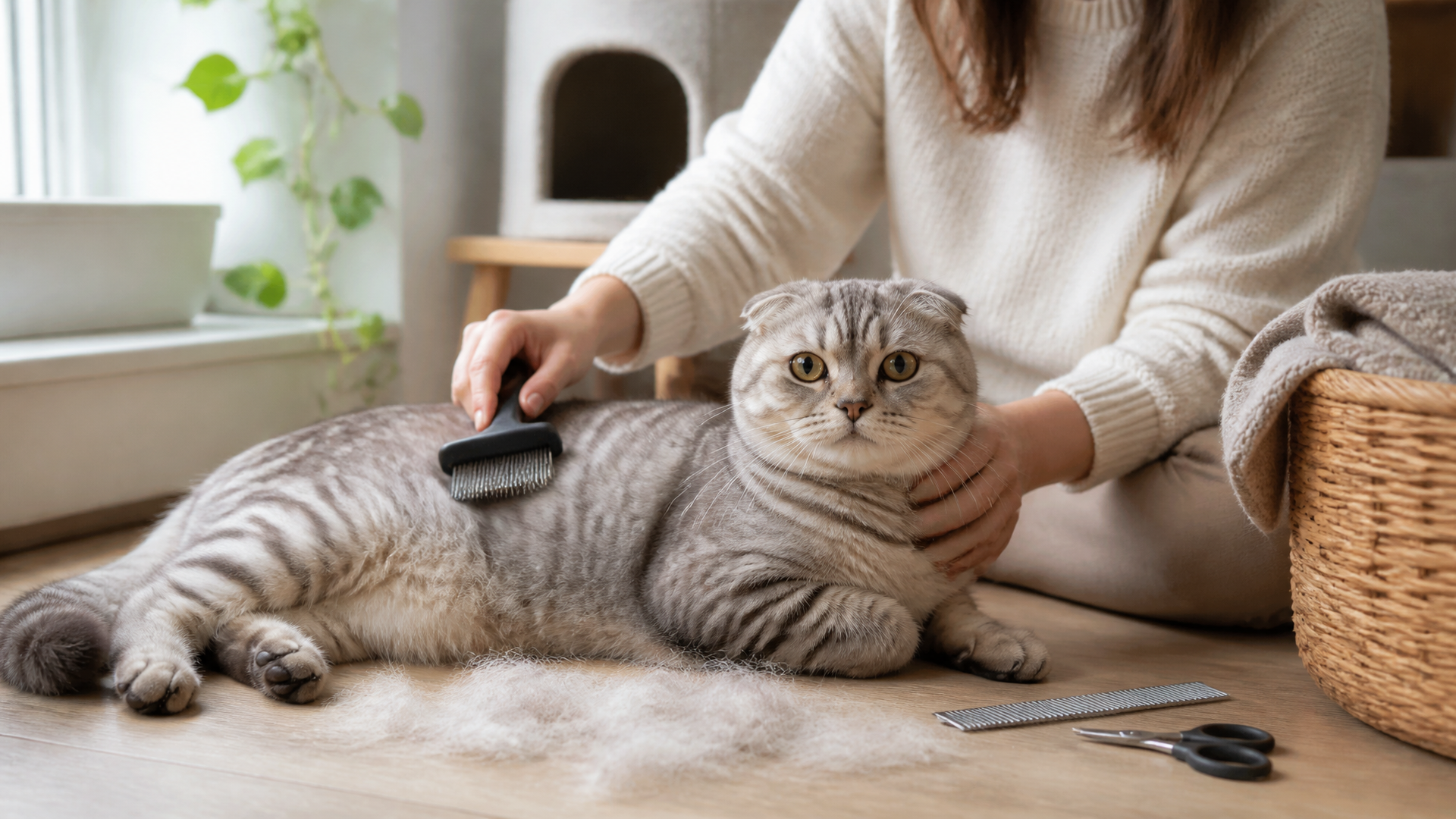
do Scottish Folds Shed a Lot
Scottish Folds shed. It’s a plain fact. Their plush double coat means you’ll find fur on your furniture, clothes, and floors year-round, with heavier shedding during spring and fall. The good news: with the right routine, the shedding is completely manageable.

Quick Answer
Yes, Scottish Folds shed noticeably because they have a dense double coat that releases fur continuously. Shorthaired Folds shed moderately year-round, while longhaired Folds shed more heavily and need daily grooming during peak seasons. The folded ear trait has no effect on shedding — coat type determines how much fur ends up on your sofa. With consistent brushing (2–3 times per week) and seasonal deshedding, you can keep the fur under control without turning your home into a tumbleweed factory.
Tools and Prerequisites
Using the wrong brush can irritate your Fold’s skin or fail to reach the undercoat. Here’s what you actually need:
| Tool | Purpose | When to Use |
|---|---|---|
| Slicker brush (fine wire pins) | Removes loose fur from topcoat and undercoat | 2–3 times per week |
| Pin brush (stainless steel, rounded tips) | Gently detangles and smooths the coat | Weekly |
| Deshedding tool (rake-style undercoat comb) | Pulls out dead undercoat fur | Once a week during spring and fall only |
| Grooming glove | Light daily maintenance and bonding | Daily (optional) |
| Metal flea comb | Checks for dandruff, fleas, or matting near ears | Weekly |
Important caution: Don’t overuse a deshedding tool like a Furminator. Scottish Folds have a sensitive double coat, and excessive raking can damage the outer guard hairs or irritate their skin. Limit it to the heavy shedding periods in March through May and September through November.
A 5-Point Shedding Check: Is Your Routine Enough?
Use this quick checklist to decide if your current grooming plan is working or needs an upgrade. Check each item that applies to your cat.
- [ ] My cat is a longhaired Scottish Fold (thicker undercoat means more visible shedding)
- [ ] I find fur tumbleweeds on floors or furniture every single day
- [ ] It’s currently spring or fall (shedding doubles during these seasons)
- [ ] My cat has dandruff, dry skin, or bald patches (may indicate diet issue or need for vet visit)
- [ ] I’ve never used a deshedding tool or only brush once a month
What your score means:
- 0–1 checks: Your routine is probably fine. Stick with 2–3 weekly brushings.
- 2–3 checks: You’ll benefit from a more structured grooming plan (see steps below).
- 4–5 checks: Time to act. Your Fold is likely leaving fur everywhere, and there may be an underlying issue with diet, health, or stress.
Step-by-Step Grooming Plan for Shedding Control
Each session takes about 10–15 minutes. This routine works for both shorthaired and longhaired Scottish Folds.
Step 1: Start with the Slicker Brush
Work from the neck toward the tail, brushing in the direction of hair growth. Use light, gentle strokes so the pins reach the undercoat without scratching the skin. Focus on the flanks, belly, and behind the legs — these are the spots where loose fur collects most.
Checkpoint: After one full pass, your brush should have a visible layer of fur. If it’s nearly empty, you’re not brushing deep enough to reach the undercoat.
Realistic branch: If the brush shows mostly short, soft undercoat hairs with little topcoat, that’s normal. But if you see only long guard hairs (the shiny outer coat), you’re brushing too lightly — ease up on pressure and angle the brush tips deeper into the fur, or switch to a pin brush first to part the coat.
Step 2: Switch to the Pin Brush for Detangling
Use the pin brush to smooth out any small tangles, especially behind the ears and along the ruff (the thicker fur around the neck). Longhaired Folds need extra attention here — run your fingers through the coat to feel for lumps that signal developing mats.
Decision point: If you find a mat smaller than your thumb, you can work it apart with a metal comb or your fingers. For mats larger than that, stop brushing immediately — pulling at them hurts the cat and damages the coat. Instead, use a detangling spray, let it sit for a few minutes, then carefully tease the mat apart from the edges. If it doesn’t release, clip it out with rounded-tip safety scissors or see a groomer. Never cut toward the skin.
Step 3: Use the Deshedding Tool (Seasonal Only)
During spring and fall, add a deshedding tool to your weekly routine. Work in small sections, brushing with the grain. Stop if you see resistance or the cat shows discomfort. A light hand is key — you’re removing dead undercoat, not scraping the skin.
Success check: After deshedding, the fur on your brush should be thick and fluffy (undercoat), not wiry (guard hairs). If you’re pulling mostly guard hairs, ease up on pressure.
Step 4: Finish with the Grooming Glove
Run a grooming glove over your Fold’s entire body to catch any remaining loose hairs. Most cats enjoy this step — it feels like a gentle massage. It’s also your best opportunity to check for skin issues, bumps, or parasites while your cat is relaxed.
Step 5: Wipe Down with a Damp Cloth
Dampen a soft microfiber cloth with warm water and lightly wipe your cat’s coat. This collects fine fur that brushes missed and helps distribute natural oils for a healthier coat. It’s especially helpful during heavy shedding months.
Troubleshooting: When Shedding Signals a Problem
Not all shedding is normal. Watch for these signs that something deeper might be going on:
| Symptom | Likely Cause | What to Do |
|---|---|---|
| Bald patches or thinning fur | Stress, allergies, or skin infection | Vet visit for skin scrape or allergy testing |
| Excessive scratching alongside shedding | Fleas, mites, or food allergy | Check with flea comb; switch to grain-free diet trial |
| Dull, brittle coat with increased shedding | Poor nutrition or dehydration | Upgrade to high-protein wet food; add omega-3 supplement |
| Sudden heavy shedding in winter | Indoor heating drying out skin | Add humidifier to main living areas |
When to escalate — stop DIY and call your vet: If your Scottish Fold develops bald spots, redness, or starts over-grooming (licking fur off in patches), do not attempt more brushing or home remedies. These symptoms won’t resolve with grooming alone and often require a vet’s diagnosis. Also escalate if you notice a sudden change in appetite, lethargy, or if the cat is pulling out clumps of fur during a grooming session. These are concrete thresholds — mark your calendar and if symptoms persist beyond 3 days, schedule an appointment.
Related Questions
Do longhaired Scottish Folds shed more than shorthaired?
Yes. Longhaired Folds have a thicker undercoat that produces more visible shedding, especially around the ruff and tail. They need daily brushing during spring and fall, while shorthaired Folds can get by with 2–3 times per week.
Can diet reduce shedding in Scottish Folds?
A high-quality diet rich in omega-3 fatty acids (from salmon oil or flaxseed) supports a healthier coat and can reduce excessive shedding. Look for cat foods with named protein sources like chicken or turkey as the first ingredient, and add an omega-3 supplement after checking with your vet.
Is there a way to stop Scottish Folds from shedding entirely?
No. Shedding is a natural process for a healthy double coat. The goal is management, not elimination. Consistent grooming, good nutrition, and a humidifier during dry months will keep fur under control, but you’ll always see some loose hair.
Save This Guide: Scottish Folds shed year-round (more in spring and fall), but a 10-minute weekly routine with the right tools keeps it manageable. Brush 2–3 times per week with a slicker brush, use a deshedding tool only during peak seasons, and watch for bald patches or scratching that signal a deeper issue. Following this plan keeps your Fold’s coat healthy and your furniture mostly fur-free.
This article contains affiliate links. We may earn a small commission if you purchase products through them, at no extra cost to you.