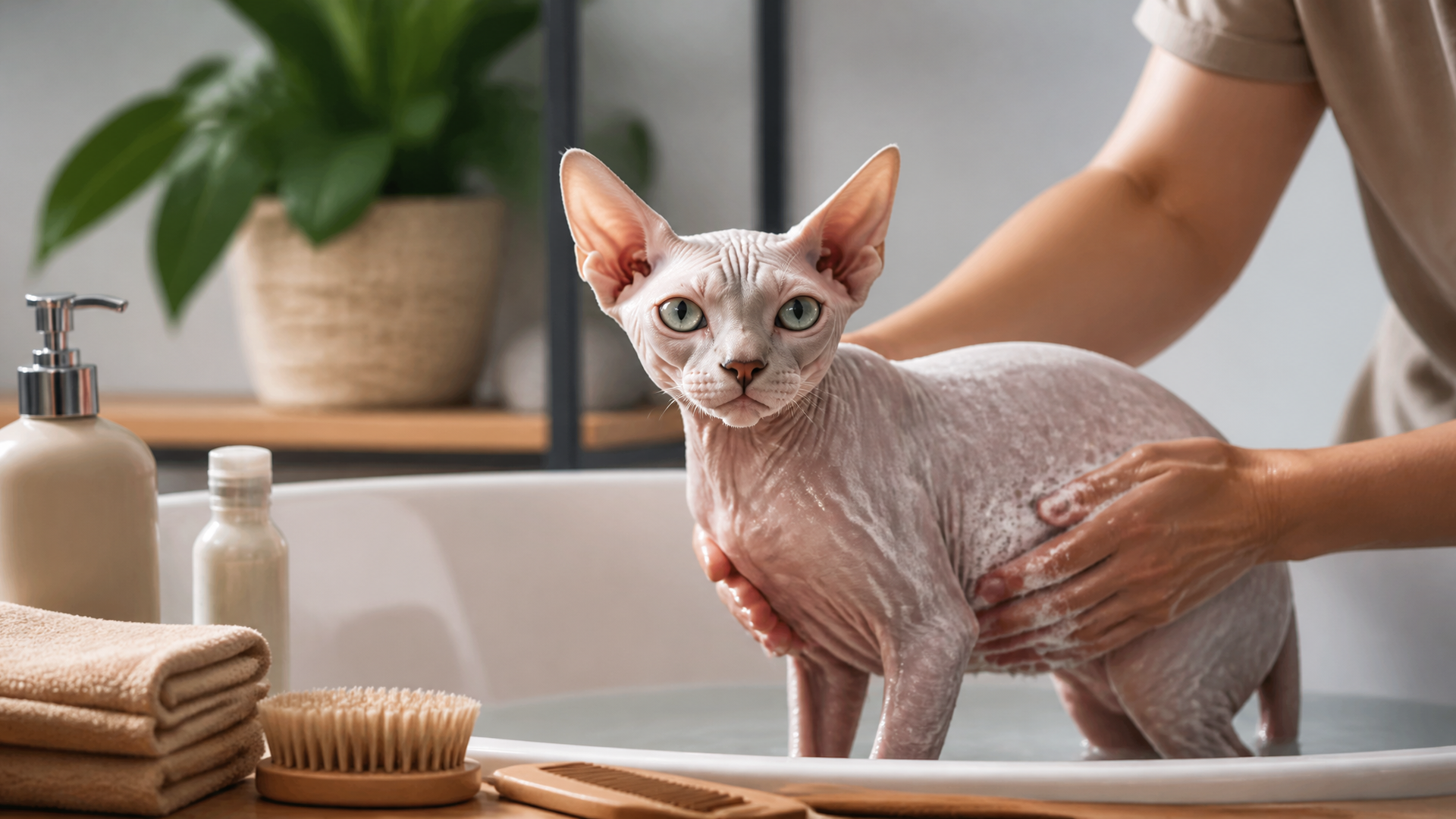
Bathe a Sphynx Cat: Complete Guide for Sphynx Owners
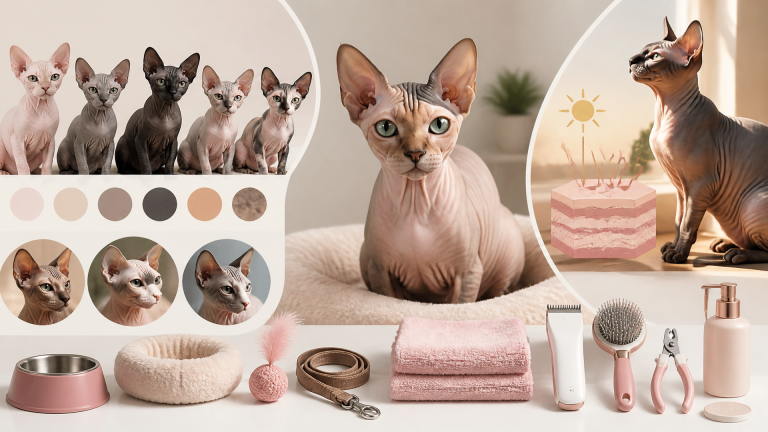
Bathe your Sphynx every 2–4 weeks using lukewarm water and a gentle, hypoallergenic cat shampoo. Yes, they need baths—even without a fur coat—because their skin produces excess oil that can lead to dirt buildup, acne, and skin infections if left unchecked.

Start With the Right Frequency
Most Sphynx cats need a bath every two to four weeks. Some oily-skinned individuals may need weekly baths during humid months, while drier-skinned cats can stretch to five weeks. The trick is to find your cat’s sweet spot:
- Too often (weekly or more): strips natural oils, causing dry, flaky skin and irritation.
- Too seldom (monthly+ with heavy oil): leads to brown waxy residue on furniture, blackheads, and fungal infections.
Watch for these signs it’s bath time:
- Greasy, shiny patches on the skin (especially on the back, tail, and chin).
- A musty or sour odor.
- Dirt or dust sticking to the skin.
- Visible blackheads or acne along the chin or tail.
Here’s a counter-intuitive truth most owners miss: Sphynx cats can actually get dirtier than furry cats. Without hair to wick oil away, the oil sits directly on the skin, collecting dust and debris. Regular baths prevent that grime from turning into skin problems.
What You’ll Need
Before you start, gather everything in one spot. Rushing to find a towel mid-bath stresses both of you.
| Item | Why it matters |
|---|---|
| Gentle cat shampoo | Avoid human or dog shampoos. Look for fragrance-free, hypoallergenic formulas (e.g., HyLyt, DermAllay, or a tearless kitten shampoo). |
| Two large, soft towels | Sphynx cats lose body heat fast—drying immediately is critical. |
| Non-slip bath mat | Prevents slipping in the tub or sink. Sphynx cats are already nervous; a slippery surface makes it worse. |
| Soft washcloth | For cleaning the face, ears, and folds without irritating eyes. |
| Lukewarm water | Test with your wrist—should feel barely warm, not hot. Sphynx skin is sensitive. |
| Cotton balls | Lightly place in ears to keep water out (do not push deep). |
| Olive or coconut oil (optional) | A few drops in the shampoo can help very dry skin. |
Product recommendation: Veterinary Formula Clinical Care Hypoallergenic Shampoo – it’s mild, tearless, and widely used for Sphynx. (We may earn a commission if you purchase through links on this page. As an Amazon Associate we earn from qualifying purchases.)
Step-by-Step Bathing Routine
1. Pre-Bath Prep (5 minutes)
- Brush your cat’s nails or do a nail trim first—baths are less stressful without sharp claws.
- Place a cotton ball loosely in each ear to block water.
- Run the water to lukewarm while your cat is still dry.
Checkpoint: If your cat is hissing or trembling, stop and try a dry-wipe session instead. Forced baths create long-term fear.
2. Wet the Body (1–2 minutes)
- Use a handheld sprayer or a cup. Avoid the face and ears at this stage.
- Pour water slowly down the back and sides. Sphynx cats usually dislike water hitting their head.
3. Apply Shampoo (2 minutes)
- Dilute shampoo with water (1:3 ratio) in a small bowl. This makes rinsing easier.
- Use your hands or a soft washcloth to lather the whole body, including the tail and between toes.
- For the face: wet the washcloth and wipe gently around the eyes, chin, and ear edges. Do not use shampoo on the face unless the vet recommends it.
4. Rinse Thoroughly (3–4 minutes)
- This is the most important step. Residual shampoo causes itchiness and dandruff.
- Rinse until the water runs clear. Lift skin folds gently to check for trapped soap.
Stop check: If you smell shampoo on your cat’s skin, you haven’t rinsed enough. Run one more full rinse cycle.
5. Dry Immediately (5–7 minutes)
- Lift your cat out onto a towel on a warm, draft-free surface.
- Pat dry—do not rub. Rubbing can irritate sensitive skin.
- Use a second towel to absorb remaining moisture. Sphynx cats get chilled easily, so wrap them like a burrito and hold for a few minutes.
- If your cat tolerates it, use a hairdryer on the lowest heat and speed, held at least 12 inches away. Many Sphynx owners skip the dryer and just use towels.
Success check: Your cat’s skin should feel clean, slightly warm, and free of soap residue. No visible oil or dirt. If you see white flakes, you likely over-bathed or left soap residue.
Common Sphynx Bathing Mistakes (and How to Avoid Them)
Over-bathing
Bathing more than once a week strips the skin’s protective barrier. You’ll see flaking, redness, and increased oil production (the skin overcompensates). If your cat looks greasy two days after a bath, you may need a milder shampoo or a medicated wash from your vet instead of more frequent baths.
Using the Wrong Shampoo
Human shampoos, dish soap, and dog flea shampoos disrupt the pH balance of cat skin. Sphynx skin is especially alkaline-sensitive. Always use a shampoo labeled safe for cats (or Sphynx specifically).
Skipping the Rinse
Rinsing takes longer than you expect. Run one extra rinse cycle after you think you’re done. If you smell shampoo on your cat’s skin, you didn’t rinse enough.
Water in the Ears
Moisture leads to ear infections. Always use cotton balls, and never spray water directly toward the ear canal. After the bath, dry the outer ear with a soft cotton ball.
When to Skip the Bath and Call the Vet
Stop bathing and contact your veterinarian immediately if you notice:
- Open sores or crusty lesions – Could be a bacterial or fungal infection.
- Excessive dandruff despite proper bathing – May indicate seborrhea or an underlying health issue.
- Lethargy or vomiting after a bath – Rare but could signal hypothermia or a reaction to shampoo.
- Red, swollen skin patches – Possible allergy or chemical burn.
A Sphynx with healthy skin should be soft, smooth, and free of bumps or rashes. If you’re unsure, your vet can provide a medicated wash or recommend a veterinary dermatologist.
Bath Prep Checklist
Check these off before you start:
- [ ] Nails trimmed or dulled.
- [ ] Cotton balls in ears.
- [ ] Shampoo diluted and ready.
- [ ] Two dry towels within reach.
- [ ] Water temperature tested (wrist-warm).
- [ ] Non-slip mat in tub or sink.
- [ ] Hairdryer on low (optional) and ready.
- [ ] Room warm (no air conditioning or drafts).
- [ ] Treats nearby for post-bath reward.
Quick Answers to Common Questions
Can I use baby shampoo on my Sphynx?
No. Baby shampoo is not pH-balanced for cats and can dry out their skin. Stick to a gentle cat-specific shampoo.
My Sphynx hates baths—what should I do?
Start with a dry spa: wipe your cat daily with a damp washcloth so they get used to handling. Keep baths short and reward heavily with a favorite treat. If your cat becomes aggressive or extremely stressed, try waterless cat wipes between baths.
How do I prevent blackheads on my Sphynx’s chin?
Wipe the chin daily with a damp cotton ball or a gentle cat-safe acne wipe. Avoid plastic bowls (use ceramic or stainless steel). Regular baths help as well.
Can I use a dry shampoo instead of a wet bath?
Waterless cat foams and wipes work for light cleanup between baths, but they cannot replace a full bath for removing heavy oil buildup. Use wet baths as your main routine.
Save This Guide
Bathing your Sphynx every 2–4 weeks with lukewarm water, gentle cat shampoo, and thorough rinsing keeps their skin healthy and oil-free. Use the prep checklist above to make bath day fast and stress-free. Your Sphynx will thank you with a purr and a clean cuddle.