to Bichon Dogs Get Collapsed Trachea Symptoms in Dogs Pictures
Yes, Bichon Frises are one of the small breeds most prone to collapsed trachea. If your Bichon makes a honking cough that sounds like a goose, acts like something is stuck in their throat, or struggles to breathe after excitement, pay close attention. This condition can worsen quickly, but early detection and simple home changes can slow progression and keep your dog comfortable.

Affiliate disclosure: Some links below are affiliate links, meaning we may earn a commission at no extra cost to you.
Know the Warning Signs
Bichons have delicate windpipes (tracheas) that can narrow or collapse under pressure. The classic symptom is a harsh, dry, honking cough that:
- Gets worse when you pull on the leash or lift your dog under the chest
- Flares up after exercise, excitement, eating, or drinking
- Sounds like a goose honk or a cat coughing up a hairball
- May be accompanied by gagging, retching, or blue-tinted gums in severe cases
Not every honk is a collapsed trachea. Bichons also reverse sneeze — a rapid snorting sound that seems like they can’t breathe. Reverse sneezing usually stops within 30 seconds and is harmless. The difference: reverse sneezes are quick, noisy inhalations, while collapsed trachea produces a cough on exhalation. Record a 30-second video of the episode. Your vet can tell the difference in seconds.
What Collapsed Trachea Looks Like in Bichons
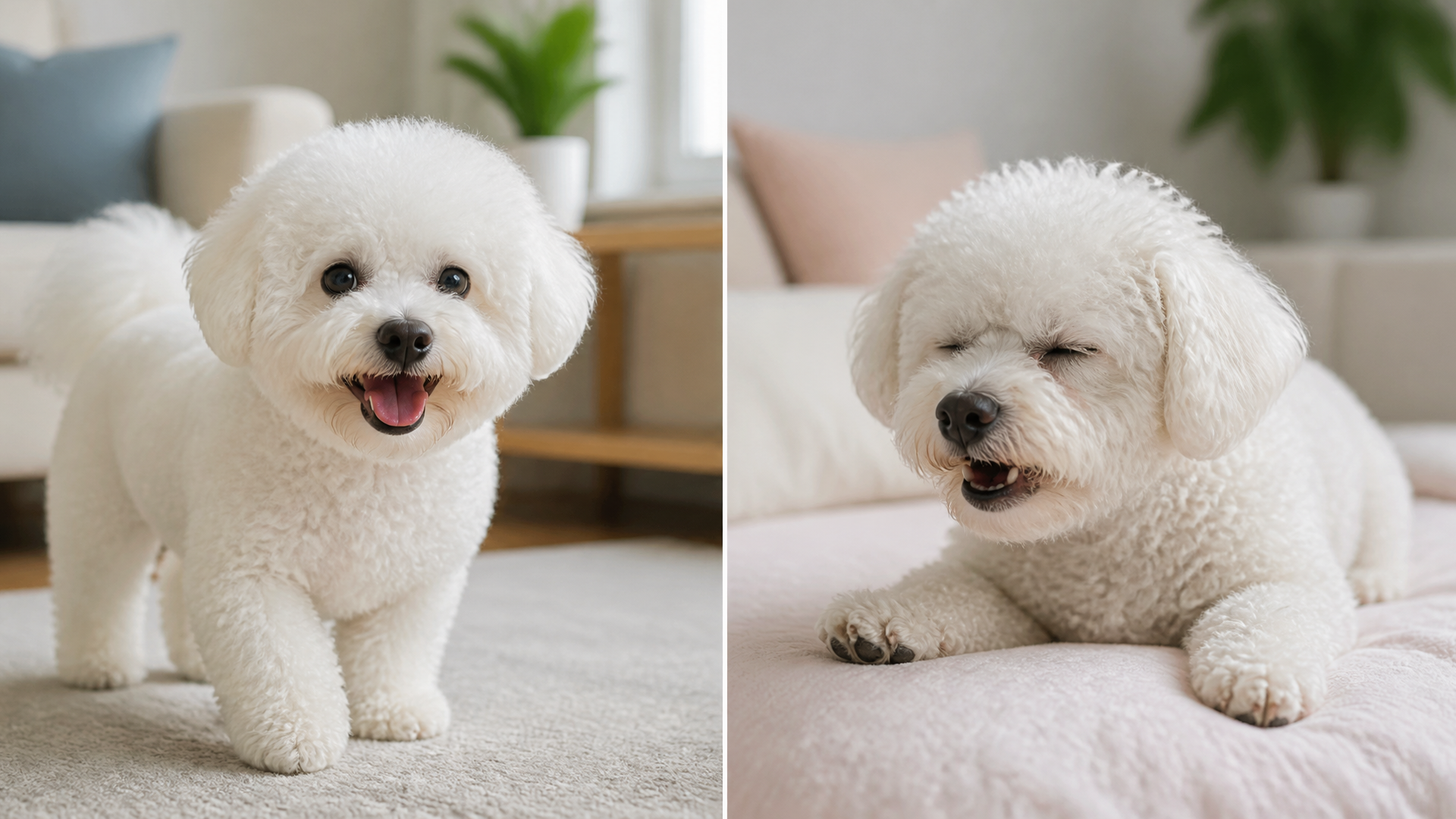
Since you searched for pictures, here’s what to watch for in your Bichon:
- Neck extension — Your dog stretches its neck forward while coughing, as if trying to open the airway
- Elbows out — They may stand with elbows slightly away from the body to help breathing
- Restlessness — During an episode, your Bichon may pace or circle, unable to settle
- Overheating — Collapsed trachea episodes often spike in warm weather or after exertion
- Blue or pale gums — This is a late-stage sign — if you see it, head to the vet immediately
To help your vet diagnose accurately, record a 30-second video of the episode in good lighting from the side. Show your dog’s posture and the sound clearly. That footage is gold — it captures the exact cough rhythm and body position that a physical exam alone might miss.
Is It Mild or Severe? Quick Checklist
Use this pass/fail checklist to decide your next step right now.
- [ ] Coughing happens more than once a day
- [ ] Coughing lasts longer than 2 minutes
- [ ] Gums look pale, blue, or gray
- [ ] Your dog is panting heavily or has trouble catching their breath
- [ ] They seem lethargic or refuse to eat or drink
Where your next action depends on what you see:
- If you checked only the first two items: Start with home care (switch to a harness, reduce triggers, monitor weight). Schedule a vet appointment within 24 to 48 hours.
- If you checked any of the last three items: Do not wait. Head to the vet or emergency clinic now. Those signs mean oxygen levels are dropping and your dog needs medical help right away.
Why Bichons Are Especially Prone
Bichons belong to the brachycephalic (flat-faced) family, and their tracheas can be naturally smaller and less rigid than larger breeds. Studies show that small-breed dogs under 20 pounds account for the vast majority of collapsed trachea cases, with Bichons appearing frequently in veterinary case reports. Their barrel-shaped chest and short neck add extra external pressure on the windpipe. Common triggers that make it worse:
- Collar pressure: Even a gentle pull on a flat collar compresses the throat and can trigger coughing
- Obesity: Every extra pound adds direct pressure on the trachea — in a 12-pound Bichon, that’s a significant load. Work with your vet on a weight-management diet if needed
- Irritants: Smoke, dust, strong perfumes, or even dry air can set off an episode. A humidifier in your home can help keep the airways moist
- Excitement: A happy Bichon jumping and barking can suddenly start honking. Keep play sessions calm and short
What You Can Do at Home
Step 1: Switch to a Harness Immediately
A front-clip or dual-clip harness (like the PetSafe Easy Walk or Blue-9 Balance Harness) pulls from the chest, not the neck. Avoid attaching the leash to a collar entirely — even for ID tags. Remove the collar altogether and clip tags to the harness. The weight of tags alone can trigger coughing in a sensitive Bichon.
Step 2: Keep Your Bichon at a Healthy Weight
Work with your vet on a diet if needed. Even a pound or two of extra weight adds direct pressure on the trachea in a small breed. Measuring food portions and eliminating table scraps can make a big difference.
Step 3: Reduce Triggers
Use a humidifier in dry rooms, skip smoky environments, and keep your dog’s excitement level moderate during play. A cooling mat can help prevent overheating episodes in warm weather.
Step 4: Stay Calm During an Episode
Your dog picks up on your stress. Speak softly, offer water, and gently support their chest to help them breathe easier. Never try to force their mouth open or pour liquids down their throat.
How to verify if home care is working: Track coughing episodes for 14 days. Mark each day with a tally. If episodes drop by half or more within two weeks, your changes are making a difference. If coughing stays the same or increases despite the harness and trigger reduction, move to step two: a vet visit.
Watch for this common mistake: Many owners switch to a harness but pick a back-clip style. Back-clip harnesses still pull across the chest and shoulders, but if your Bichon lunges or pulls hard, the back clip can still transmit force through the chest and indirectly compress the throat. A front-clip or dual-clip harness gives you better control and reduces throat pressure.
When to Call the Vet
Home care helps mild symptoms, but you absolutely need a vet if:
- The cough becomes constant or wakes your Bichon at night
- You see a bluish tint to the tongue or gums
- Your dog collapses or faints
- Breathing is noisy even when resting
- Home care changes (harness, weight, trigger reduction) have not reduced episodes after two weeks
Stop or escalate threshold: If your Bichon’s gums turn blue or gray at any point, stop all home care and go to the nearest emergency vet immediately. That color change means oxygen levels are dangerously low. This is not a wait-and-see situation.
Your vet may recommend anti-inflammatory medications, cough suppressants, weight loss, or even surgery for severe cases. Some Bichons also benefit from a tracheal stent — a small tube that holds the airway open.
Best Harness for Bichons with Trachea Issues
A good harness is non-negotiable. Look for a front-clip or dual-clip harness with a padded chest panel that distributes pressure evenly. Avoid any strap that sits directly across the throat. The PetSafe Easy Walk and Blue-9 Balance Harness are common options that work well for small breeds like the Bichon. Measure your dog’s chest girth before ordering — a loose fit rubs, while a tight fit still compresses the chest. Some owners also find a step-in style harness easier to put on a squirmy Bichon.
Save This Guide
Collapsed trachea in Bichons is manageable with early action. Switch to a front-clip harness today, track coughing episodes for two weeks, and keep your Bichon at a healthy weight. If gums ever turn blue, skip home care and head to the emergency vet immediately. Your quickest next step: record a 30-second video of the cough and call your vet.