Angora Cat Shed: Complete Guide for Pet Owners
Turkish Angoras have a reputation for heavy shedding — but their single-layer coat actually sheds less than many short-haired breeds. No dense undercoat means less dander and less fur flying around. The real challenge? Matting. Here’s exactly how to manage Angora shedding, when to worry, and when to call the vet.

The Reality of Angora Shedding
Turkish Angoras grow a single layer of fine, silky hair — unlike Persians or Maine Coons with thick double coats. This means:
- Less loose fur overall — the strands are longer but fewer
- Seasonal shedding (spring and fall) is still noticeable but milder
- Matting is the bigger threat — a neglected Angora can develop painful tangles within days
Most owners find Angora hair easier to clean because the long strands clump together and don’t embed in fabric like short hairs. The trade-off: daily brushing is non-negotiable, not for shedding control but for mat prevention.
One counter-intuitive truth: you’ll actually vacuum less with an Angora than with a short-haired cat. The long hairs ball up and stay on top of surfaces rather than weaving into carpet fibers. But those same long hairs will mat against your cat’s skin in under 48 hours if skipped.
Start Here: The Daily Check (2 Minutes)
Before any deep grooming, do a quick scan. Run a fine-toothed metal comb through three hotspot areas:
- Behind the ears
- Belly and armpits
- Tail (longest fur)
Branch point: If the comb slides through smoothly with only a few loose hairs, you’re done. If you hit a tangle or mat, stop — do not yank. Apply a cat-safe detangling spray and gently work the mat apart with your fingers. For tight mats close to the skin, do not cut them yourself. Escalate to a professional groomer or vet to avoid nicking the skin.
The fine-toothed metal comb is your best daily tool. A slicker brush alone won’t catch small tangles forming near the skin. Brands like Hertzko and Safari make combs with rounded tips that won’t scratch.
Weekly Deep Grooming: Step-by-Step
Reserve one 10–15 minute session per week for thorough coat care. Do this when your cat is calm — after a meal or play session works best.
1. Start with a pin brush to lift loose hair from the topcoat. Work in the direction of hair growth, not against it.
2. Switch to a slicker brush to remove small tangles. Use light, short strokes — pressing too hard can scratch the skin underneath.
3. Finish with the metal comb — if it catches anywhere, repeat step 2 on that spot. The comb should glide from head to tail without any snagging.
4. Wipe coat with a damp microfiber cloth to pick up remaining loose hairs. This also distributes natural oils evenly.
Verification step: After the final comb pass, check your results. The metal comb should glide from head to tail without snagging. If you still find tangles, apply detangling spray and brush again. A completely smooth comb-through means the coat is properly maintained.
If your cat resists grooming, try shorter sessions with high-value treats. A lick mat with wet food can distract them while you work through one hotspot at a time.
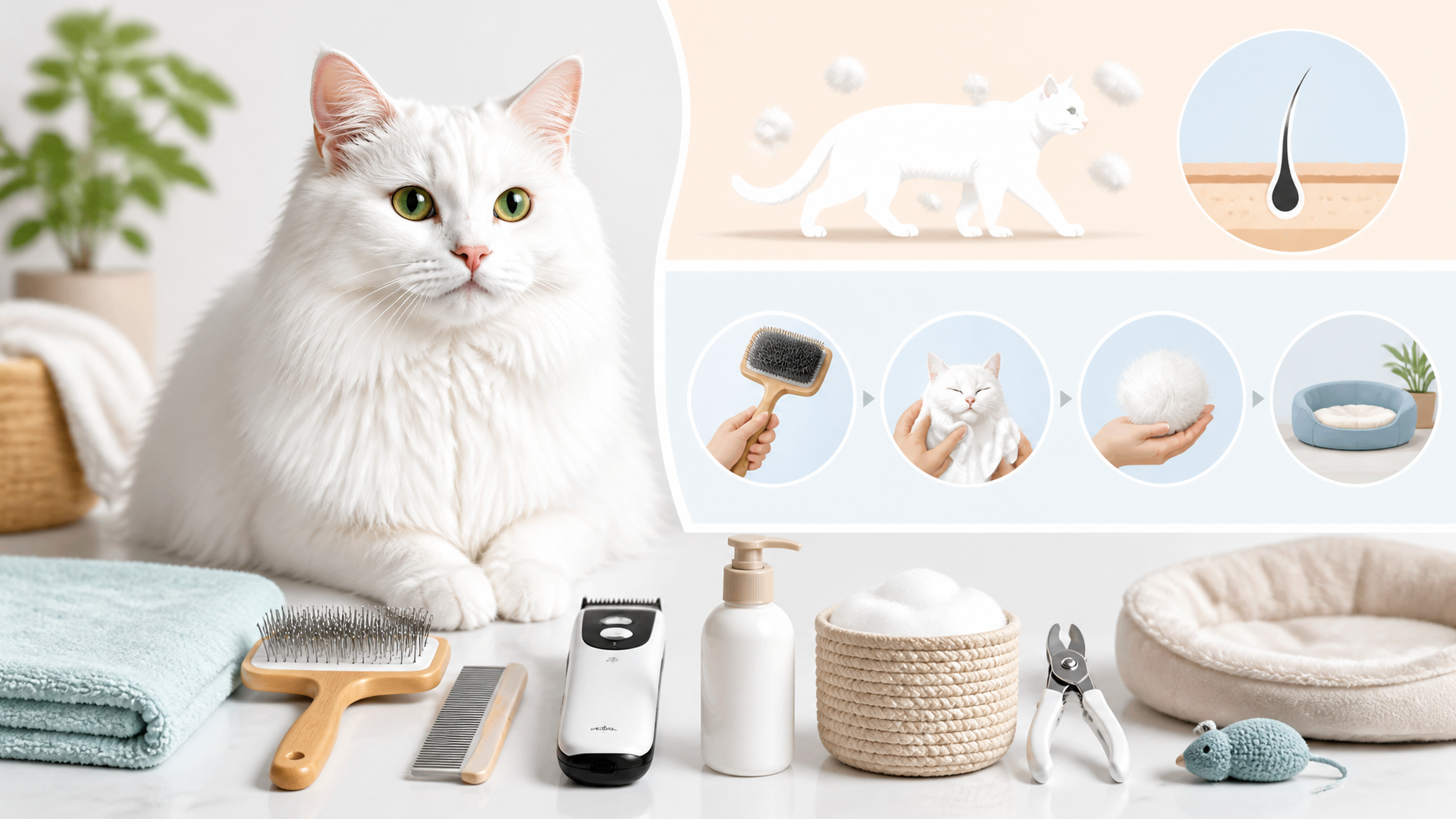
Quick Reference: Tools That Work
| Tool | Best For | When to Use |
|---|---|---|
| Fine-toothed metal comb | Daily mat prevention and loose hair removal | Every day |
| Pin brush | Weekly deep brushing | Once a week |
| Slicker brush | Tangle removal before comb | Weekly, or as needed |
| Rubber grooming mitt | High-shedding periods (spring/fall) | Twice daily during peak sheds |
| Detangling spray | Stubborn mats | Before working on tangles |
| Microfiber cloth | Final wipe-down | After each grooming session |
Disclosure: Some product links in this guide may earn us a commission at no extra cost to you.
When to Bathe (and When to Skip)
Turkish Angoras are fastidious self-groomers. Over-bathing strips natural oils and can cause skin irritation. Only bathe when:
- They’ve gotten into something sticky or toxic
- They’re visibly greasy or dirty
- Your vet recommends it for a skin condition
Safe bathing steps:
- Fill the sink or tub with lukewarm water (about 100°F) — test with your wrist, it should feel neutral
- Place a rubber mat on the bottom so your cat feels secure
- Apply only cat-safe, hypoallergenic shampoo — avoid anything with fragrances or dyes
- Rinse thoroughly — residue causes itching and can lead to hot spots
- Blot dry with a towel, then air-dry in a warm room away from drafts
Never use a blow-dryer on high heat. The fine coat can singe, and the noise stresses most cats. If you must use a dryer, keep it on the lowest heat setting and hold it at least 12 inches away.
5 Signs Your Angora’s Shedding Is a Problem
Normal shedding means loose hairs come out evenly during brushing. Watch for these red flags that require a vet visit:
1. Bald patches or thinning spots — could be ringworm, allergies, or hormonal issues
2. Excessive scratching or biting at fur — check for fleas, mites, or skin allergies
3. Mats that re-form within 24 hours of brushing — may indicate skin irritation causing over-grooming
4. Dandruff or flaky skin — often signals poor diet or dehydration
5. Sudden heavy shedding outside spring/fall — stress, illness, or pregnancy can trigger this
Stop/escalate threshold: If you notice any of these signs, stop all DIY treatments. Do not apply over-the-counter creams or change diets without a vet’s diagnosis. Schedule an appointment within 48 hours.
A high-protein diet with omega-3 fatty acids from fish oil can support coat health and reduce excessive shedding. Brands like Royal Canin and Hill’s Science Diet offer breed-specific formulas that help maintain skin barrier function.
Why You Should Never Shave Your Angora
The single-layer coat insulates against heat and cold. Shaving it off:
- Removes their natural cooling system — they can overheat
- Can cause permanent coat damage — fur may grow back coarser or patchy
- Increases sunburn risk — pink skin underneath is vulnerable to UV damage
Instead, manage summer shedding with more frequent brushing and provide cool, shaded resting spots. If matting is severe, a professional groomer can trim problem areas without removing the entire coat. A sanitary trim around the rear and belly is safe, but leave the main coat intact.
Weekly Grooming Checklist
- [ ] Run metal comb behind ears — any tangles?
- [ ] Brush belly and leg pits
- [ ] Comb tail thoroughly
- [ ] Check for flea dirt, redness, or lumps
- [ ] Wipe eye corners with damp cloth
- [ ] Trim nails if needed
- [ ] Clean ears with vet-recommended solution
- [ ] Inspect teeth for tartar or bad breath
This checklist takes about 10 minutes total. Keep it posted on your fridge or set a weekly reminder on your phone until it becomes habit.
FAQ About Angora Cat Shedding
Do Turkish Angora cats shed a lot?
No — they shed less than most short-haired breeds because they lack a dense undercoat. Shedding is moderate and seasonal.
Can I reduce Angora shedding with diet?
Yes. A high-protein diet with omega-3 fatty acids (from fish oil) supports skin and coat health, which can minimize excessive shedding.
How often should I brush my Angora cat?
Daily quick combing plus one deeper weekly session. Double brushing (morning and evening) during spring and fall shedding peaks.
Is Angora cat hair hypoallergenic?
No cat is truly hypoallergenic. Angoras produce less Fel d 1 protein than some breeds, but individual cats vary widely.
What’s the best brush for an Angora cat?
A fine-toothed metal comb for daily use and a pin brush for weekly deep grooming. Avoid plastic combs that create static.
Save This Guide: Angora shedding is manageable with a daily metal comb and weekly deep brush. Skip the baths, watch for matting, and escalate to a vet if you see bald patches or fast-recurring tangles. Your cat’s coat stays silky — and your furniture stays cleaner. The key is consistency: two minutes daily prevents problems that would take hours to fix later.