Maine Coon Physical Traits
Maine Coons are the gentle giants of the cat world. Males typically weigh 13–18 pounds (some hit 25+), and from nose to tail tip they can stretch up to 40 inches. Their thick double coat, tufted ears, bushy tail, and muscular rectangular body set them apart from every other domestic breed. Whether you’re trying to identify a Maine Coon or learning how to care for one, here’s exactly what to look for.

How Big Does a Full-Grown Maine Coon Get?
Maine Coons are slow growers — they don’t reach full size until 3–5 years old. A 1-year-old Maine Coon still has plenty of growing ahead.
Typical size ranges (fully mature):
| Trait | Male | Female |
|---|---|---|
| Weight | 13–18 lbs (some exceed 25 lbs) | 8–12 lbs |
| Body length (nose to tail tip) | 30–40 inches | 28–36 inches |
| Shoulder height | 10–16 inches | 8–14 inches |
Compare to other large breeds:
| Breed | Typical Male Weight | Maturity Age |
|---|---|---|
| Maine Coon | 13–18 lbs | 3–5 years |
| Ragdoll | 12–20 lbs | 3–4 years |
| Norwegian Forest Cat | 12–16 lbs | 3–5 years |
| Siberian | 12–17 lbs | 3–5 years |
| Domestic Shorthair | 8–10 lbs | 1–2 years |
Why Size Matters for Owners
A fully grown Maine Coon needs a large litter box (24 inches or bigger), a sturdy cat tree that supports 25+ lbs, and food portions adjusted for their slow metabolism as adults. Underfeeding during the growth phase can stunt development; overfeeding can lead to joint strain.
How to Verify Your Cat’s Growth Progress
At 2 years old, most Maine Coons reach about 80–90% of their adult weight. Ask your breeder for the parents’ adult size — a female kitten from a 16-lb sire and 11-lb dam will likely land in the smaller half of the range. If your cat isn’t gaining steadily by 18 months, check with your vet for possible thyroid or dietary issues.
What If Your Maine Coon Is Smaller Than Average?
That’s common in cats from mixed ancestry, rescue lines, or early neuter/spay. Neutering before 6 months can slow growth slightly. Female Maine Coons are naturally 5–7 lbs lighter, so a 10-lb female is still normal. If the cat is also narrow-chested or has a short tail, it may be a mix rather than purebred.
Coat: Texture, Length, and Accepted Colors
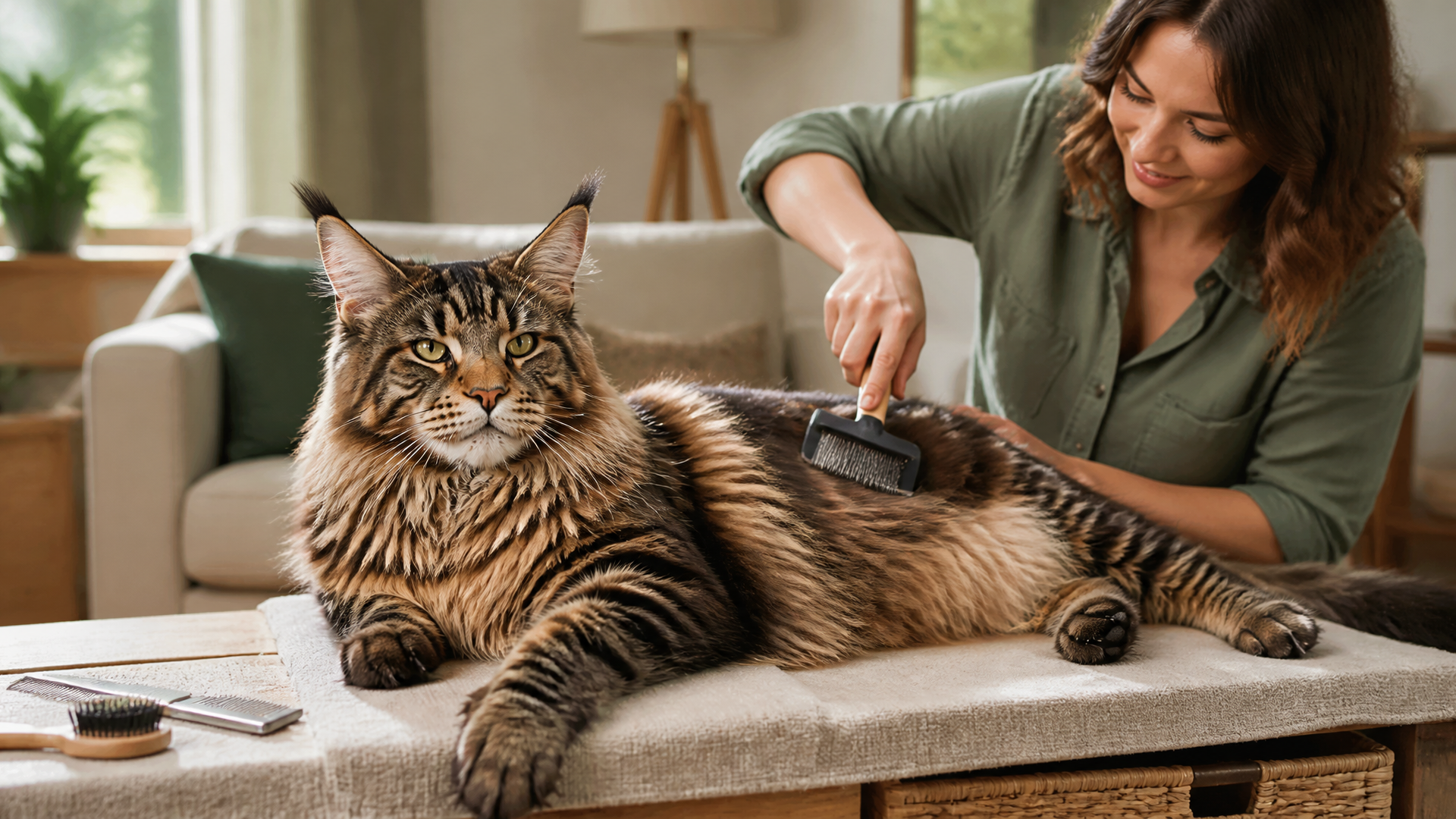
The Maine Coon coat is a double layer — a silky outer guard coat over a soft, dense undercoat. The fur is shorter on the shoulders and head, then gets longer along the stomach and hindquarters.
Coat characteristics:
- Texture: Silky, not woolly. Slides through your fingers easily.
- Water resistance: The outer coat sheds water — a holdover from their New England origins.
- Seasonal shedding: Heavy in spring and fall. Expect tumbleweeds of fur.
- Grooming frequency: 2–3 times per week most of the year; daily during shedding season.
Accepted colors and patterns: Maine Coons come in virtually every color and pattern except pointed (like a Siamese), chocolate, lavender, and ticked tabby. Common ones include:
- Brown tabby (most classic)
- Black, blue, red, cream
- Silver and smoke
- Tortoiseshell and calico
- White (rare — check for deafness risk)
- Bi-color and parti-color
Patterns you’ll see: Classic tabby (swirls), mackerel tabby (stripes), spotted tabby, and patched tabby (torbie).
Decision Criterion Based on Climate
If you live in a warm climate (USDA zones 8–10), your Maine Coon will still shed the undercoat seasonally but may have a thinner coat year-round due to less cold stimulus. You’ll need to brush weekly even in summer to prevent indoor-heat-related matting. In cold climates, expect peak shedding in spring and fall — an undercoat rake becomes essential.
Signature Traits That Make Maine Coons Stand Out
Maine Coons have a handful of hallmark features that make them instantly recognizable. If you’re trying to confirm whether a cat is a Maine Coon, check these four traits first.
Ear Tufts and Lynx Tips
Long hair sprouting from inside the ear (ear tufts) and pointed hair tips on the outer ears (lynx tips) are breed hallmarks. These aren’t just decorative — they helped protect the breed’s ancestors from cold New England winters.
The Ruff (Mane)
Maine Coons develop a thick mane around the neck and chest, similar to a lion’s ruff, that gets more prominent in winter and on males. Some cats look like they’re wearing a fur collar.
The Bushy Tail
The tail is long and full, often reaching the shoulder when laid along the body. It should be wide at the base and taper slightly at the tip. In winter, the tail becomes even fluffier, and the cat will wrap it around its face while sleeping for warmth.
Tufted Paws
Thick tufts of fur between the toes act like built-in snowshoes. These tufts are heaviest in winter and can make the paws look oversized compared to the rest of the leg.
Rectangular Body Shape
Unlike the cobby (round) body of a Persian or the slender frame of a Siamese, Maine Coons have a long, muscular, rectangular body — broad chest, level back, and substantial bone structure throughout.
Trade-Off to Keep in Mind
Not every Maine Coon expresses all four traits equally. A rescue or pet-line cat may have a smaller ruff, less prominent lynx tips, or a slightly shorter tail. That doesn’t mean it’s not a Maine Coon — just that it may not meet show standards. Use the combination of traits (size + coat + body shape + head shape) rather than any single feature.
A Grooming Routine That Matches Their Coat Type
A Maine Coon’s coat is beautiful but needs consistent care. Here’s a grooming routine that works for the breed — use it for a healthy cat with no severe mats or skin issues. If your cat has a medical condition or recent surgery, check with your vet first.
What You’ll Need
- Slicker brush (for removing loose undercoat)
- Pin brush (for detangling the outer coat)
- Wide-tooth metal comb (for checking work and finishing)
- Detangling spray or water mist
- Nail clippers (guillotine or scissor-style)
- Treats (for positive reinforcement)
Disclosure: As Amazon Associates, we earn from qualifying purchases.
Step 1: Pre-Groom Check
Run your hands over the entire body before brushing. Feel for mats, especially behind the ears, under the armpits, along the belly, and at the base of the tail. If you find a mat, do not pull it — you’ll hurt the cat.
Checkpoint: If the mat is smaller than a pea, you can brush it out. If larger than a grape, stop and use a mat splitter or see a groomer.
Step 2: Slicker Brush the Undercoat
Start at the shoulders and work backward. Use short, gentle strokes in the direction of hair growth. Lift the outer coat with one hand and brush the undercoat layer underneath.
Likely cause of resistance: If your cat flinches or pulls away, you’re hitting a hidden mat or pressing too hard.
Step 3: Detangle with the Pin Brush
Switch to the pin brush for the outer coat. Focus on the ruff, belly, and hindquarters where tangles form most often. Spray a light mist of detangling spray on stubborn spots.
Friction point: The belly is often the most sensitive area. Work slowly, keep sessions short (5–10 minutes), and pair with treats. If your cat consistently resists belly brushing, try a soft pin brush at a 45-degree angle — it’s gentler on the skin.
Step 4: Comb Through for Finish
Run the wide-tooth comb from head to tail. If the comb snags, go back over that spot with the slicker brush. A smooth comb pass means you’re done with brushing.
Verification step: After the comb runs clean, check one spot on the belly by parting the fur and looking at the skin. There should be no redness or irritation. If you see red marks, reduce brush pressure next time.
Step 5: Check Paws, Ears, and Tail
- Paws: Trim fur tufts between the toes only if they’re matting. Check nails — clip the tips every 2–3 weeks.
- Ears: Look inside for dirt or wax buildup. Clean with a vet-approved ear cleaner on a cotton ball, not a Q-tip.
- Tail: This is a high-mat zone. Pay extra attention to the underside of the tail near the base.
Success Check
Your Maine Coon’s coat should feel smooth with no snags or lumps.