Bichin Poo Stges of Growth
From 8 weeks to senior years — here’s exactly what to expect at every stage of your Bichon Poo’s life, plus the one mistake most owners make and how to catch it early.

Bringing home a Bichon Poo (Bichon Frise–Poodle mix) means signing up for 12–15 years of fluffy companionship. But the puppy that fits in your palm at 8 weeks won’t stay that size — and each stage brings different needs for food, grooming, training, and health care. Here’s the breed-specific breakdown.
One Big Variable: Toy vs. Miniature Poodle Parent
Your Bichon Poo’s growth depends heavily on which Poodle size the breeder used. This changes everything about feeding, weight expectations, and even grooming timelines.
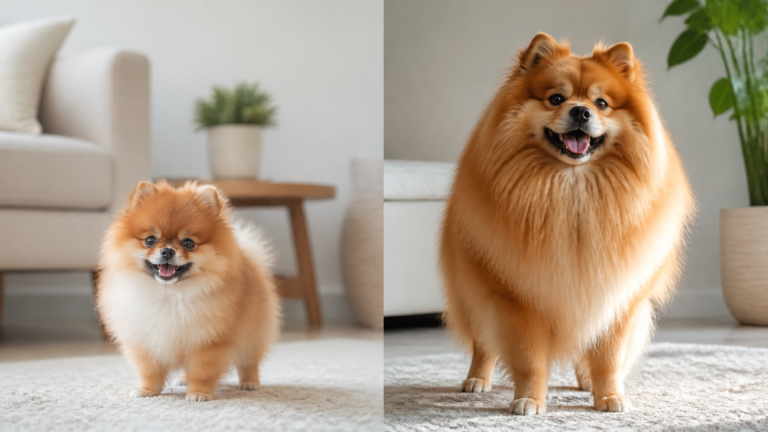
- Toy Poodle parent: Adult weight typically 8–14 pounds. Growth slows earlier (around 9 months).
- Miniature Poodle parent: Adult weight typically 14–18 pounds. Filling out can continue until 18 months.
How to verify which you have: Ask the breeder for the weight and size of both parents. If that’s not possible, look at the puppy’s paw size and bone structure at 12 weeks — larger paws and thicker legs hint at the Miniature side.
What this means for you: If you assume Toy when you have Miniature, you’ll underfeed and may see a too-lean puppy. If you assume Miniature when you have Toy, you’ll overfeed and risk joint stress from excess weight. The safe middle ground: Use the full 12–18 pound adult weight range as a guide until you see actual growth curve data for your individual dog.
One realistic trade-off: A Toy-sized Bichon Poo often has a slightly smaller bladder, meaning more frequent potty breaks as a puppy — plan for every 45–60 minutes at 8 weeks instead of every 1.5 hours for a Miniature. That extra 15–30 minutes matters when you’re crate training.
8 Weeks to 6 Months: The Puppy Stage
This is the highest-maintenance phase. Your Bichon Poo will grow from roughly 3–6 pounds to about 8–12 pounds by month six.
What to focus on:
- Housebreaking first. Small breeds with high metabolisms need potty breaks every 1–2 hours during the day. Crate training helps speed this up. Expert tip: Use a consistent cue word like “potty” the moment they start circling, then reward immediately. Common mistake: waiting until they sniff — by then they’re already going. Learn their pre-potty signal (pacing, circling) and act within 10 seconds.
- Socialization, not just play. By 16 weeks, your pup’s critical socialization window closes. Introduce them to different surfaces, sounds, people, and calm dogs. Expert tip: Carry high-value treats on every outing and reward calm curiosity. Common mistake: forcing interaction when your puppy is scared — that teaches fear, not confidence. Let them approach at their own pace.
- Teething starts around 12 weeks. Expect chewing. Provide safe puppy teething toys and cold washcloths. Watch for baby teeth that don’t fall out on their own — small breeds often retain them.
Feeding: 3–4 small meals per day of a high-quality small-breed puppy formula (look for DHA and probiotics for digestion). Bichon Poos are prone to sensitive stomachs, so avoid switching foods abruptly.
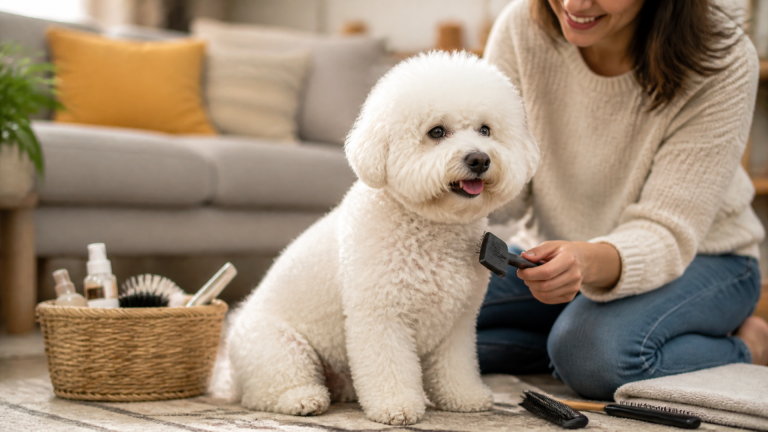
Grooming note: Start brushing every other day immediately, even if the coat is short. Get your puppy used to having paws, ears, and face handled. Expert tip: Pair each brushing session with a tiny treat so they associate grooming with positive rewards. Common mistake: waiting until the coat is fully grown to start handling — that sets you up for a battle at the groomer.
6 to 18 Months: The Adolescence (Trying) Stage
Your Bichon Poo hits their “teen” phase around 6–9 months. They’ll test boundaries, forget commands they knew, and develop a selective hearing problem.
Weight guide: Most Bichon Poos reach adult weight (12–18 pounds) between 9 and 12 months. Some continue filling out until 18 months.
Common challenges that catch owners off guard:
- Regressive potty training. They may suddenly “forget” where to go. Go back to basics — more frequent trips outside and supervision. Expert tip: If accidents happen, clean thoroughly with an enzymatic cleaner (dogs return to the scent). Common mistake: scolding — it only makes them sneakier. Instead, interrupt calmly and take them outside.
- Leash pulling. The Bichon’s small size doesn’t mean they can’t yank. Consistent loose-leash training now pays off for the next decade. Use a front-clip harness (it discourages pulling without hurting the neck).
- Demand barking. Bichon Poos are vocal. If they learn barking gets attention, it becomes a lifelong habit. Ignore demand barking completely — no eye contact, no talking, no moving. Expert tip: Teach a “quiet” command by rewarding one second of silence, then gradually increase the duration. Common mistake: yelling “quiet” — that sounds like barking to them and reinforces the noise.
Feeding: Switch to an adult formula between 9–12 months. 2 meals per day is enough. Measure carefully — this breed gains weight fast on too many treats.
Grooming intensity increases: The adult coat comes in around 6–8 months. Expect more matting behind the ears, under the legs, and around the collar line. Professional grooming every 4–6 weeks is non-negotiable from this point on.
18 Months to 7 Years: The Adult Stage
This is the golden period. Your Bichon Poo is fully grown, settled into routines, and less prone to mischief.
Stable weight: 12–18 pounds, depending on whether the Poodle parent was toy or miniature. Check weight monthly; even 1–2 extra pounds stresses their small joints and increases tear stain production.
Daily needs that stay consistent:
- Exercise: 30–40 minutes total per day split into two walks. Bichon Poos bounce between couch-potato mode and bursts of energy. A short fetch session plus a walk covers it.
- Mental stimulation: They’re smart (thanks to the Poodle side). Five minutes of training tricks, puzzle toys, or hide-and-seek prevents boredom chewing.
- Brushing: Every other day minimum. Daily is better. Use a slicker brush followed by a metal comb to check for mats. Expert tip: Focus extra time on the armpit area and behind the ears — those are mat hot spots. Common mistake: only brushing the top layer. You must part the hair and brush down to the skin.
Common adult health concerns:
| Issue | What to Watch For | Action |
|---|---|---|
| Eye discharge / tear stains | Reddish-brown staining under eyes | Daily eye wipe with vet-approved cleaner; check for blocked tear ducts |
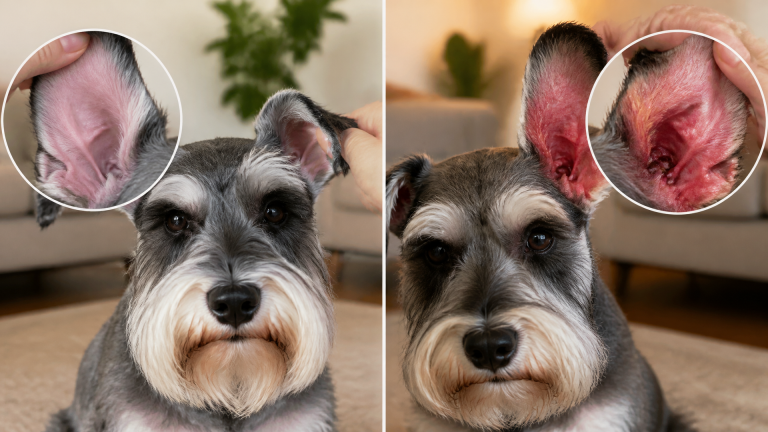
| Ear infections | Head shaking, odor, redness | Check and clean ears weekly with a drying solution |
| Dental disease | Bad breath, yellowing, gum redness | Brush teeth at least 4–5 times per week; schedule professional cleanings |
| Patellar luxation | Skipping or hopping while running | Vet check if you see any gait changes — common in both parent breeds |
Feeding: ½ to 1 cup of high-quality small-breed kibble per day split into two meals. Adjust based on activity level. Bichon Poos are masters of begging — factor in treat calories (keep treats under 10% of daily intake).
7 Years and Up: The Senior Stage
Small breeds like Bichon Poos don’t always act old, but their bodies change. Around age 7–8, start watching for:
What shifts in senior years:
- Activity drops gradually. They may sleep more and need shorter walks. Listen to them — don’t force the old mileage.
- Dental care becomes urgent. Small breeds accumulate tartar fast. If you haven’t been brushing regularly, start now. Dental disease affects the heart, kidneys, and joints.
- Vision and hearing changes. Cataracts are common. A Bichon Poo that seems confused or jumpy may not see or hear well, not be stubborn.
- Arthritis creeps in. Watch for hesitation on stairs, stiff movements after naps, or reluctance to jump on furniture. Joint supplements (glucosamine/chondroitin) and ramps help.
Special senior checkup items:
- Annual bloodwork (every 6 months after age 10)
- Dental cleaning if recommended by your vet
- Weight check every vet visit — senior Bichon Poos gain weight easily with reduced activity
- Thyroid screening (hypothyroidism is common in both parent breeds)
Feeding: Same amount, but consider a senior formula with joint support and lower calories. Soak kibble if dental issues develop.
The Bichon Poo Growth Problem Most Owners Miss
The single biggest mistake owners make: feeding the wrong amount because they base it on how the dog looks, not weight.
Bichon Poos are fluffy. A 15-pound dog looks bigger because of the coat. Owners see a “solid” dog and keep feeding puppy portions, and the dog gains 3–4 excess pounds before the owner notices. Those extra pounds hit small joints — knees, elbows, hips — hard.
The early detection fix: Weigh your Bichon Poo every two weeks until age 2, then monthly for life. Keep a note on your phone. If the number goes up two pounds in a row, reduce food by 10% and retest the next month. One pound of excess weight on a 15-pound dog is equivalent to 15 pounds of excess weight on a 150-pound human.
Quick-Reference Card: Bichon Poo Growth Milestones
| Stage | Age | Weight Range | Key Action |
|---|---|---|---|
| Newborn | 0–8 weeks | 1–3 lbs | Stay with breeder until 8 weeks minimum |
| Puppy | 8 wks–6 mo | 3–12 lbs | Socialize, housebreak, start brushing |
| Adolescent | 6–18 mo | 12–18 lbs | Brace for boundary-testing; finish training |
| Adult | 18 mo–7 yrs | 12–18 lbs | Maintain weight, ear care, dental routine |
| Senior | 7+ yrs | 12–18 lbs | Joint checks, senior vet screenings |
6-Month Care Checklist for Every Bichon Poo Owner
Print this or screenshot it — run through these items once per month:
- [ ] Weigh your dog and log it. Did it go up more than 0.5 lbs since last month?
- [ ] Run hands over entire coat — feel any mats or lumps?
- [ ] Check inside both ears — any redness, smell, or discharge?
- [ ] Lift lips and check teeth — any tartar buildup, redness, or loose teeth?
- [ ] Watch your dog walk — any skipping, hesitation, or stiffness?
- [ ] Confirm you’re feeding the correct amount for current weight (adjust treats too)
This stage-by-stage guide gives you the weight targets, grooming schedule, and health red flags for each phase of your Bichon Poo’s life. Use the monthly checklist to catch changes early, and rely on the feeding and weight-checking rule to prevent the most common growth mistake.
This article contains affiliate links; we may earn a commission on purchases at no extra cost to you.