Lhasa Apso Grooming: Complete Guide for Lhasa Apso Owners
A Lhasa Apso’s coat is a double-layer, hair-like coat that grows continuously — meaning daily brushing is non-negotiable, and a full grooming session every 4–6 weeks is the minimum to avoid mats, skin issues, and painful tangles. Skip a week, and you’ll likely face matting that requires shaving. Here’s exactly what you need to keep your Lhasa Apso comfortable and looking great, with the tools, techniques, and product picks that actually work.

What You’ll Need Before You Start
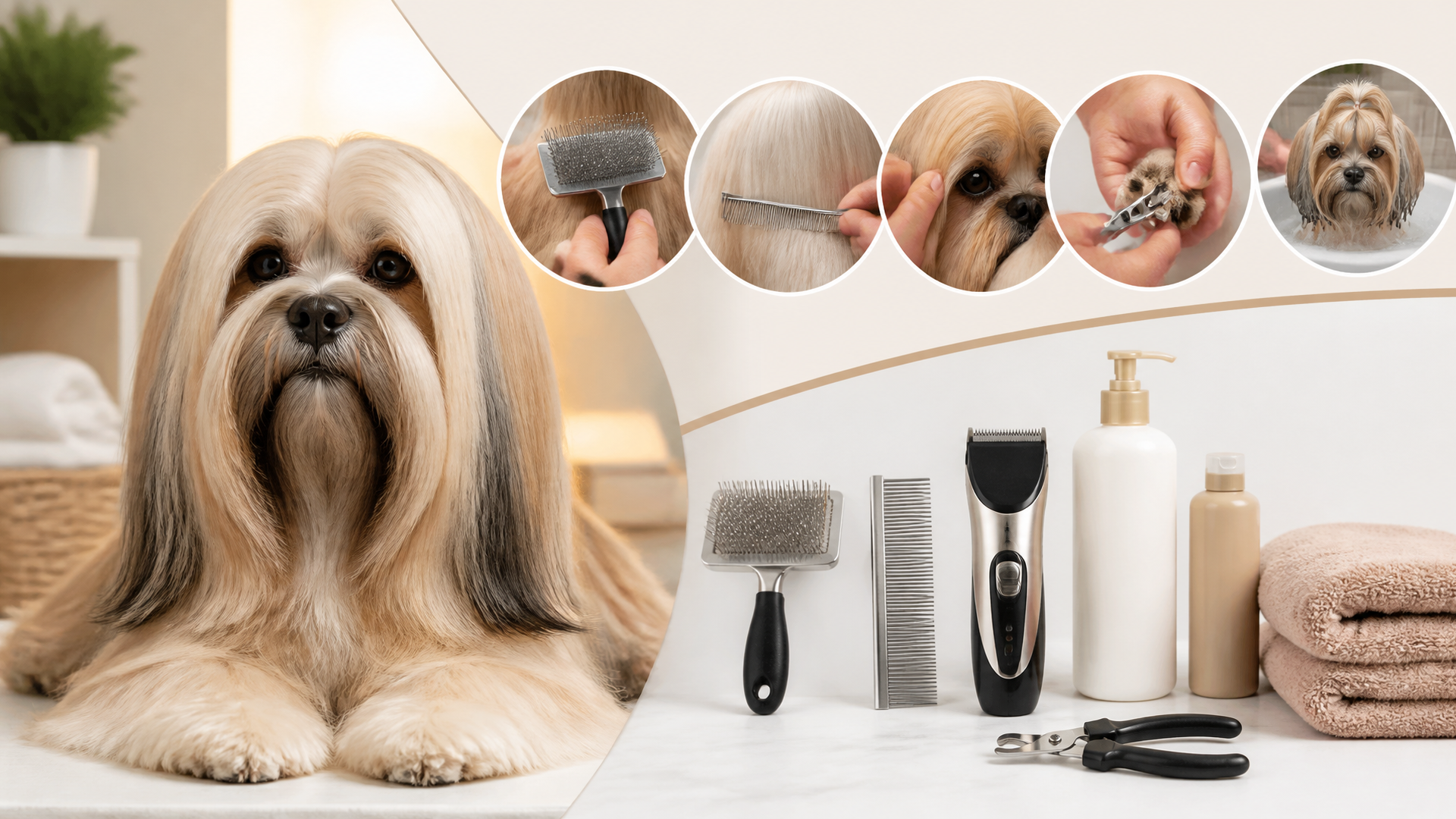
Gathering the right tools first saves you frustration and keeps your dog calm. Lhasa Apsos have fine, dense hair that mats easily, so cheap brushes won’t cut it.
- Slicker brush – medium to fine pins, preferably curved to contour to your dog’s body. Owner favorites include the Chris Christensen Big G or Hertzko self-cleaning slicker.
- Pin brush – for finishing and fluffing. A Kenchii Tuff Coat brush works well.
- Metal greyhound comb – with both wide and fine teeth. This is your checkpoint tool for spotting small mats.
- Detangling spray – use a leave-in conditioner like The Stuff or Isle of Dogs Silky Coating Mist before brushing.
- High-velocity dryer (optional for home use) – or a human blow dryer on low heat. Thorough drying is essential to prevent skin irritation.
- Grooming table or non-slip mat – a bathmat on a countertop works if you don’t have a table.
- Nail clippers or grinder – Miller’s Forge clippers or a Dremel 7300 grinder.
- Ear cleaner – a gentle, vet-recommended formula like Vet’s Best.
- Eye wipes – Lhasa Apsos often tear-stain; use Angle’s Heaven Sent wipes daily.
- Scissors or clippers – for sanitary trim. A #10 blade and small curved shears.
Affiliate Disclosure: Some links are affiliate links. If you purchase through them, we may earn a small commission at no extra cost to you.
The Step-by-Step Lhasa Apso Grooming Routine
Work in this order to keep your dog comfortable and catch problems early.
Step 1: Brush Before the Bath – Always
Bathing a matted Lhasa Apso makes mats tighter and more painful. Brush thoroughly first, even if you plan to bathe.
1. Spritz with detangling spray – light mist over the whole body.
2. Line-brush – part the coat horizontally and brush small sections from the skin outward, using your free hand to hold the hair above the section you’re brushing (prevents pulling).
3. Finish with the metal comb – run it through each brushed section. If it snags, you missed a mat – go back with the slicker.
4. Check high-friction areas – behind ears, armpits, groin, and tail. These mat first.
Verification checkpoint: After brushing a section, pass the metal comb through. If it glides without resistance, the section is done. If you hit a snag, stop and re-brush that area before moving on.
Failure mode alert: If you find a mat larger than your thumbnail, don’t try to brush it out. Pulling a tight mat can cause skin tears. Use thinning shears or take the dog to a groomer. Trying to force a brush through a large mat will make the dog fearful and may damage the skin.
Step 2: Bath – Warm Water, Gentle Products
Lhasa Apsos have sensitive skin. Use a shampoo formulated for double coats or white coats (to reduce staining).
- Wet coat thoroughly with lukewarm water.
- Apply shampoo from neck down. Avoid eyes and ears.
- Scrub with a silicone grooming mitt for better circulation and dirt removal.
- Rinse completely – residue causes itching.
- Conditioner is a must. Apply, wait 2–3 minutes, then rinse well.
Step 3: Drying – Don’t Skip
Never let a Lhasa Apso air-dry fully – the hair can mildew at the skin and cause hot spots.
- Pat dry with a microfiber towel first.
- Use a high-velocity dryer (or a human blow dryer on low heat) while line-brushing again. The airflow helps separate the hair and prevents new tangles.
- Dry until the skin feels fully dry and cool.
Verification step: Run your fingers through the coat near the skin. If the skin feels damp or the hair feels sticky, continue drying. A fully dry Lhasa Apso coat should feel fluffy and separate easily when you part it.
Step 4: Nail Trim & Ear Care
- Nails: Clip or grind every 2–3 weeks. If you hear clicking on the floor, they’re too long. For small dogs, cut tiny bits often to avoid the quick.
- Ears: Lhasa Apsos have floppy ears that trap moisture. Clean once a week with ear solution and a cotton ball. Never use Q-tips inside the ear canal.
- Eye area: Wipe tear stains daily with a soft, damp cloth or medicated wipe. Keep the hair around eyes trimmed short (or use a groomer for “safety trims”).
Step 5: Sanitary & Paw Trim
- Sanitary trim: Shave a #10 blade over the belly, groin, and around the anus. This keeps urine and feces from matting the coat and causing infections.
- Paw pads: Trim hair between paw pads with curved scissors or a #30 blade. Also trim the foot hair so it’s flush with the paw – this prevents slipping and reduces dirt tracked inside.
Stop/escalate threshold: If your dog reacts with yelping, snapping, or extreme resistance at any point, stop that step. Forced grooming can cause injury and long-term fear. Try again later with positive reinforcement, or schedule a professional groomer if the behavior doesn’t improve.
The Counter-Intuitive Truth About Lhasa Apso Coats
Most grooming guides tell you to brush from the tips inward. For Lhasa Apsos, that approach causes more matting. Their hair is so fine and dense that brushing the tips first pushes the mat toward the skin and tightens it. Instead, work from the skin outward in small sections, and always hold the coat taut at the base to prevent pulling. This is the same method professional show groomers use.
Common Mistakes That Lead to Shave-Downs
| Mistake | Why It Happens | What to Do Instead |
|---|---|---|
| Brushing only the topcoat | Gives a smooth appearance but mats hide underneath | Line-brush all the way to the skin |
| Bathing without brushing first | Mats tighten with water | Always brush out before bath |
| Using a conditioner with silicones | Builds up, attracts dirt, causes tangles | Use water-based, silicone-free conditioners |
| Skipping the dryer | Air-drying mats the coat | Blow-dry while brushing |
| Letting nails get too long | Painful, changes gait | Clip weekly or grind every 2 weeks |
Recurring mats? Here’s what to check. If you’ve been following the routine but still find new mats every few days, the likely cause is not getting deep enough with the comb. Owners often brush the top layer and miss the undercoat right at the skin. Solution: slow down and use the metal comb daily, especially behind ears and in the groin. Another common recurrence pattern is using too much detangling spray — excess product attracts dirt and creates a tacky surface that catches new tangles. Use only a light mist, and brush until the coat is dry and free of residue.
When to Call a Professional Groomer
Even dedicated at-home owners need help sometimes. Go to a groomer if:
- Your Lhasa Apso has multiple tight mats that won’t brush out – especially behind ears or in armpits.
- You don’t have a high-velocity dryer and see skin irritation after baths.
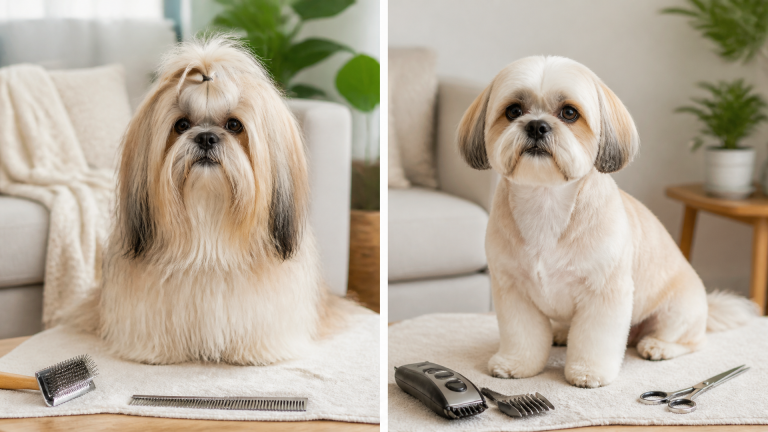
- You need a full-body clip (a “puppy cut”) – many owners prefer this for summer or if the dog is elderly.
- Your dog shows signs of ear infection (smell, redness, shaking head). Groomers can alert you, but a vet should treat infection first.
- You’re unsure about safety trims near eyes, genitals, or paw pads.
Vet visit needed: If you find hot spots, bumps, rashes, or excessive scratching during grooming, schedule a vet appointment before continuing DIY grooming. Also seek veterinary help if your Lhasa Apso has persistent tear stains that are thick, greenish, or accompanied by squinting.
Checklist: Save This for Every Grooming Session
Use this pass/fail checklist before, during, and after each session. Print it or save to your phone.
- [ ] Slicker brush, pin brush, metal comb, detangling spray on hand
- [ ] Dog is calm and has been exercised (tired dogs tolerate grooming better)
- [ ] Coat is brushed completely (metal comb passes freely) before bath
- [ ] Bathing products are Lhasa-safe and silicone-free
- [ ] No mats larger than a pea remain anywhere
- [ ] Drying is complete – skin feels dry, coat is fluffed not flattened
- [ ] Nails are trimmed or ground (no clicking on floor)
- [ ] Ears are clean and dry (no redness or odor)
- [ ] Eyes are wiped and free of crust
- [ ] Sanitary and paw trims are done (if needed)
- [ ] Dog gets a treat and praise after each step
Product Recommendations That Save Time
- Detangling spray: The Stuff – works on wet or dry coat, prevents static.
- Slicker brush: Chris Christensen Big G (orange or purple) – moves through dense coat well.
- Pin brush: Kenchii Tuff Coat – gentle on skin, fluffs coat.
- Shampoo: Isle of Dogs Silky Coating Shampoo – whitening and conditioning.
- Conditioner: Nature’s Specialties Plum Silk – leaves coat soft without buildup.
- Eye wipes: Angle’s Heaven Sent – designed for tear stain removal.
- Nail grinder: Dremel 7300 – cordless, quiet for small dogs.
Quick FAQ
How often should I bathe a Lhasa Apso?
Every 3–4 weeks is standard. Bathing more often can dry the skin. Use a gentle shampoo.
Can I shave my Lhasa Apso completely?
Yes, but know that a full shave can change the coat texture permanently and remove the double-layer protection. Many owners choose a 1-inch clip instead for easier maintenance.
Why does my Lhasa Apso’s coat smell even after a bath?
Likely an ear infection or skin yeast overgrowth. Check ears and skin folds. See a vet if the smell persists.
Save This Guide
A Lhasa Apso’s coat is its signature feature — but it takes consistent work. Daily brushing (5–10 minutes) plus a full grooming session every 4–6 weeks keeps the coat healthy and manageable. Use the checklist above to stay on track. When in doubt, the metal comb is your best friend: if it snags, stop and brush deeper. Give your Lhasa Apso a treat after each grooming step, and you’ll build trust that makes every session easier.