Are Beagles Good at Hearing?
Short answer: Yes, Beagles have excellent hearing — on par with most dog breeds and far better than humans. They can hear sounds at higher frequencies and from greater distances than you can. But here’s the catch: a Beagle’s legendary stubbornness means they may choose not to respond, even when they heard you perfectly.

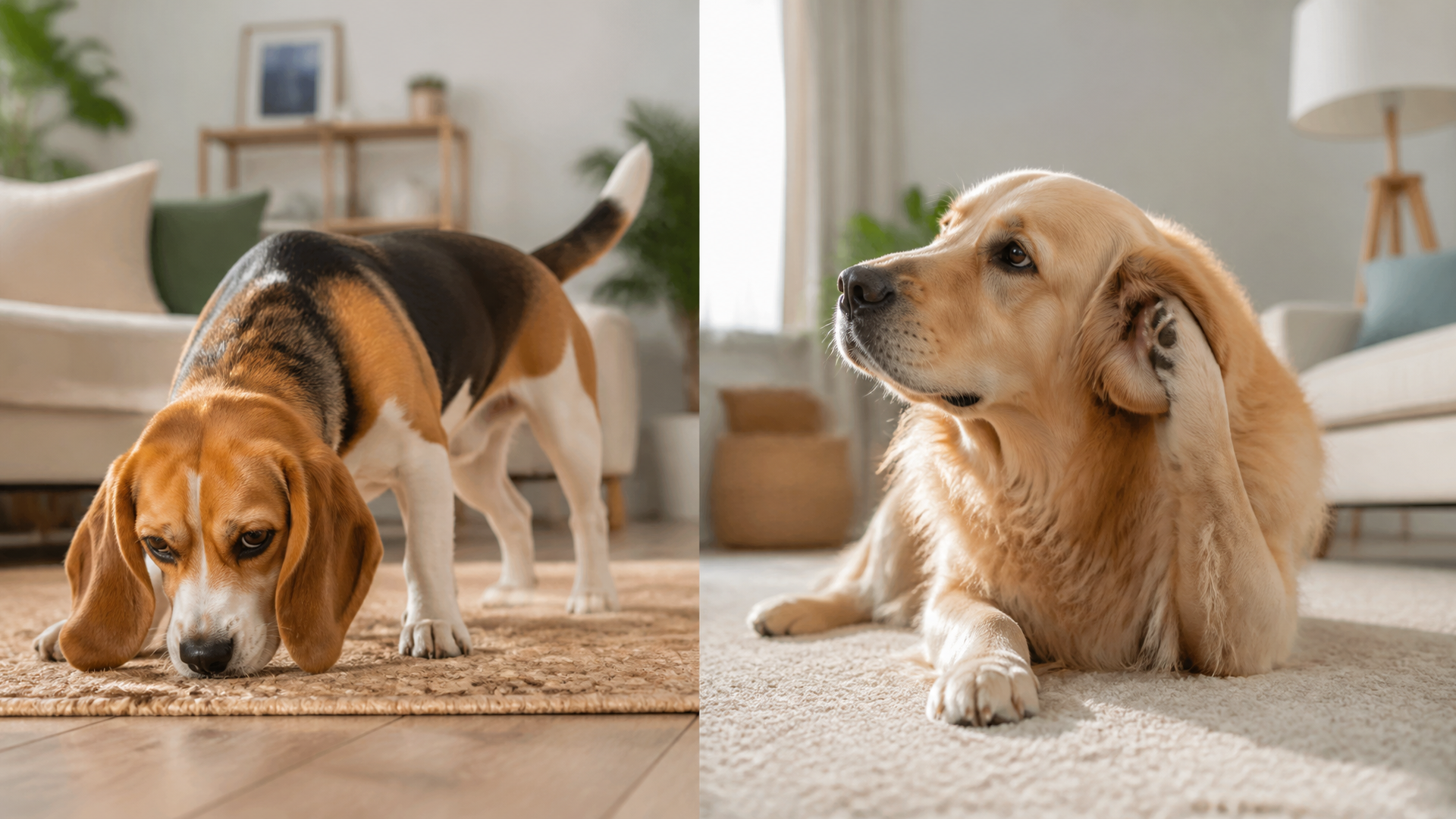
Beagles were bred to track small game by scent, not by sound. Their ears prioritize the ground (and whatever smells are there) over your voice. Understanding this difference between capability and compliance is the key to communicating with your Beagle.
Applicability boundary: This guide applies to healthy adult Beagles (1–7 years). Puppies under six months have slightly less developed hearing — their ear canals finish maturing around 16–20 weeks. Senior Beagles (8+ years) may experience age-related hearing loss, which affects their response to high-pitched sounds first. If your Beagle falls into one of these age groups, adjust your expectations and check the age-specific notes in the later sections.
How Good Is a Beagle’s Hearing, Really?
A dog’s hearing range is roughly 67 Hz to 45,000 Hz, compared to a human’s 20 Hz to 20,000 Hz. Your Beagle can hear sounds about four times farther away than you can — that rustling treat bag in the kitchen? They heard it from the backyard, through a closed door, before you even opened it.
What makes Beagles unique isn’t better hearing than other breeds, but different hearing priorities. Their ears are optimized for:
- Locating prey (or snacks) at ground level — those long, floppy ears actually help funnel scent particles toward the nose, not amplify sound
- Filtering background noise — a Beagle in full scent-tracking mode can literally tune out your voice, even at full volume
- Detecting high-frequency sounds — the squeak of a toy, the crinkle of a wrapper, or a rabbit moving in the brush
Breed-specific detail: Beagles are hounds, and hounds process the world primarily through their nose, not their ears. A Beagle’s brain prioritizes olfactory input over auditory input when both are competing. This means your Beagle can hear you — they’re just busy smelling something more interesting.
How Beagle Hearing Compares
| Sound Source | Human Hearing | Beagle Hearing | Beagle Response Likely? |
|---|---|---|---|
| Treat bag crinkle at 50 ft | Faint or silent | Clear and distinct | Yes, immediately |
| Your voice calling “come” | Normal | Clear | 50/50 if scent is present |
| Another dog barking 3 blocks away | Faint | Loud and clear | Barking response likely |
| High-pitched squeaky toy | Audible | Very distinct | Yes, usually |
| Thunder in the distance | Barely audible | Audible, often stressful | Whining or hiding |
Why Your Beagle Might “Pretend” They Can’t Hear You
This is the most common owner frustration, and it’s not a hearing problem — it’s a motivation problem.
Beagles were bred to work independently from humans. A Beagle following a scent trail isn’t being disobedient; they’re doing exactly what centuries of breeding programmed them to do. When your Beagle ignores your “come” command while tracking a rabbit, they heard you. They just evaluated the options and decided the rabbit was more rewarding.
Key insight to remember: Your Beagle isn’t deaf — they’re selectively listening. The same dog who ignores your recall command will sprint from three rooms away at the sound of a cheese wrapper.
Signs It’s Selective Hearing vs. Actual Hearing Loss
| Behavior | Likely Selective Hearing | Possible Hearing Loss |
|---|---|---|
| Responds to treat sounds but not commands | ✅ | ❌ |
| Doesn’t react to loud, sudden noises | ❌ | ✅ |
| Responds outdoors but not indoors | ✅ (distracted by scents) | ❌ |
| Seems disoriented or doesn’t wake to noise | ❌ | ✅ |
| Ignores you while staring at something | ✅ | ❌ |
How to Test Your Beagle’s Hearing at Home
Before you assume selective listening, run this simple 5-minute hearing test in a quiet room. You’ll need three sounds: a soft squeaky toy, your voice saying a favorite word (“cookie”), and a loud clap.
1. Stand behind your Beagle (out of sight) and squeeze the squeaky toy softly. Note if the ears perk or head turns.
2. Wait 30 seconds, then say “cookie” in a normal tone from behind.
3. Wait 30 seconds, then clap your hands once from behind.
Pass: Your Beagle reacts to at least two of the three sounds. Hearing is normal — work on training.
Partial pass: Reacts to only the clap. May have reduced hearing for higher frequencies. Try lower-pitched sounds and check for ear infections.
Fail: No reaction to any sound. Schedule a vet visit this week.
This test won’t replace a veterinary exam, but it gives you a quick reality check before you jump to “they’re stubborn.”
3 Expert Tips for Communicating With Your Beagle
Tip 1: Make Yourself More Interesting Than the Scent
Actionable step: Carry high-value treats (freeze-dried liver, cheese, or hot dog pieces) on every walk or outdoor session. When your Beagle ignores you, don’t repeat the command — show them the treat and let them see and smell it before asking again.
Common mistake to avoid: Repeating “come” five times in a row. Your Beagle learns that the command means nothing until you’re frustrated and yelling. Say it once, then use a treat or sound to redirect their attention.
Tip 2: Use Hand Signals Alongside Verbal Commands
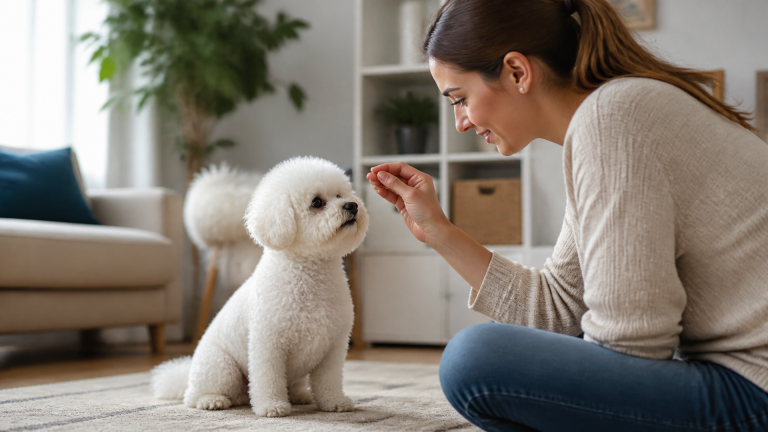
Actionable step: Teach your Beagle a hand signal for every verbal command (palm out for “stay,” finger point for “look,” patting your leg for “come”). Dogs process visual cues faster than auditory ones, and a hand signal doesn’t compete with interesting smells the way your voice does.
Common mistake to avoid: Only using hand signals indoors. Practice in low-distraction environments first, then gradually add distance and distractions. A Beagle needs to see the signal clearly — make your movements big and deliberate.
Tip 3: Create an “Emergency Recall” Sound
Actionable step: Choose a unique sound — a whistle, a specific word like “COOKIE” said in a high-pitched voice, or a squeaky toy — that you only use for high-value rewards. Use it 3-4 times per week in low-stakes situations, always followed by an amazing treat. A dog whistle like the Acme 210.5 works especially well because it cuts through environmental noise.
Common mistake to avoid: Using the emergency recall sound for routine commands or without a reward. If you use it to call them in from the yard and then just close the door, your Beagle learns it’s not special. The emergency recall must always pay better than whatever they’re ignoring you for.
Hearing vs. Listening: A Quick Decision Aid for Beagle Owners
Use this checklist when your Beagle seems to ignore you. Check each item — if you hit “no” on more than one, it’s likely selective hearing, not a hearing issue.
- Sound check: Did the sound come from 3+ rooms away, through a wall? (Yes = dog likely heard it)
- Motivation check: Would your Beagle respond if you held a piece of cheese? (Yes = they heard you, just weren’t motivated)
- Distraction check: Is your Beagle actively sniffing the ground or staring at something? (Yes = nose is overriding ears right now)
- Environment check: Are there competing sounds (TV, kids, other dogs) masking your voice? (Yes = try moving closer)
- Health check: Has your Beagle stopped responding to all sounds, including treats, squeaky toys, and sudden noises? (Yes = this warrants a vet visit)
Decision rule: If your Beagle responds to any sound (treat wrapper, squeaky toy, another dog barking) but not to your commands, their hearing is fine. The issue is training and motivation, not hearing ability.
When to Actually Worry About Your Beagle’s Hearing
True hearing loss in Beagles is uncommon but possible, especially in older dogs. Watch for these signs:
- No reaction to loud, sudden noises (door slamming, firecracker, dropped pan)
- No response to sounds that used to excite them (treat bag, leash jingling, car keys)
- Sleeping more deeply and not waking when you enter the room
- Tilting head frequently or scratching at ears (possible ear infection affecting hearing)
- Not startling at unexpected sounds from behind
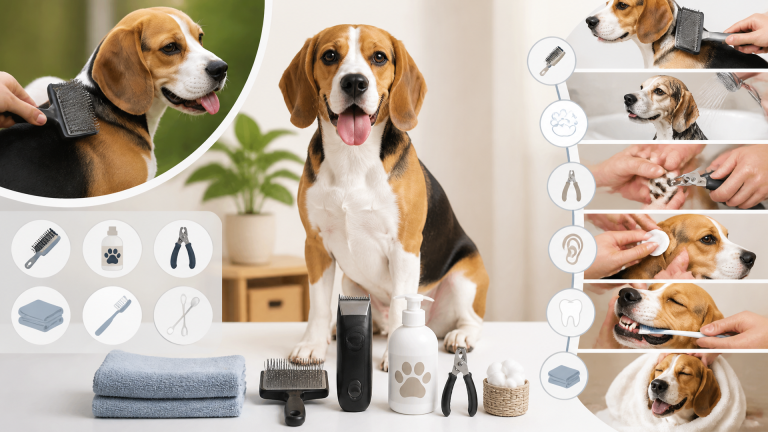
Beagles are prone to ear infections due to their floppy, poorly ventilated ears, and a chronic infection can temporarily or permanently affect hearing. Check your Beagle’s ears weekly for redness, odor, or discharge. Use a gentle ear cleaning solution like Virbac Epi-Otic and cotton balls — never cotton swabs.
Why weekly ear checks matter: If you ignore an ear infection, the inflammation can spread to the deeper structures of the ear, including the eardrum and middle ear. You’ll start to see head shaking, a foul smell, and eventually hearing loss that doesn’t bounce back even after treatment. Permanent damage happens when the infection reaches the nerve fibers in the inner ear. The window for full recovery is about 2–4 weeks from first symptoms — after that, the risk of chronic scarring increases. That’s why weekly ear checks and prompt treatment are non-negotiable for Beagle owners.
When to see the vet: If your Beagle shows no response to multiple sound types for more than a day or two, or if ear discharge or head shaking accompanies the hearing change, schedule a vet appointment. Most hearing loss in Beagles is treatable when caught early.
Trade-Off: When High-Pitched Training Tools May Not Work
Dog whistles and high-pitched squeaky toys are great for most Beagles, but they come with a real limitation: if your Beagle already has age-related or infection-related hearing loss, high-frequency sounds may be the first frequencies to fade. In that case, a whistle does nothing — you’re just blowing into silence.
Worse, if your Beagle has a painful ear infection, a loud whistle can cause discomfort or startle the dog into anxiety. The safer option: use a lower-pitched attention sound (a firm word like “hey!” or a clicker) instead of a whistle. Or, switch to visual signals entirely (hand signals, flashlight beam on the ground). For senior Beagles, combination cues — a hand wave plus a low “come here” — work better than any high-pitched noise.
FAQ: Beagle Hearing Questions
Do Beagles have better hearing than other dog breeds?
Not inherently. Beagles have average canine hearing capability. What sets them apart is their prioritization of scent over sound, which can make them seem less responsive than more biddable breeds like Labradors or Border Collies.
Why does my Beagle ignore me outside but listen perfectly inside?
Because outdoors is full of competing scents. Your Beagle’s nose is overriding their ears. This is normal breed behavior, not disobedience. Use high-value treats and hand signals to compete with the environment.
Can ear infections cause permanent hearing loss in Beagles?
Yes, if left untreated for more than 2–4 weeks. Chronic inflammation can scar the inner ear structures and damage nerve fibers. Weekly ear checks and prompt veterinary care prevent this.
At what age do Beagles start losing their hearing?
Senior Beagles (8+ years) may develop age-related hearing loss, especially for high-frequency sounds. Regular vet checkups can catch this early. Combination cues (visual + low-pitched verbal) work best for older dogs.
What’s the best way to call a Beagle that won’t listen?
Use an emergency recall sound paired with a high-value reward, and only use it for special situations. A dog whistle or a unique word like “COOKIE” said in a high-pitched voice, followed immediately by an amazing treat, works better than repeating “come.”
This article contains affiliate links. If you purchase through them, we may earn a small commission at no extra cost to you.
Save This Guide: Your Beagle’s hearing is excellent — the real challenge is motivation, not ability. Use the hearing test to rule out medical issues, then focus on training strategies that make you more interesting than whatever they’re sniffing. Check ears weekly, use hand signals, and keep high-value treats handy. The Beagle who ignores you today isn’t deaf — they’re just weighing their options.