How Long do Pomeranians Sleep
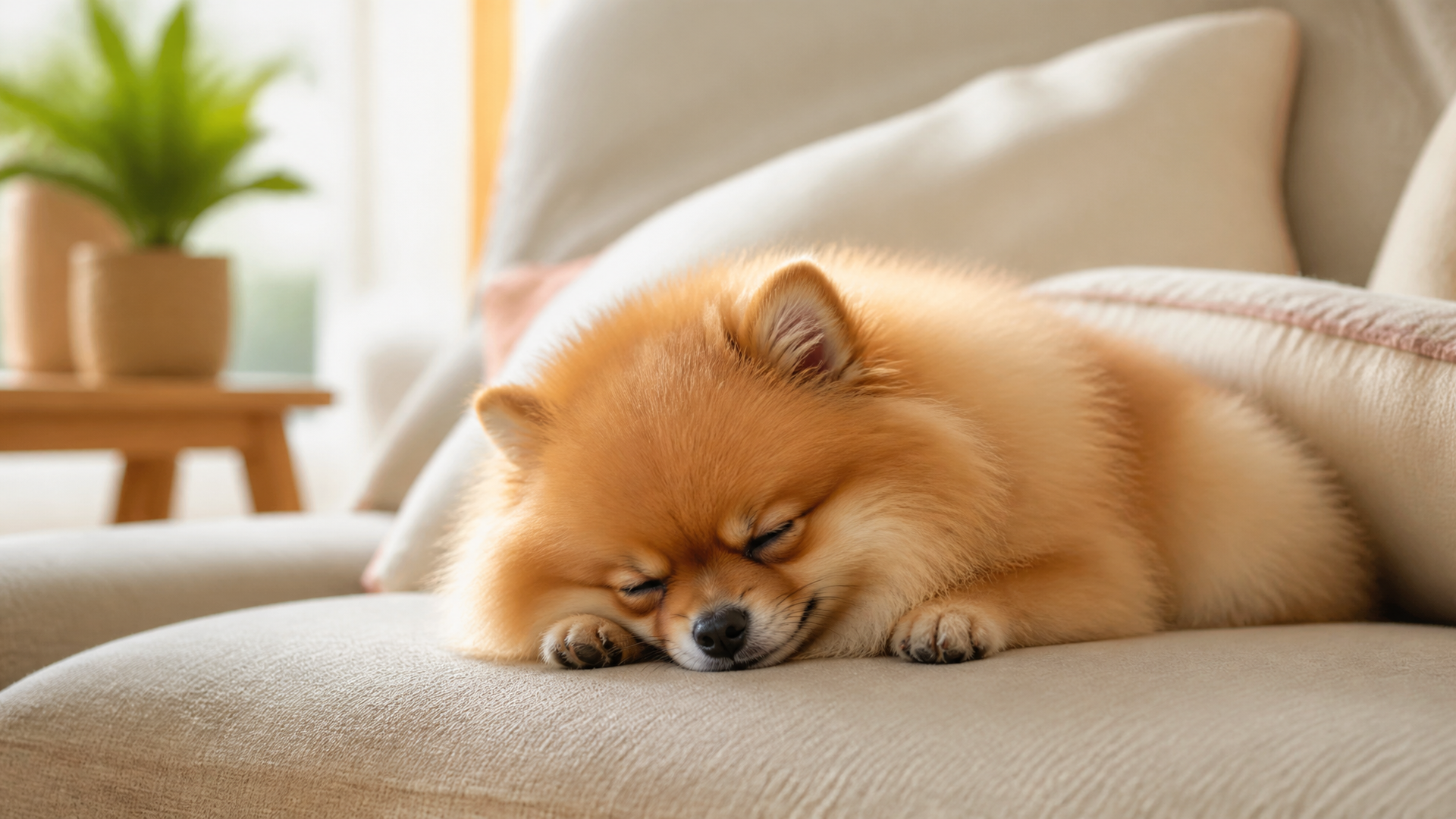
Pomeranians sleep 12 to 16 hours a day normally, with puppies and seniors hitting 18–20 hours. Their small bodies burn energy fast, so they need frequent naps between short bursts of play. If your Pom sleeps less than 12 hours or seems hard to wake, that’s a red flag.

What this means for you right now: You don’t need to force your Pom to sleep more or less — just match their sleep to their age and activity level. The biggest mistake owners make is confusing normal Pom napping with lethargy. If your Pom is alert and playful when awake, they’re fine. If they’re groggy even after 12 hours of sleep, then it’s time to check for health issues.
Age-Based Sleep Needs
Pomeranian Puppies (8 Weeks–1 Year)
Puppies sleep 18–20 hours a day. They wake for short bursts of eating, playing, and potty, then crash hard. This rapid cycle supports brain development. Don’t wake a sleeping puppy to play — interrupted sleep leads to overtired, cranky behavior.
Actionable tip: Set a consistent nap schedule. After 45 minutes of awake time, put your puppy in a crate or quiet pen. Most pups need a nap every 1–2 hours.
Adult Pomeranians (1–7 Years)
Adults average 12–14 hours per day, including overnight sleep (8–10 hours) plus daytime naps. A healthy adult sleeps deeply but wakes easily. If your adult Pom sleeps more than 16 hours consistently, check for boredom, lack of exercise, or an underlying issue.
Actionable tip: Provide two 15–20 minute walks daily. A tired Pom sleeps better at night and avoids problem behaviors from pent-up energy.
Senior Pomeranians (8+ Years)
Seniors sleep 16–18 hours a day, similar to puppies. Their metabolism slows, joints may ache, and they need more rest. Watch for sudden changes: if a senior Pom starts sleeping much more or less than usual, or seems disoriented when waking, see your vet.
Actionable tip: Invest in an orthopedic dog bed to support aging joints. Place it in a warm, draft-free spot. Seniors often sleep more soundly in a cozy, accessible bed.
What Affects Sleep Quality and How to Check
Not all sleep is equal. These factors influence rest quality, and there’s a simple way to verify if your Pom’s environment is right.
- Exercise level: Under-exercised Poms get restless; over-exercised ones crash harder but may wake sore. Verify: After a walk, does your Pom settle into a relaxed sleeping position within 10 minutes? If they pace or pant, the intensity or timing is off.
- Temperature: Pomeranians overheat easily. Keep the room cool (65–72°F). Verify: Place a thermometer near your Pom’s bed. If they avoid the bed and lie on cool tile or pant, the area is too warm. Add a cooling mat or fan.
- Diet and feeding schedule: A late meal or sugary treats disrupt sleep. Feed the last meal at least 3 hours before bedtime. Verify: Observe if your Pom wakes up to snack or ask for potty within 2 hours of bedtime — that indicates the feeding schedule needs adjustment.
- Health issues: Dental pain, arthritis, hypothyroidism, or Cushing’s disease can change sleep patterns. Many owners assume “my Pom is just lazy” and skip a vet check. The tradeoff is delayed treatment — a Pom with undiagnosed dental pain may sleep more to avoid chewing, but will also have bad breath and drool. Don’t mistake comfort-seeking for laziness.
3 Expert Tips for Better Pomeranian Sleep
1. Create a bedtime routine. Walk, potty, then 10 minutes of quiet brushing or cuddling. Do the same order every night. Poms thrive on predictability. Mistake to avoid: Letting your Pom nap on the couch and then moving them to the crate — they wake up confused and may whine.
2. Use a crate for nighttime sleep. Choose a crate big enough for your Pom to stand, turn, and lie down. Cover with a light blanket to block light. Mistake to avoid: Using the crate as punishment. Your Pom should associate it with sleep, not isolation.
3. Limit playtime before bed. Stop high-energy games at least 30 minutes before bedtime. Mistake to avoid: Letting your Pom “zoom” around the house at 10 PM — that’s overstimulation, not tiredness.
Sleep Warning Signs
Pomeranians are prone to conditions that affect sleep. Call your vet if you notice any of these:
- Excessive sleeping (over 20 hours a day) with no interest in food or play
- Difficulty waking — seems disoriented, stumbles, or takes more than 30 seconds to fully rouse
- Nighttime restlessness — pacing, panting, whining, or getting up every 15–30 minutes
- New or louder snoring — dental disease or collapsing trachea are common in Poms
- Sudden decrease in sleep — less than 10 hours total per day, combined with irritability
Quick reference: If your Pom checks two or more of these, schedule a vet visit within 48 hours.
Pomeranian Sleep vs. Other Breeds
| Breed | Average Sleep (Adult) | Notes |
|---|---|---|
| Pomeranian | 12–14 hours | High sleep need due to small size |
| Chihuahua | 12–16 hours | Similar small-breed pattern |
| Labrador Retriever | 10–12 hours | Lower sleep need; more active |
| French Bulldog | 14–16 hours | Sleep more due to breathing issues |
| Golden Retriever | 10–12 hours | Moderate sleep, needs exercise |
Poms sleep more than larger, more athletic breeds. That’s by design — small dogs have higher metabolic rates and shorter sleep cycles.
How to Build a Healthy Sleep Routine
Follow this flow to set your Pom up for quality rest.
Step 1 – Morning: Wake your Pom at the same time every day. Potty, breakfast, and a short walk (10–15 minutes).
Step 2 – Midday naps: After morning play, put your Pom in their crate or bed for a 1–2 hour nap. Repeat in the afternoon.
Step 3 – Evening wind-down: Stop active play 30 minutes before the final potty break. Offer a chew toy or calming brushing.
Step 4 – Bedtime: Last potty break, then crate or bed in a quiet, dark room. No food or water after that point (unless your vet advises otherwise).
Checkpoint after 3 days: If your Pom still wakes up crying at night, the routine may need tweaking.
Likely causes to verify:
- Potty break too early (should be right before crate time)
- Not enough daytime exercise (try an extra 5-minute walk)
- Bedding temperature too hot or cold (place your hand on the bed after 30 minutes — if it’s warm, add a cooling mat; if cold, add a fleece blanket)
Success signal: Your Pom settles into their bed within 5 minutes and stays asleep for at least 6 hours straight.
Escalation: If after 7–10 days your Pom still can’t sleep through the night with this routine, consult your vet to rule out pain or anxiety.
Frequently Asked Questions
How long do Pomeranian puppies sleep at night? Most puppies sleep 6–8 hours straight overnight by 12 weeks old. Expect a potty break every 3–4 hours before that.
Should I wake my Pomeranian to potty at night? For puppies under 12 weeks, set an alarm for a middle-of-the-night potty break (4–5 hours after bedtime). For adult Poms, let them sleep through unless they ask to go out.
Why does my Pomeranian sleep under the covers? It’s instinctive denning behavior. Provide a covered crate or a small, plush bed with a hood. Never force them under covers if they resist.
Can I let my Pomeranian sleep in my bed? Yes, but be consistent. Inconsistent access can cause anxiety. Also consider safety for a tiny dog (risk of rolling over or falling off the bed) and your own allergies.
How much sleep is too much for a Pomeranian? Consistently over 18 hours for an adult (or 20+ for a puppy/senior) combined with lethargy when awake is too much. A healthy Pom should be alert and playful during waking hours.
Save This Guide – Bookmark this page for quick reference. A healthy Pomeranian follows predictable sleep patterns. Use the age-based numbers, the step-by-step routine, and the warning signs to keep your Pom well-rested and happy.
Affiliate disclosure: Some product links in this article may earn us a small commission at no extra cost to you.