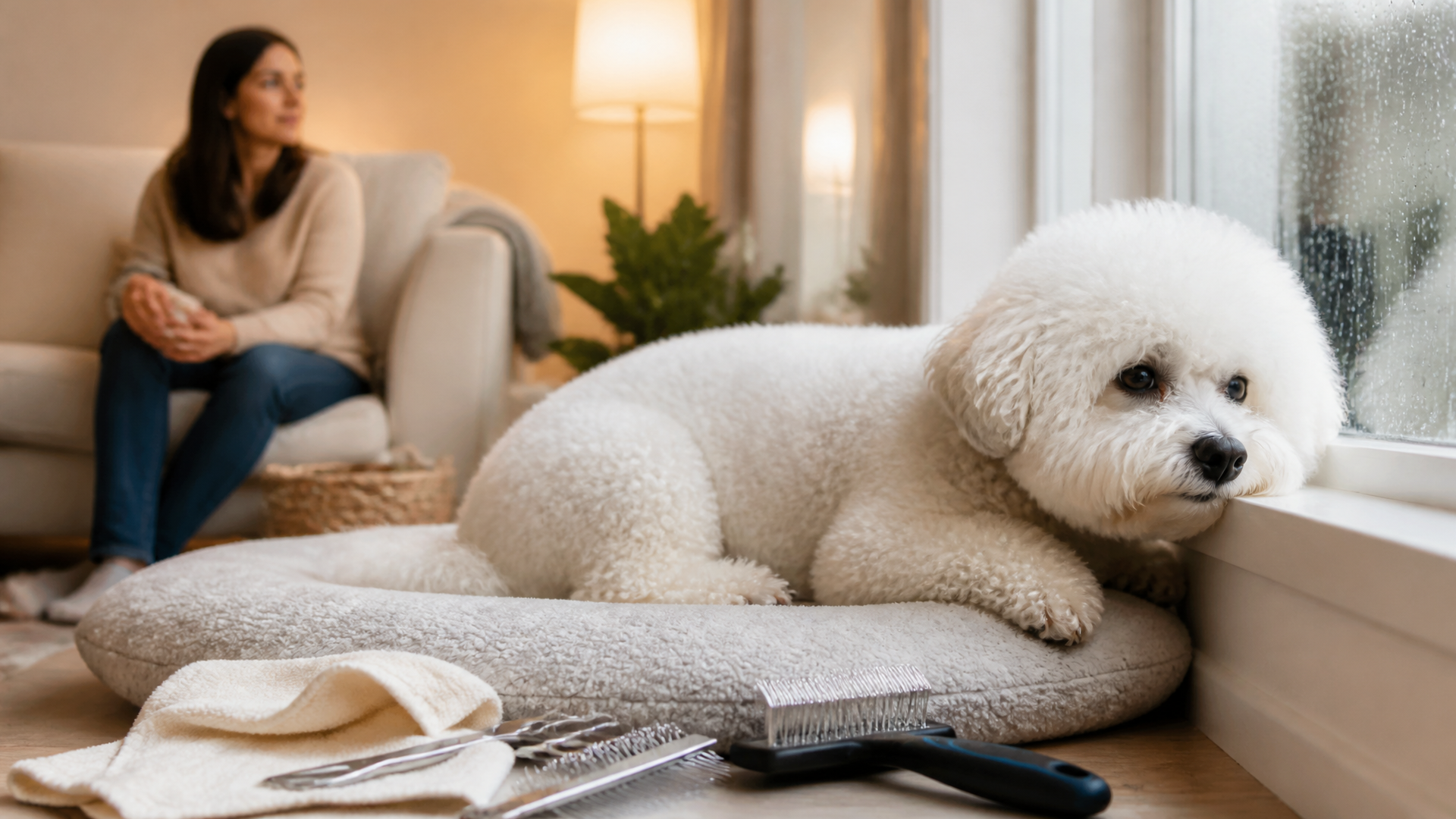
Bichon Frise Have Separation Anxiety
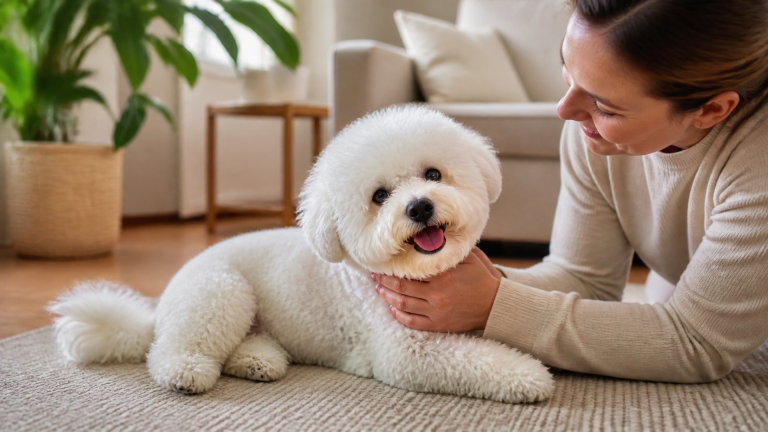
Bichon Frise are famous for their happy, fluffy personalities — but that cheerful coat hides a common struggle. Yes, Bichon Frise are prone to separation anxiety. Bred as companion dogs, they form intense bonds with their owners and genuinely struggle when left alone. The good news: this is one of the most fixable behavior issues if you catch it early and follow a consistent plan.

Why Bichons Are Prone to Separation Anxiety
This isn’t bad behavior — it’s breed wiring. Bichon Frise were developed specifically to be lapdogs and companions. They don’t have a working-dog independent streak. Their entire history is about being with you.
What this means in practice:
- They shadow you from room to room — this is normal Bichon behavior, not a red flag by itself
- They rely on your presence for comfort — a Bichon left alone loses their primary source of security
- They have high social needs — a bored Bichon will channel anxiety into destructive behaviors
A 2023 study in Applied Animal Behaviour Science found that companion breeds like Bichons showed separation-related distress at significantly higher rates than working or herding breeds. This isn’t a training failure — it’s a breed-specific vulnerability you need to manage proactively.
Practical implication: This means you cannot simply punish or ignore the behavior. Doing so will only increase your Bichon’s stress and make training harder. Instead, you need to invest time in systematic desensitization and, if needed, purchase calming tools like a KONG or crate. The steps below are designed for mild to moderate anxiety; if your dog shows signs of severe panic (panting, drooling, self-harm), stop DIY training and consult a vet first — that’s your applicability boundary.
The One Failure Mode Most Owners Miss (and How to Spot It Early)
Most owners look for the big signs — barking, chewing, accidents. But Bichons often show a quieter failure mode first: freezing or over-sleeping.
How to detect it early:
- Before you leave, does your Bichon go to their bed and not move? That’s not calmness — it’s shutdown behavior
- When you return, do they stay lying down for several minutes before greeting you? That’s emotional flooding, not relaxation
- Do they refuse treats or toys in the first 15 minutes after you leave? Anxious dogs lose appetite
The early checkpoint test: Set up a camera and leave for 20 minutes three separate times. If your Bichon shows any of these three signs, you’re seeing the beginning of separation anxiety — even if there’s no barking or destruction yet.
Catching this phase means you can use prevention strategies instead of needing a full behavior modification program later.
7-Step Training Plan for Your Bichon
Each step builds on the last. Do not skip ahead — Bichons need slow, consistent progress.
Preparation:
- High-value treats (small, soft, stinky — freeze-dried liver or cheese work well)
- A camera or phone to record (you need to see what they do, not guess)
- At least two weeks before expecting real progress
- A safe space — crate-trained works best for Bichons, but a puppy-proofed room is fine
Step 1: Desensitize Your Departure Cues
Your Bichon has learned that keys jingling + shoes on + grabbing your bag = you leaving. That pattern triggers anxiety before you’re even out the door.
- Pick up your keys and sit down for 10 minutes without leaving
- Put on your shoes and then watch TV
- Grab your bag and set it by the door — then cook dinner
- Repeat until your Bichon stops reacting to each cue
Duration: 5–7 days, multiple short sessions daily
Success check: Your Bichon doesn’t get up or change position when you do any departure cue
Step 2: Start With Micro-Departures (30 Seconds)
Leave through the door, close it, wait 30 seconds, and come back inside. Do not make a big greeting — act like nothing happened.
- Keep sessions under 1 minute for the first week
- Stay unpredictable — vary how long you’re gone between 10 and 60 seconds
- Only return when your Bichon is quiet (even if that means waiting an extra 10 seconds)
Duration: 3–5 sessions per day for 3–4 days
Success check: Your Bichon stays quiet and relaxed during all micro-departures
Step 3: Build to 5 Minutes
Double your time only when your Bichon is successful at the current duration.
- 1 minute → 2 minutes → 4 minutes → 5 minutes
- If your Bichon shows stress at any point, drop back to the previous duration for several sessions
- Never push through stress — that teaches them their fear is justified
Duration: 5–7 days
Success check: Your Bichon can handle 5 minutes alone without whining, pacing, or shutting down
Step 4: Introduce a Calming Activity
Bichons do better when they have a job to do while you’re gone.
- A frozen KONG stuffed with plain yogurt and a few kibble pieces (lasts 15–20 minutes)
- A lick mat with peanut butter (xylitol-free only)
- A puzzle toy that dispenses treats slowly
Give this to your Bichon as you leave, not before. It creates a positive association with your departure.
Step 5: Extend to 30 Minutes
Now you can work toward a typical errand-length absence.
- Increase in 5-minute increments: 5 → 10 → 15 → 20 → 30
- If you hit a setback, return to the last comfortable duration for 2–3 sessions
- At 30-minute success, do at least 5 successful sessions before moving on
Duration: 7–10 days
Success check: Your Bichon settles within 5 minutes of you leaving and stays relaxed for 30 minutes
Step 6: Reach 2 Hours
Most Bichons can handle 2–3 hours alone after proper training.
- Jump from 30 minutes to 45, then 60, then 90, then 120
- Do fewer sessions per day (1–2) as durations get longer
- Always set your Bichon up for success — never leave longer than they’ve proven they can handle
Duration: 10–14 days
Success check: Your Bichon is calm when you return, has not eliminated, and hasn’t damaged anything
Step 7: Proof the Training With Real-Life Variables
- Leave at different times of day
- Vary your pre-departure routine slightly
- Leave from different doors
- Occasionally leave a TV or radio on low volume (some Bichons find this soothing)
Quick Decision Aid: Is Your Setup Helping or Hurting?
Run through these 5 checks before starting your training:
| Check | Pass | Fail |
|---|---|---|
| Exercise before departure — Did your Bichon get a 15-minute walk or play session within 30 minutes of you leaving? | ✅ Yes | ❌ No — exercise first |
| Potty break — Did they go outside and eliminate within 10 minutes of departure? | ✅ Yes | ❌ No — take them out again |
| No big goodbyes — Did you leave calmly without long petting or emotional farewells? | ✅ Yes | ❌ No — keep departures neutral |
| Safe space ready — Is their crate or room set up with bedding, water, and a calming toy? | ✅ Yes | ❌ No — set this up now |
| Camera check — Are you recording to see what actually happens after you leave? | ✅ Yes | ❌ No — this is essential data |
If you fail more than two checks, fix those before starting your training sessions. Most training setbacks come from missing the basics, not from the Bichon being “stubborn.”
Common Obstacles (and What to Do)
Your Bichon has full-blown panic (panting, drooling, destroying crate):
Stop all alone time training immediately. Your dog needs a veterinary behaviorist, not DIY training. Ask your vet about anti-anxiety medication as a temporary bridge.
Trade-off to consider: Using a crate for a panicked Bichon can be dangerous — they may break teeth or paw pads trying to escape. If your dog shows panic in a crate, switch to a puppy-proofed room with no hazards, and consult a behaviorist before resuming crate training.
Your Bichon is fine alone for 30 minutes but panics at 45:
That’s a clear data point. Drop back to 25 minutes for at least 5 successful sessions, then try 35 minutes before jumping to 45. The jump was too big.
Your Bichon only struggles when you leave for work (fine on weekends):
That’s pattern anxiety, not general separation anxiety. Make your morning routine different on work days vs. weekends. If possible, have someone come mid-day for the first two weeks of training.
Your Bichon is destroying specific items (shoes, remote, mail):
That’s not separation anxiety — that’s boredom or teething behavior. Increase exercise and provide appropriate chew items. The training steps above still help, but you’re also managing a high-energy puppy.
Verification step: To confirm your Bichon is truly calm before you leave, wait until they are lying down with relaxed body language (soft eyes, not panting, ears loose). If they are still alert or following you, do not leave. Repeat Step 1 until they disengage from your departure cues.
Products That Help (Use These as Training Tools, Not Solutions)
These support your training program but never replace the desensitization steps above.
- KONG Classic — Stuff with plain yogurt, kibble, and a few blueberries. Freeze overnight for a longer-lasting challenge
- Snuffle Mat — Scatter a few kibble pieces in it before you leave. The foraging activity keeps a Bichon occupied for 10–15 minutes
- Adaptil Diffuser — Synthetic pheromone that some Bichons find calming. It’s not a standalone solution but can reduce baseline stress during training. Note: not all dogs respond; if no change after two weeks, discontinue.
- PetSafe Treat Cam — Lets you dispense treats remotely and watch your Bichon’s behavior. Useful for the 30-minute+ training phase
Disclosure: As Amazon Associates, we earn from qualifying purchases. These products are recommended based on breed-specific fit, not affiliate income.
When to Call the Vet
Call your vet if your Bichon:
- Has had accidents indoors for more than 3 weeks despite consistent training
- Has injured themselves trying to escape (broken nails, bloody paws, damaged teeth)
- Refuses to eat for more than 24 hours when you’re gone
- Vomits or has diarrhea from stress more than once
These signs suggest your Bichon needs medical support — prescription medication, a behaviorist referral, or both — to make training possible. There’s no shame in this. Some Bichons genuinely need anti-anxiety medication to be calm enough to learn.
Save This Guide
Bichon Frise are genetically prone to separation anxiety — but they’re also one of the most trainable breeds when you use the right approach. Start with the early detection test (that 20-minute camera check), then work through the 7 steps at your Bichon’s pace. The key takeaway: never push through stress, and always let your Bichon tell you when they’re ready for the next step. With patience and consistency, you can help your velcro dog feel safe even when you’re not home.