Cats That Look Like Sphynx
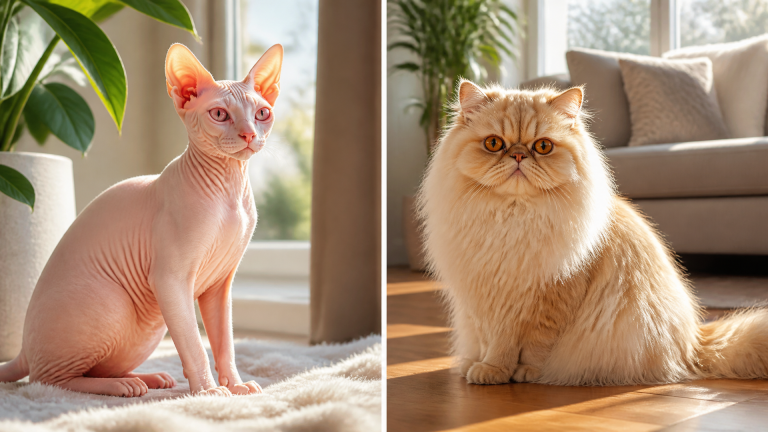
Love the Sphynx look but wondering if another breed might be a better fit? You’re not alone. Several breeds share the same hairless or nearly-hairless appearance, big ears, and wrinkled skin — but they differ in temperament, grooming needs, and health concerns.

Here’s the short answer: The Donskoy, Peterbald, Bambino, Elf Cat, Ukrainian Levkoy, Devon Rex, and Cornish Rex all resemble the Sphynx. Some are truly hairless; others have a fine, short coat that reads as hairless from a distance. Below is how to tell them apart and which one might suit your home.
What the Comparison Means for Your Next Choice
If you’re shopping for a “hairless cat” online, the photo alone won’t tell you enough. Picking the wrong breed can mean unexpected vet bills, a different bathing schedule, or a cat whose personality clashes with your household.
Practical implication: Before you commit, decide which care style you can handle. Sphynx cats need weekly baths and constant warmth — they get cold easily. Donskoys and Peterbalds produce less oil, so baths are less frequent. If you want the look without the heavy upkeep, a Cornish Rex (with its velvety short coat) may be your best bet. Match the maintenance to your lifestyle, not just the photo.
Hairless & Nearly-Hairless Breeds Compared
| Breed | Coat Type | Ear Shape | Body Build | Key Trait | Best For |
|---|---|---|---|---|---|
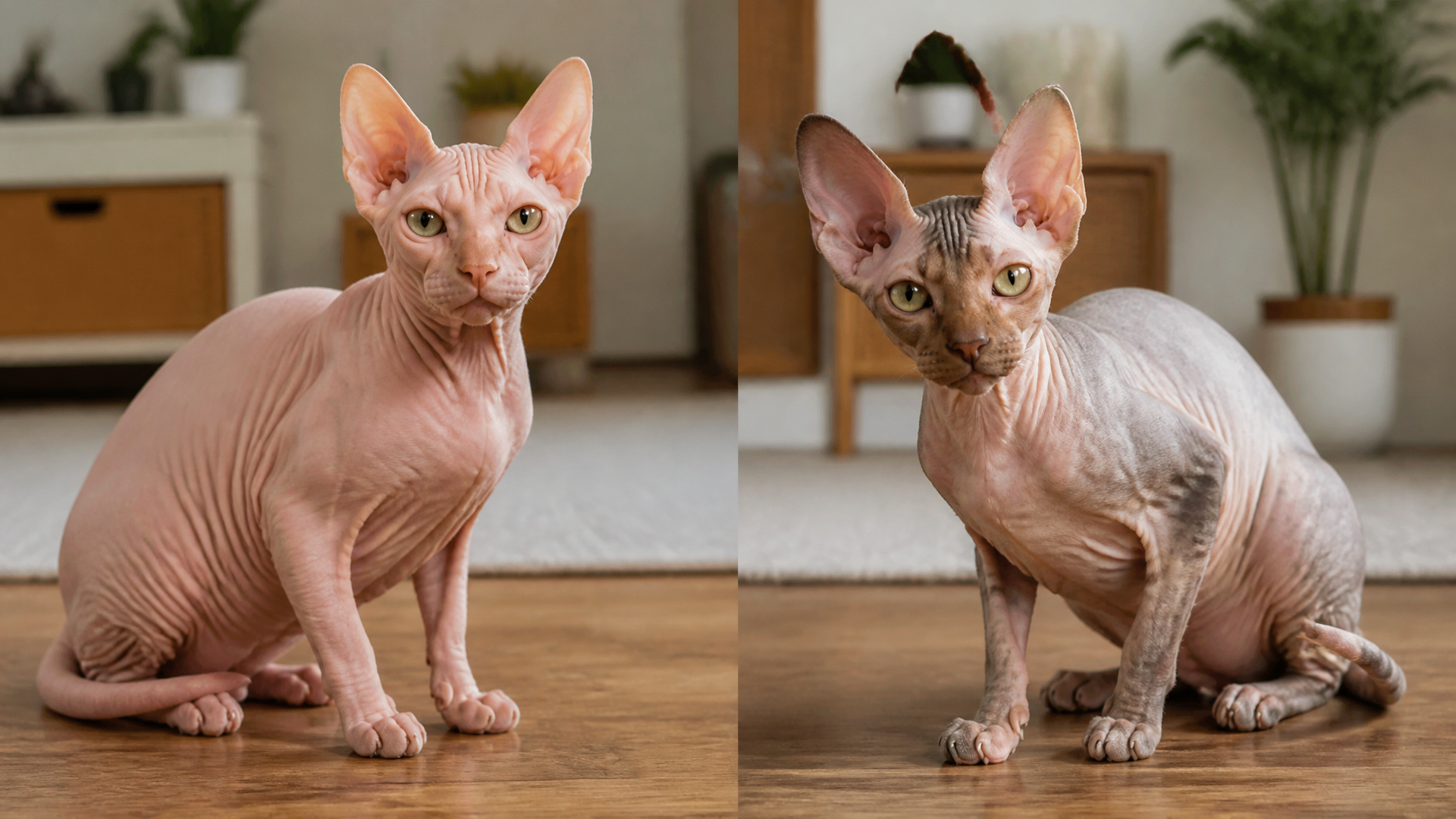
| Sphynx | Completely hairless (peach-fuzz texture) | Very large, wide-set, bat-like | Medium, muscular, round belly | Warm to touch, oily skin – needs weekly bath | Owners ready for weekly grooming and attention |
| Donskoy | Hairless, flocked, or brush coat | Large, slightly folded forward | Medium, fine-boned | Skin feels rubbery, not oily – less frequent baths | Owners who want a lower-maintenance hairless cat |
| Peterbald | Hairless to short fine coat | Extremely large, low-set | Long, elegant, slender | Whiskers often absent or curly; can become more coated with age | Owners who want a graceful, quiet companion |
| Bambino | Hairless (Sphynx × Munchkin) | Large, bat-like | Short legs, long body | Dwarf legs, playful personality – extra joint care needed | Families wanting a unique look with a friendly nature |
| Elf Cat | Hairless (Sphynx × American Curl) | Curled-back tips | Medium, muscular | Ears curl backward 90–180° – risk of ear infections if curls trap debris | Owners who love unusual ears and can clean them weekly |
| Ukrainian Levkoy | Hairless or very short coat | Folded forward, folded downward | Medium, angular | Folded ears + hairless face – limited availability outside Ukraine | Experienced owners willing to find a rare breed breeder |
| Devon Rex | Very short, soft curls | Oversized, low-set | Slender, high-arched back | Pixie-like face, wavy coat – needs ear cleaning often | Owners who want a social, dog-like cat with minimal shedding |
| Cornish Rex | Very short, tight curls | Large, egg-shaped | Slender, arched back | Six-point egg head, velvety coat – low oil production, fewer baths | Owners who want a hairless look with almost no bathing |
How to Spot the Difference: A 3-Step Identification Flow
Use this simple verification process when you’re looking at a cat in person or in photos. Each step gives you a checkpoint to rule out the wrong breed.
Step 1: Check the Ears
First checkpoint: Look at ear size and shape.
- Bat-like and wide-set → Sphynx or Bambino
- Curled backward → Elf Cat
- Folded forward or drooping → Ukrainian Levkoy or Donskoy
- Low-set and oversized → Peterbald or Devon Rex
Likely cause of confusion: Breeders sometimes crop photos at an angle that hides ear curl. Ask for a straight-on head shot.
Step 2: Feel the Skin (or Look Closely at Texture)
Second checkpoint: The skin feel tells you the breed’s oil level and coat type.
- Warm, oily, with peach-fuzz texture → Sphynx (you’ll need weekly baths)
- Rubbery, slightly tacky → Donskoy (less oily, baths every 10–14 days)
- Soft, fine down → Peterbald (may develop more coat with age)
- Velvety short curls → Devon Rex or Cornish Rex (not truly hairless)
Friction point: Photos can’t show texture. If you’re buying online, ask the seller for a video where they run a hand over the cat’s back and describe the feel.
Step 3: Look at Body Shape
Third checkpoint: The silhouette is a dead giveaway.
- Muscular with a round belly → Sphynx
- Long, slender, elegant → Peterbald
- Short legs → Bambino
- Arched back with a whippet-like body → Cornish or Devon Rex
Success check:
If the cat matches all three checkpoints (ears + skin + body) for one breed, you can be 95% confident. If you’re still unsure, ask the breeder for a pedigree or genetic test certificate. Many breeders offer health records that include breed confirmation.
Escalation signal: If the seller cannot provide a clear photo from multiple angles or gets defensive about breed origin, walk away. A reputable breeder will happily help you verify.
Real-World Trade-Offs: What Can Go Wrong
No breed is perfect, and each hairless lookalike has a hidden downside that owners discover after bringing them home.
- Elf Cat ear curls are adorable, but the fold can trap wax and debris. Without weekly ear cleaning, infections develop fast — and treatment costs $200–$500 per vet visit.
- Bambino short legs come from the Munchkin gene, which can lead to spinal issues and arthritis as the cat ages. Pet insurance is strongly recommended.
- Donskoy skin is more fragile than Sphynx skin. Using Sphynx-specific moisturizers (which are heavier and oilier) can cause breakouts and irritation on a Donskoy. Always check breed-specific product recommendations.
- Ukrainian Levkoy is extremely rare outside Ukraine and Russia. Importing one can cost $2,000–$4,000 in travel fees, and you may struggle to find a vet familiar with the breed’s ear and skin needs.
Mismatch alert: If you want a cuddly lap cat that sleeps with you, the Peterbald is more independent and may not seek constant human contact. The Sphynx and Devon Rex are far more attention-driven.
Grooming & Care: These Three Tips Save You Time (and Vet Bills)
Every “hairless” breed requires specific care, but the details vary. Here are three expert tips to keep your cat healthy — regardless of which breed you choose.
Tip 1: Bathing frequency depends on oil production.
- Actionable step: Sphynx cats need a weekly bath with a gentle, hypoallergenic cat shampoo. Donskoys can go 10–14 days because their skin produces less oil.
- Common mistake: Over-bathing a Peterbald or Donskoy. Their skin is more fragile; too many baths cause dryness and irritation, leading to scratching and sores.
Tip 2: Moisturize after every bath — but use breed-safe products.
- Actionable step: Apply a fragrance-free, pet-safe moisturizer (like coconut oil or a vet-recommended balm) immediately after toweling dry.
- Common mistake: Using Sphynx-specific lotion on a Donskoy. Donskoy skin is less oily, so heavy moisturizers can clog pores and cause acne. Ask your vet for a lighter formulation.
Tip 3: Sun protection is non-negotiable.
- Actionable step: Keep hairless cats indoors during peak UV hours (10 a.m.–4 p.m.). If they do go outside, apply pet-safe sunscreen to ears and nose.
- Common mistake: Assuming “indirect sunlight” is safe. Sun through a window can still burn sensitive skin over time, especially on Donskoys and Peterbalds with thinner skin.
Daily & Weekly Care Checklist
Every day:
- Wipe skin folds and ear creases with a soft, damp cloth
- Check for redness, dryness, or flaking
- Provide a warm bed (hairless cats run cold — 75°F minimum)
- Apply pet-safe moisturizer if skin looks dry
Weekly:
- Full bath with hypoallergenic cat shampoo
- Ear cleaning with a vet-recommended solution (pay extra attention to curled or folded ears)
- Nail trim
- Check for blackheads or acne on chin and tail
Monthly:
- Deep clean bedding and favorite napping spots
- Inspect skin for unusual bumps or discoloration
- Weigh your cat to track healthy growth
When to Call the Vet (Warning Signs Common in Hairless Cats)
Because hairless cats have exposed skin, they show signs of distress differently than coated breeds. Watch for these specific red flags:
- Skin that feels excessively hot or has open sores — could be sunburn, infection, or allergic reaction
- Yellow or green discharge from eyes, nose, or ears — often indicates an ear infection or respiratory issue
- Sudden increase in oil production or greasiness — may signal a dietary imbalance or skin infection
- Lethargy or hiding for more than 24 hours — hairless cats lose body heat fast; check for fever or chills
- Loss of appetite for 12+ hours (kittens) or 24+ hours (adults) — especially common in breeds with sensitive stomachs like the Devon Rex
Escalation signal: If the cat’s skin becomes sticky, red, or emits a bad odor, see a vet immediately. This can indicate a bacterial infection that spreads quickly on hairless skin.
Which Breed Fits Your Home Best?
- Want a true Sphynx temperament (social, attention-seeking, dog-like)? Stick with the Sphynx or Devon Rex.
- Need a quieter, less demanding cat? The Peterbald or Donskoy tends to be more independent.
- Looking for a unique look with a playful personality? The Elf Cat or Bambino combines unusual ears or short legs with a friendly disposition.
- Hoping for a lower-maintenance “hairless” look? The Cornish Rex has a coat so short it reads as hairless, but needs far fewer baths.
Save This Guide: Your Lookalike Cheat Sheet
Bottom line: Not every hairless cat is a Sphynx, and not every Sphynx lookalike needs the same care. Use the three-step identification flow (ears → skin → body shape) before you buy or adopt. Refer to the comparison table when browsing breeder listings or rescue photos.
Key takeaway: Match the breed to your lifestyle — not just the photo you pinned. A few minutes of verification now can save you years of mismatched care later.
This post contains affiliate links. As an Amazon Associate, I earn from qualifying purchases. I only recommend products I trust for my own pets.