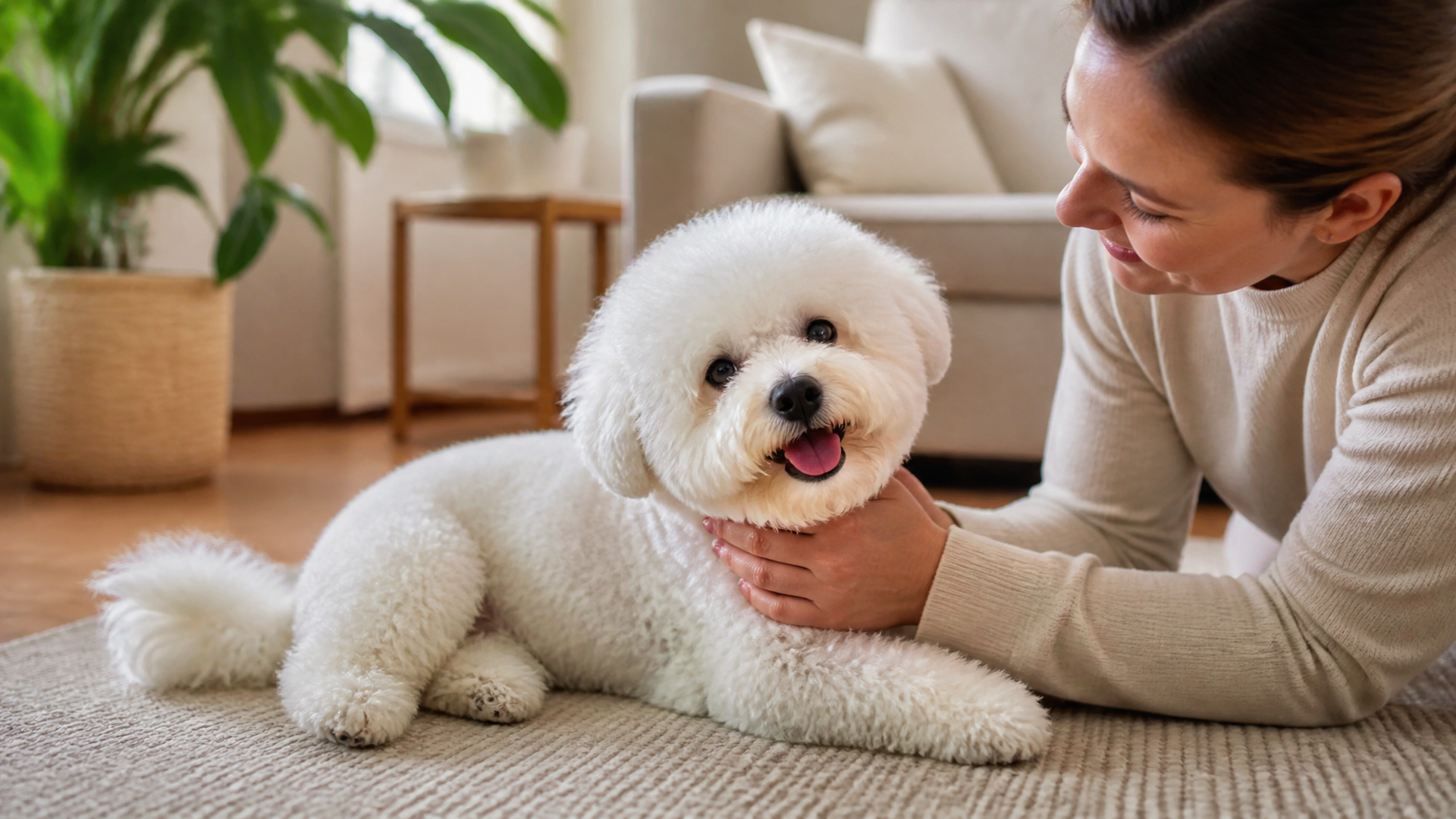
Bichon Frise Bladder Stones Treatment
The short answer: Most bladder stones in Bichon Frise can be treated without surgery if caught early and the stone type is identified. Struvite stones often dissolve with a prescription diet and antibiotics. Calcium oxalate stones usually require surgical removal because they don’t dissolve. Your vet must analyze the stones to pick the right path — guessing wrong wastes time and risks your dog’s health.

Here’s what most owners don’t realize: feeding a generic “urinary health” food without a stone analysis can actually make calcium oxalate stones grow faster. That bag of grocery-store urinary care kibble is designed to lower urine pH — great for struvite, dangerous for oxalate. Always confirm the stone type before changing the diet.
Urgency Check: When to See the Vet Immediately
Some bladder stone symptoms turn dangerous fast. Take your Bichon to the vet right away if you notice any of these:
- Unable to urinate or only passing a few drops (complete blockage is life-threatening)
- Straining to pee with little or no output
- Blood in the urine — bright red or pink
- Crying or whining when trying to urinate
- Lethargy, vomiting, or loss of appetite (signs of possible kidney damage)
A blocked urethra in a small dog like a Bichon Frise is a medical emergency. Do not wait to see if it passes.
Why Bichons Develop Bladder Stones
Bichons have a genetic predisposition to both major stone types — struvite and calcium oxalate. Their small bladder means even a tiny stone can cause irritation and partial blockage. Common triggers include:
- Concentrated urine from not drinking enough water
- High-mineral diets (especially dry kibble with excess magnesium, phosphorus, or calcium)
- Urinary tract infections (UTIs) — common in Bichons and a direct cause of struvite stones
- Infrequent potty breaks that let urine sit in the bladder longer
Know the early signals: accidents in the house, licking the genital area, or a change in peeing posture. Catching stones early gives you more treatment options.
What Treatment Means for Your Next Move
Treatment hinges entirely on the stone type. That’s the single most important decision you’ll make with your vet.
- If your Bichon has struvite stones (linked to UTIs), you can likely skip surgery. A prescription dissolution diet plus antibiotics will dissolve them over 4–8 weeks. You’ll save thousands of dollars and hospital stress.
- If your Bichon has calcium oxalate stones (linked to genetics and diet), no dissolution diet works. Surgery is the only reliable way to remove them. Attempting to dissolve them with a low-pH diet can make them grow.
Practical implication: Don’t buy any food or supplement until your vet confirms the stone type through lab analysis. One wrong purchase (and three weeks of feeding) can make the problem worse.
Step-by-Step Treatment Process
Step 1: Vet Diagnosis — Don’t Skip the Stone Analysis
Your vet will start with a urinalysis to check for infection, blood, and crystals. An X-ray or ultrasound confirms the presence, size, and location of stones. The critical next step is stone analysis (examining the actual stone composition). Without this, you can’t choose the right treatment.
How to verify the stone type yourself: Ask your vet for a copy of the stone analysis report. Look for the specific mineral composition listed (e.g., “magnesium ammonium phosphate” for struvite, “calcium oxalate monohydrate” for oxalate). If the report isn’t clear, call the lab. You need this confirmation before starting any diet.
A Bichon with recurrent UTIs is far more likely to have struvite stones. A Bichon with no infection but high urine calcium is more likely to have calcium oxalate.
Step 2: Identify the Stone Type — The Treatment Fork
| Stone Type | Common Cause | How It Forms | Treatment Path |
|---|---|---|---|
| Struvite | Urinary tract infection (UTI) | Bacteria raise urine pH, causing magnesium ammonium phosphate to crystallize | Prescription dissolution diet + antibiotics — surgery usually not needed |
| Calcium Oxalate | Genetics, diet, low water intake | Excess calcium and oxalate bind in acidic urine | Surgical removal (cystotomy) — diet alone won’t dissolve them |
Step 3A: Struvite Stones — Dissolution Without Surgery
If the stones are struvite, your vet will prescribe a therapeutic urinary diet (like Hill’s Prescription Diet c/d or Royal Canin Urinary SO) and a course of antibiotics to clear the underlying UTI.
The diet lowers urine pH and limits the minerals needed for struvite to form. Over 4–8 weeks, the stones gradually dissolve. Feed only the prescription food — no treats or table scraps. Give the full antibiotic course. Bring your Bichon back for follow-up X-rays every 2–4 weeks to track stone shrinkage.
The success rate is about 80–90% for struvite stones dissolving completely when the infection is controlled. Both Hill’s c/d and Royal Canin Urinary SO come in wet and dry forms. Wet food adds extra water, which helps flush the bladder — a smart choice for Bichons who don’t drink much.
Step 3B: Calcium Oxalate Stones — Surgery Is the Standard
Calcium oxalate stones do not dissolve with diet. They must be physically removed. The most common procedure is a cystotomy — a surgical incision into the bladder to extract the stones.
Your Bichon will be under general anesthesia. Recovery usually takes 7–14 days with a cone, pain meds, and restricted activity. After surgery, your vet will send the stones for analysis to confirm they are calcium oxalate. A special preventive diet (low oxalate, low calcium, moderate protein) will be prescribed to reduce recurrence.
What can go wrong: Surgery can leave microscopic fragments behind, especially if the stones are small or embedded in the bladder wall. These fragments act as seeds for new stones. Ask your vet about post-op X-rays to confirm the bladder is completely clear. Also, some Bichons have a reaction to the suture material inside the bladder, causing inflammation — discuss dissolvable sutures with your vet.
No diet or medication currently works on calcium oxalate stones. Attempting to dissolve them with a struvite diet could actually make them grow faster.
Step 4: Post-Treatment Prevention — Both Stone Types
Once stones are gone, prevention is a lifelong commitment for a Bichon.
- Continue a urinary health food long-term (or a maintenance formula recommended by your vet)
- Increase water intake — add water to meals, offer a pet fountain, or switch to canned food
- Don’t let urine sit in the bladder for more than 6–8 hours
- Your vet may recommend urinalysis every 6–12 months
- Treat UTIs promptly at the first sign of smelly or discolored urine
Quick Decision Aid: Home Care vs. Vet Visit
Use this checklist to decide your next move. Mark each item true or false.
- [ ] My Bichon is able to pee (even if just a trickle) — False → Emergency vet now
- [ ] There is visible blood in the urine — True → Vet visit within 24 hours
- [ ] My dog has had a bladder stone before — True → Vet visit to recheck (stones recur in 30–50% of Bichons)
- [ ] I have been feeding a generic grocery-store kibble — True → Switch to a vet-approved urinary diet as soon as possible
- [ ] My Bichon seems energetic, eating normally, and peeing without straining — True → Schedule a vet appointment this week for a routine urinalysis and X-ray
If you checked any “True” in the first three items, do not attempt home treatment. Bladder stones require professional diagnosis and prescription management.
Preventing Future Bladder Stones in Your Bichon
The most effective prevention is a combination of diet, hydration, and monitoring.
Feed a prescription urinary diet — general dog food often contains too much mineral content for a stone-prone Bichon. Brands like Hill’s c/d, Royal Canin Urinary SO, and Purina Pro Plan UR are recommended by vets.
Bichons can be picky drinkers. A circulating fountain encourages more water intake, diluting urine and reducing crystal formation. Wet food has 70–80% moisture vs. 10% in dry kibble. Unsalted bone broth (without onions or garlic) can also tempt a reluctant drinker.
Schedule twice-yearly vet checks — a simple urine test can catch crystals before they become stones. Female Bichons and older dogs are especially prone to UTIs. Foul-smelling urine or licking the genitals is a red flag.
Save This Guide
Bladder stones in Bichon Frise are treatable, but the approach depends on knowing the stone type. Struvite stones dissolve with diet and antibiotics; calcium oxalate stones need surgery. Always have stones analyzed before changing food, and feed a lifelong urinary health diet to prevent recurrence. A Bichon that stays hydrated and gets frequent potty breaks has the best chance of staying stone-free.
Disclosure: Some product links in this article are affiliate links. We may earn a small commission if you purchase through them, at no extra cost to you.
FAQ
Can bladder stones go away on their own?
No. Struvite stones can dissolve with a prescription diet and antibiotics, but they will not disappear without treatment. Calcium oxalate stones never dissolve and must be surgically removed.
How much does bladder stone treatment cost for a Bichon Frise?
Surgical removal typically costs between $1,500 and $3,000 depending on your location and the complexity. Medical dissolution (diet plus antibiotics) runs $200–$600 for the full treatment period.
Can I prevent bladder stones with a homemade diet?
Homemade diets are difficult to balance correctly for stone prevention. Work with your vet or a veterinary nutritionist if you want to go this route. Most Bichons do best on a proven prescription urinary diet.
How long does my Bichon need to stay on a prescription diet?
Most vets recommend a urinary health diet for life once your Bichon has formed stones. The recurrence rate is high — about 30–50% — and switching back to regular food increases that risk significantly.