10 Week Old Beagle Puppy
Bringing home a 10-week-old Beagle puppy is exciting — and a little overwhelming. At this age, your puppy is in a critical socialization window, needs a consistent feeding and potty schedule, and is ready for basic training. Here’s exactly what to do during the next few weeks to set your Beagle up for success.

One important reality check: Not all Beagles are the same. If your puppy comes from a field-bred line (hunting background), expect higher energy, stronger prey drive, and more stubbornness. Show-line Beagles are usually calmer but still food-obsessed. A rescue or rehomed puppy may have different past experiences that change your approach. Adjust the advice below based on your puppy’s background — the core schedule stays, but intensity and patience levels vary.
What to Feed a 10 Week Old Beagle Puppy
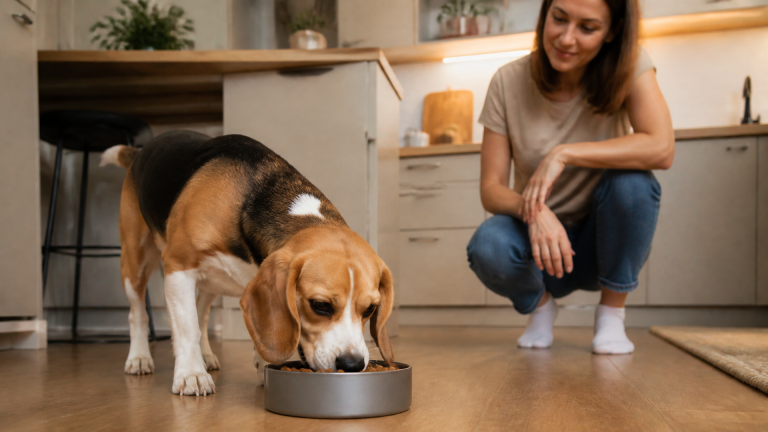
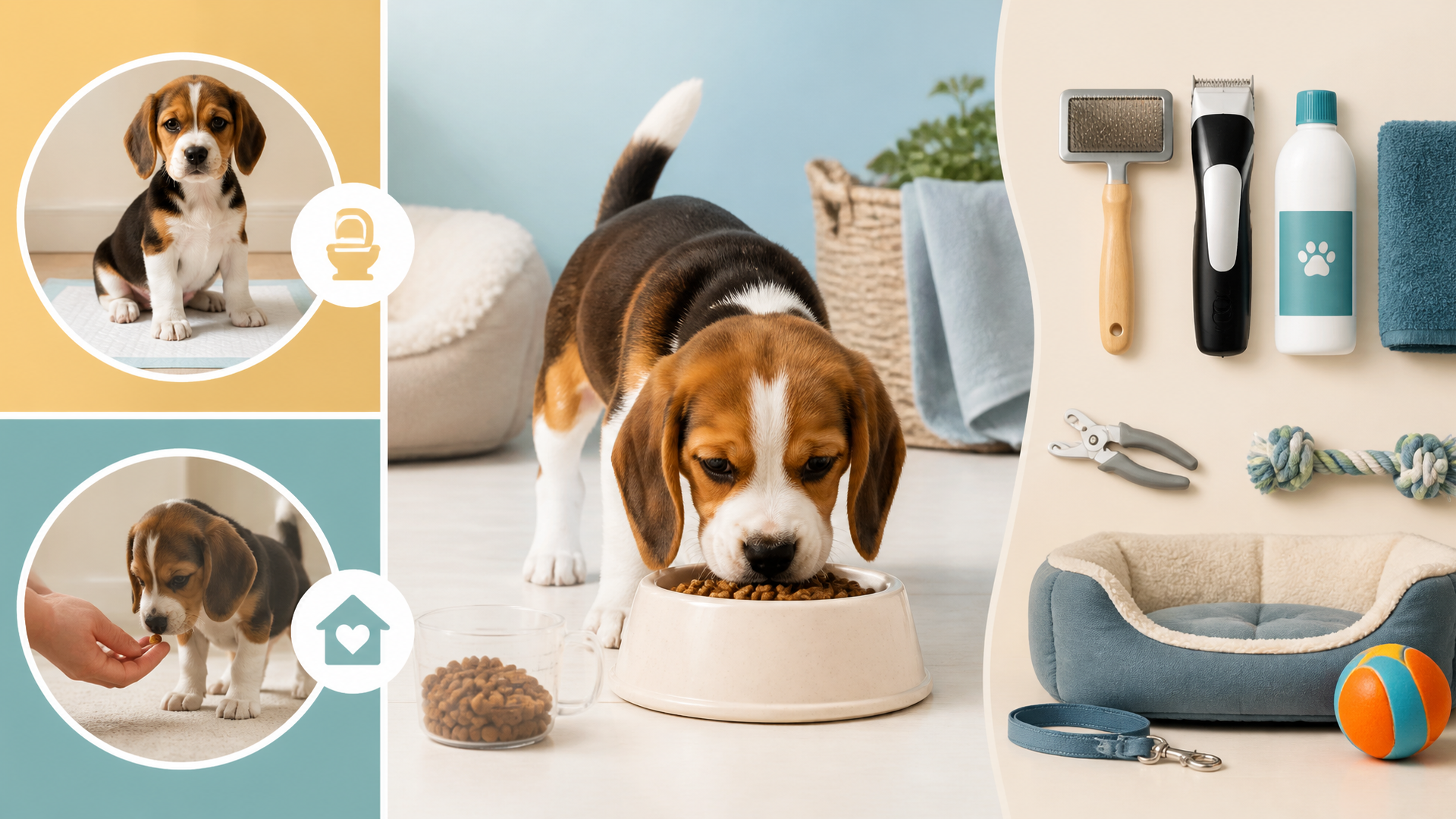
Beagles are food-motivated (no surprise), so feeding is easy but requires precision. At 10 weeks, your puppy should eat three meals per day — not two. Puppies this age have small stomachs and need steady energy.
- Type of food: High-quality large-breed or all-life-stages puppy kibble (look for AAFCO approval). Avoid grain-free unless your vet recommends it; grain-free diets are linked to heart issues in some dogs.
- Amount: About ½ to ¾ cup per meal (total 1.5–2.25 cups per day). Check the bag for weight-based guidelines, but every brand differs. Weigh your puppy weekly and adjust.
- Treats: Use tiny soft training treats (3–5 calories each) or pieces of plain boiled chicken. Beagles gain weight easily — limit treats to 10% of daily calories.
Practical implication for your next purchase: If your Beagle finishes every meal but still acts hungry, do not increase the portion — instead, switch to a higher-protein kibble (e.g., 28–30% protein) or add a small amount of plain steamed green beans as a low-calorie filler. If your puppy frequently leaves food, reduce the portion by ⅛ cup per meal. A Beagle that consistently leaves food may have a digestive issue or dislike the flavor — try a different protein source (e.g., salmon instead of chicken) before switching brands.
Verification step: To confirm you’re feeding the right amount, weigh your puppy weekly on a kitchen scale (or use a baby scale) and compare to your breed’s growth chart. At 10 weeks, a typical Beagle puppy weighs 6–9 pounds. If your puppy is gaining more than 2 pounds per week, reduce food by ¼ cup total daily. If gaining less than 0.5 pounds per week, increase by ¼ cup.
Expert Tip #1: Feed on a consistent schedule (e.g., 7am, 12pm, 6pm). Remove the bowl after 15 minutes, even if food remains. This prevents picky eating and trains your Beagle to eat when food is offered. Common mistake: leaving food out all day (free-feeding) — it leads to overeating and makes potty training harder.
Quick Reference Card – Feeding at 10 Weeks
| Meal | Time | Amount (kibble) |
|---|---|---|
| Breakfast | 7am | ½–¾ cup |
| Lunch | 12pm | ½–¾ cup |
| Dinner | 6pm | ½–¾ cup |
Transition to two meals per day around 6–8 months.
Potty Training a Beagle Puppy
Beagles are stubborn and can be tough to housetrain. But at 10 weeks, you have a head start. Expect accidents — your puppy’s bladder control is about 2–3 hours max.
- Take puppy out every 2 hours during the day, immediately after waking, after meals, and after play.
- Use a designated potty spot (same patch of grass or puppy pad). Beagles rely on scent cues.
- Praise and treat the second they finish outdoors. Do not wait until they come inside.
- Crate training is essential: a crate prevents accidents at night and teaches bladder control. At 10 weeks, your Beagle can hold it 3–4 hours overnight if taken out once.
Trade-off to know before choosing a method: Using puppy pads indoors can be faster for apartment dwellers, but it delays outdoor training. If you use pads, place them near the door and gradually move them outside over two weeks. However, if you have a yard, skip pads entirely — they teach your Beagle that indoor spots are okay, which can set back training by weeks. The concrete consequence: a puppy that uses pads for three weeks may take another month to reliably go outside because the indoor scent lingers.
Checklist for Potty Success (use daily):
- ☐ Take puppy out first thing in the morning.
- ☐ Take out after every meal (within 10 minutes).
- ☐ Take out after every nap or play session.
- ☐ Reward with a high-value treat only after they go in the right spot.
- ☐ Never punish accidents — clean with an enzymatic cleaner to remove scent.
Expert Tip #2: Keep a log of potty times for 3 days. You’ll spot a pattern and can schedule trips proactively. Common mistake: expecting full bladder control by 10 weeks — realistic goal is 80% reliability by 16 weeks.
Socialization & Early Training
The 10–16 week window is prime for socialization. Beagles are friendly but can develop separation anxiety or reactivity if not exposed properly.
- Introduce new people, dogs, and surfaces slowly. Have visitors give treats. Let puppy sniff for 10 seconds, then move on.
- Enroll in a puppy kindergarten class — they teach bite inhibition and off-leash focus. Beagles respond best to positive reinforcement (treats, praise).
- Teach five basic cues: name recognition, sit, down, come, and leave it. Keep sessions to 3–5 minutes, 3 times a day.
Expert Tip #3: Use a treat scatter game to build focus. Toss 10 tiny treats on the floor and say “find it.” This calms an excited Beagle and teaches them to pay attention to you. Common mistake: trying to teach “stay” too early — Beagles are scent-driven roamers; wait until 12–14 weeks.
Decision Criterion: When to Adjust Your Training Approach
- If you live in an apartment (thin walls, close neighbors): prioritize quiet cue training and early crate games (prevents barking that annoys neighbors).
- If you have a yard: focus on fence-proofing and recall training — Beagles follow their nose and may ignore “come” if a rabbit runs by.
Crate Training & Sleeping
Beagles are den animals; a properly introduced crate becomes their safe space. At 10 weeks, your puppy needs the crate to nap and sleep (8–12 hours of sleep per day).
- Crate size: Large enough to stand, turn around, and lie down. Block off extra space so they don’t use one end as a bathroom.
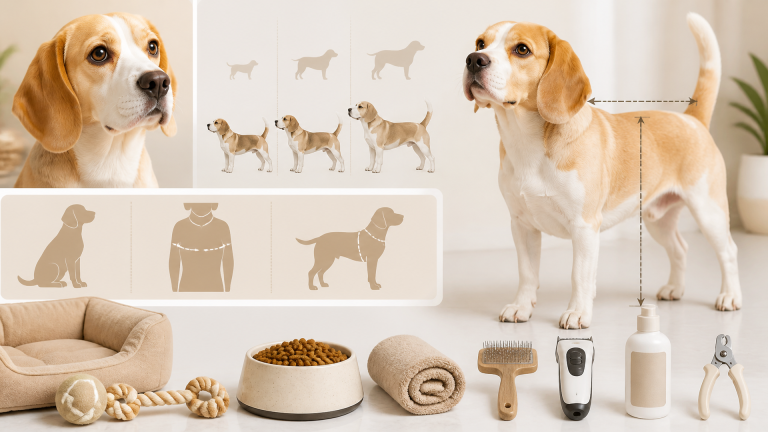
- Verification step: Measure your puppy from nose to base of tail and add 2–3 inches. That’s the minimum crate length. To test fit, put the puppy in the crate: if they can stretch out fully without touching both ends, it’s too big. Use a divider to reduce space until they are 5–6 months old. An oversized crate encourages soiling on one side.
- Night routine: Take puppy out to potty right before bed. If they cry, wait for a 10-second quiet moment before letting them out. Never let them out while whining — it teaches that whining = freedom.
- Daytime naps: Use the crate for enforced naps after 1 hour awake. A tired Beagle is a calm Beagle.
Health & Vet Visit Checklist
Your 10-week-old Beagle should have had at least their first set of vaccines (DHPP). If not, schedule immediately.
- Vaccinations needed: DHPP (distemper, hepatitis, parvo, parainfluenza) at 8, 12, and 16 weeks; rabies at 12–16 weeks; bordetella (kennel cough) optional but recommended.
- Parasite prevention: Heartworm and flea/tick prevention starting at 8 weeks. Ask your vet for chewable tablets (e.g., Heartgard, NexGard).
- Spay/neuter: Discuss with your vet; many recommend waiting until 6–12 months for Beagles to reduce hip/joint issues.
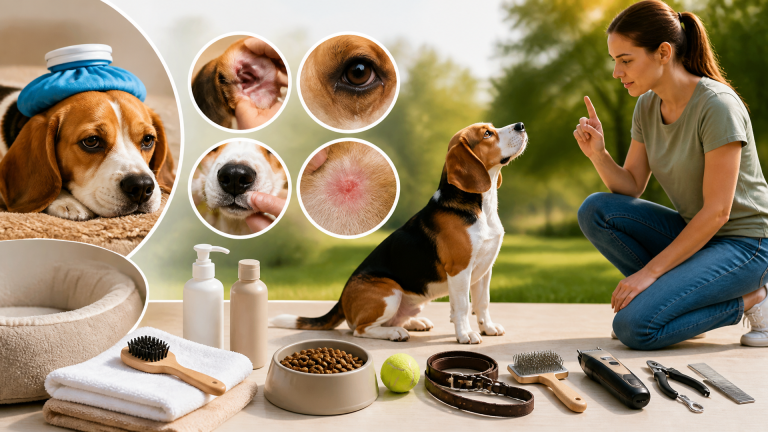
- Watch for signs: Lethargy, vomiting, diarrhea (especially bloody), or not eating for more than 12 hours — call your vet immediately. Beagles are prone to ear infections (floppy ears trap moisture) — check weekly for redness, odor, or head shaking. Parvo is a real risk in puppies: if your puppy has bloody diarrhea and is lethargic, get to an emergency vet within hours.
Exercise & Enrichment
Beagles have high energy but can’t handle long walks at 10 weeks. Follow the five-minute rule: 5 minutes of structured exercise per month of age (max 10 minutes twice daily for a 10-week-old).
- Play sessions: Fetch indoors (soft toys), hide-and-seek with treats, puzzle toys (like a Kong stuffed with peanut butter and frozen, or a Nina Ottosson puzzle). Beagles need mental stimulation more than physical at this age — a 10-minute nose work game tires them more than a 20-minute walk.
- Short walks: 5–10 minutes on a harness (not collar — Beagles pull and can injure their trachea). Focus on sniffing — mental exhaustion is more effective than physical.
Trade-off on walking gear: A front-clip harness (e.g., Ruffwear Front Range) gives better control for a scent-driven Beagle, but it can rub under the armpits if too tight. A no-pull harness with a martingale attachment is a safer alternative for puppies with short coats. Avoid retractable leashes — they teach pulling and can cause neck injury if the puppy darts. Use a 6-foot standard leash.
Product recommendation: A front-clip harness (e.g., Ruffwear Front Range) gives better control for a scent-driven Beagle. Use a 6-foot leash, not retractable — retractable leashes teach pulling.
Grooming Basics
Beagles have short coats that shed moderately. At 10 weeks, grooming is simple but builds trust.
- Brushing: Once a week with a rubber curry brush or bristle brush. Removes loose fur and distributes oils.
- Bathing: Every 4–6 weeks (or as needed) with a mild puppy shampoo. Beagles have a distinct “hound” smell — don’t over-bathe; that strips natural oils.
- Nail trimming: Every 2–3 weeks using puppy clippers. If you’re nervous, ask your vet to show you on the first visit.
- Ear cleaning: Weekly with a vet-approved ear cleaner and cotton ball. Gently wipe visible debris — don’t insert cotton swabs into the ear canal.
A 10-week-old Beagle puppy thrives on structure: three set meals, potty breaks every 2 hours, short training sessions, and safe socialization. Start crate training and ear cleaning now. The first two weeks will feel chaotic, but consistency now builds a reliable, happy adult Beagle. Use food and routines to your advantage — and be patient. Your puppy will test your limits, but with this schedule, you’ll both make it through.
Affiliate Disclosure: Some links in this guide are affiliate links. We may earn a small commission if you purchase through them, at no extra cost to you.