Pomeranian × Sheltie: Guide: What Every Owner Should Know
Thinking about a Pomeranian × Sheltie (often called a Pomskie or Sheltie Pom)? This cross between a tiny Pomeranian and a smart Shetland Sheepdog gives you a small, fluffy dog with a big personality. Here’s the short answer: They’re affectionate, alert, and need daily brushing plus solid exercise — not a low-maintenance lapdog despite their size. If you’re ready for regular grooming and an active little companion, this mix can be a wonderful fit.

What Does This Mix Look Like?
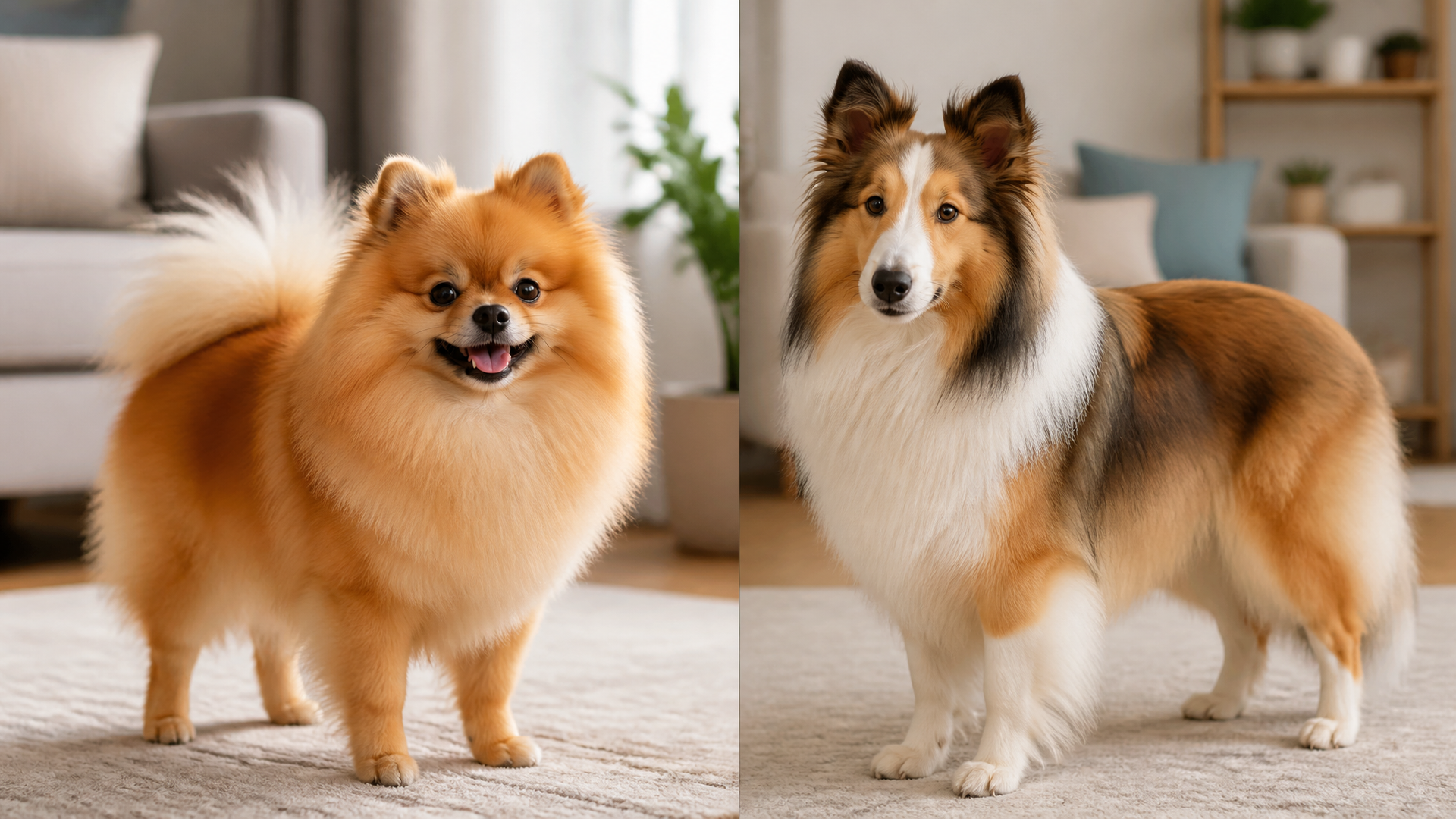
Pomeranian Sheltie mixes usually weigh 15–25 pounds and stand 10–15 inches at the shoulder. Their coat is medium to long, thick, and often comes in black, tan, sable, cream, or a combination. Ears may stand up like a Pom’s or fold over like a Sheltie’s. Because both parents have double coats, expect significant shedding year-round with heavier blows in spring and fall.
| Trait | Pomeranian | Shetland Sheepdog | Pomeranian × Sheltie (typical) |
|---|---|---|---|
| Weight | 3–7 lbs | 15–25 lbs | 15–25 lbs |
| Height | 6–7 in | 13–16 in | 10–15 in |
| Coat | Double, fluffy, profuse | Double, long, straight | Double, medium to long, dense |
| Shedding | Moderate to heavy | Heavy | Heavy |
| Lifespan | 12–16 years | 12–13 years | 12–15 years |
Temperament: What to Expect — and a Crucial Boundary
Both parent breeds are intelligent, loyal, and vocal. Your mixed dog will likely be alert, affectionate with family, and reserved with strangers. They may bark at anything unusual — handy for an alarm, but not ideal for apartments with thin walls. Early socialization helps tone down excessive barking.
Counter‑intuitive truth: Many people assume a smallish fluffball needs minimal exercise, but this mix has high energy. They need 30–60 minutes of activity daily plus mental challenges. A bored Pomskie can become destructive or obsessive about barking.
Important boundary: This guide assumes a first-generation (F1) cross between a purebred Pomeranian and a purebred Sheltie. If your dog is a multi-generational mix (e.g., a Pomskie bred to another Pomskie), traits can vary much more — size might lean heavier, coat texture might differ, and temperament can split unpredictably. The care advice still applies, but you may need to adjust expectations based on your individual dog’s behavior.
What This Means for You: The Real Cost of Ownership
Plan on at least 10–15 minutes of daily grooming plus 30–60 minutes of structured activity every single day. That’s not optional. If you can’t commit to that, this mix will likely develop mats, gain weight, or become a nuisance barker.
Before bringing a Pomskie home, set up a weekly care schedule on your phone. Start with daily brushing reminders. Buy the grooming tools (slicker brush, metal comb, detangling spray) before the dog arrives. If you’re not sure you can stick with it, consider a short-haired breed instead.
Grooming: The Biggest Commitment — With a Flow You Can Follow
Daily and Weekly Routine
- Brush daily with a slicker brush and metal comb to prevent mats (especially behind ears, under legs, and around the collar).
- Bathe every 4–6 weeks using a gentle dog shampoo that won’t strip natural oils.
- Check ears weekly for redness or wax buildup; clean with a vet‑recommended ear cleaner.
- Trim nails monthly (or when you hear them clicking on floors).
Expert Tips for Grooming Success
1. Use a metal comb after brushing. The slicker brush can glide over tangles. Always follow up with a metal comb to find hidden mats. Common mistake: brushing only the top layer and missing mats close to the skin, which can cause hot spots.
2. Start grooming as a puppy. Get them used to being handled on a table. Reward calm behavior with treats. Common mistake: waiting until your dog is older and hates the process, making every session a battle.
3. Keep a detangling spray handy. Spritz on problem areas before brushing. This reduces breakage and makes the experience less painful. Common mistake: brushing a dry, matted coat, which hurts and causes fear.
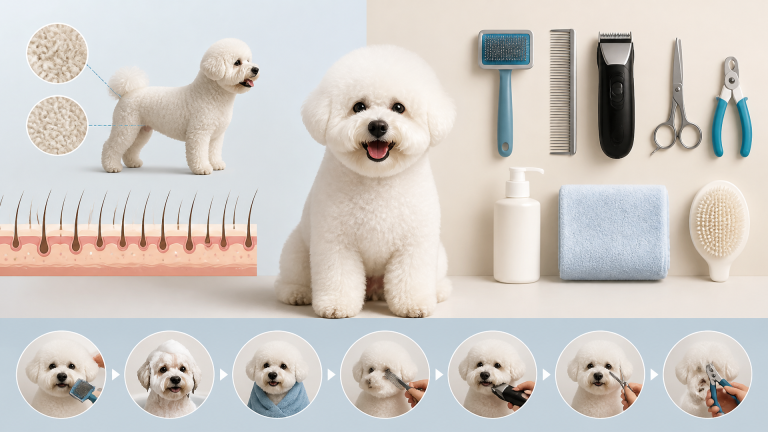
Grooming Flow: Step‑by‑Step
Before you start – Gather your tools: slicker brush, metal comb, detangling spray, treats, and blunt‑tip scissors for trimming. Make sure your dog is calm and standing on a non‑slip surface.
Early checkpoint – Run your fingers through the coat to feel for tangles. Pay extra attention behind the ears, armpits, and around the tail base. If you find large, tight mats close to the skin, stop and call a professional groomer.
Ordered steps
1. Spray any knots with detangling product and let it sit for 30 seconds.
2. Brush with the slicker brush in sections, working from the ends of the hair toward the skin. Use short, gentle strokes.
3. Comb through each section with the metal comb to confirm no tangles remain.
4. Trim around feet and sanitary areas if needed (use blunt‑tip scissors, go slowly).
5. Reward with a treat and praise.
Stop and escalate if you find mats that can’t be gently brushed out, if your dog shows signs of pain (yelping, snapping), or if you see red, irritated skin under tangles. Trying to cut mats out with scissors can cause serious injury — see a professional groomer or your vet instead.
Success check: After a full grooming session, your dog’s coat should feel smooth all over, with no hidden clumps. Your dog should be relaxed (or at least tolerant) after a treat reward.
How to Verify Your Dog’s Breed Mix (If You’re Not Sure)
If you rescued or adopted and aren’t 100% sure of the mix, here’s how to confirm:
- Look at size and structure – A true Pomeranian × Sheltie will generally fall in the 15–25 lb range with a moderately long, double coat. If your dog is under 10 lbs, it’s more likely a Pom mix with a toy breed. Over 30 lbs suggests a larger parent or multi‑generation.
- Check the ears – Pom ears are small and stand up; Sheltie ears fold over at the tip. A mix often has one or the other, but sometimes semi‑erect ears.
- Behavior clues – Herding behaviors (circling, nipping at heels) point to stronger Sheltie influence. A confident, independent streak leans Pom.
- DNA test – For a definitive answer, use a reputable dog DNA test (like Embark or Wisdom Panel). This is especially useful if you’re suspecting a multi‑generational mix.
Exercise and Training
Daily Activity Needs
- Walks: Two 20‑minute walks per day, plus a play session.
- Play: Fetch, tug‑of‑war, or puzzle toys.
- Mind games: Hide treats under cups, teach new tricks, or use interactive feeders.
Training Tips
Shelties are among the smartest dog breeds, and Poms are clever too — so your mix learns fast. But they can also be stubborn.
- Keep sessions short (5–10 minutes) to hold their attention.
- Use positive reinforcement — treats, praise, play. Avoid harsh corrections; they’re sensitive.
- Practice recall in a safe, fenced area. Their herding instinct (from the Sheltie side) may make them want to chase.
Success checkpoint: Your dog can sit, stay, and come reliably in a low‑distraction environment after 2–3 weeks of daily practice.
Health Concerns to Watch For
Because both parent breeds share some inherited issues, your Pomeranian × Sheltie may be prone to:
- Patellar luxation (kneecap slipping) — watch for hopping or limping.
- Dental disease — tiny mouths get crowded; brush teeth 2–3 times a week.
- Eye problems (progressive retinal atrophy, Collie eye anomaly) — have eyes checked annually by a vet.
- Hypothyroidism — signs include weight gain, hair loss, lethargy.
When to Call the Vet
- Limping or skipping steps (possible knee issue)
- Excessive scratching, hair loss, or red skin
- Squinting, eye discharge, or cloudiness
- Sudden weight gain or loss despite normal eating
Household Hazard Alert
Small dogs like this mix are especially vulnerable to toxic foods, medications, plants, electrical cords, alcohol, and pesticides because their small body size means a lower exposure threshold. Keep chocolate, xylitol, raisins, and grapes out of reach. Secure loose cords and supervise chewing.
Feeding: What and How Much
Choose a small‑breed dog food with smaller kibble size to prevent choking. Feed ½ to 1 cup per day split into two meals, but adjust based on activity level. Use a measuring cup — this mix can gain weight easily on extra treats.
Affiliate disclosure: We may earn a commission if you purchase products through our links.
- Recommended bowl: A raised, slow‑feeder bowl helps reduce gulping and bloating.
- Treat limit: No more than 10% of daily calories. Use small training treats.
Save This Guide
Pomeranian Sheltie mixes are loyal, smart, and beautiful — but their grooming and exercise needs are no joke. If you can commit to daily brushing, regular activity, and early training, you’ll have a loving companion for over a decade. Key takeaway: This is not an “easy” small dog. Plan your weekly care routine before you bring one home.