do Beagles Have Hunting Instints
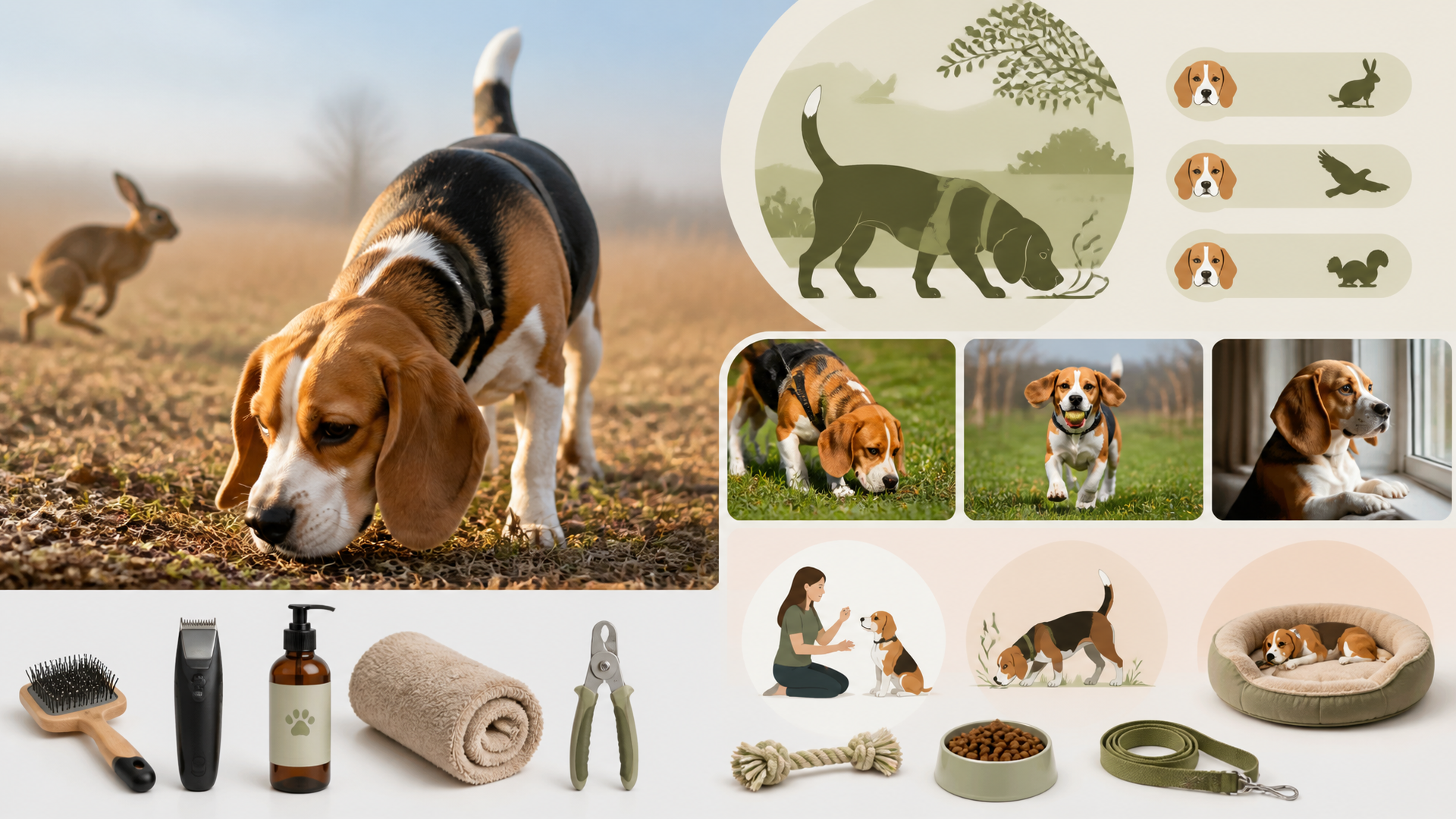
Yes, Beagles have powerful hunting instincts built into their DNA. They were bred as scent hounds to track rabbits and hares in packs, and that nose doesn’t take days off. You’ll see those instincts daily — whether you hunt or not.

The smart move is redirecting that drive into safe outlets so your Beagle doesn’t bolt after every squirrel or ignore your calls completely.
Here’s the counter-intuitive truth most guides skip: not every Beagle has the same hunting drive. Field-line Beagles (bred for hunting) typically have stronger, more persistent instincts than show- or pet-line Beagles. Age also matters — puppies may show less intensity until their nose fully matures around 2–3 years old. Your individual dog’s drive can vary significantly, and your management plan needs to match their actual behavior, not a breed stereotype.
How Hunting Instincts Show Up in Your Beagle’s Daily Life
Your Beagle doesn’t need a forest to act like a hunter. The same drive plays out at home, in the yard, and on every walk.
Scent-locked mode. Once your Beagle catches an interesting smell, they tune out everything else — including you. Many owners describe them as stubborn, but it’s not defiance. Their nose overrides every other command.
Wandering and roaming. A Beagle loose in an unfenced area will follow a scent trail for miles. They weren’t bred for close-quarter retrieving; they were bred to range out ahead and track.
Digging and rooting. If your Beagle digs at the base of a fence or under a bush, they’re likely hunting for small animal scents or trying to follow a trail.
Pawing and barking at exits. That whining at the back door is often triggered by an outdoor smell, not needing to potty.
Beagle vs. Retriever Hunting Style
| Trait | Beagle | Retriever |
|---|---|---|
| Primary tool | Nose (scent tracking) | Eyes and mouth (fetch/carry) |
| Range | Wide, independent | Close, handler-focused |
| Bred to work | In packs, following scent | With hunters, retrieving game |
| Typical recall reliability | Low when on scent | High (with training) |
| Instinct intensity | Drives behavior even when well-fed | More manageable with training alone |
This comparison shows that Beagles need a completely different approach to training and containment than other sporting breeds. Treating your Beagle like a Lab sets you up for frustration.
How to Check Your Beagle’s Drive Level
Run this quick test to see where your Beagle falls on the instinct spectrum:
1. Place a high-value treat (like a piece of chicken) inside a closed cardboard box with a small hole.
2. Let your Beagle sniff the box from 10 feet away.
3. Call their name and offer a different treat from your hand.
What to watch for: If your Beagle ignores your call and obsessively works the box for more than 30 seconds, you have a high-drive dog that needs extra containment and scent work. If they glance at the box then come to you, their drive may be more moderate.
Repeat this test at different times of day and in different locations for a reliable read of your dog’s baseline.
3 Expert Tips for Living With a Beagle’s Hunting Instinct
Tip 1: Build a Scent-Proof Yard
Actionable step: Install a fence at least 4 feet high, and bury the bottom 6 inches underground or use an L-footer. Beagles dig under fences to follow a scent. A standard chain-link fence won’t stop a determined Beagle.
Common mistake: Assuming your Beagle won’t dig if they’re well-fed or exercised. The scent drive overrides comfort. Even a tired Beagle will dig if a rabbit ran through the yard 10 minutes ago.
Trade-off to know: L-footers and buried fencing work well for most Beagles, but a truly determined high-drive dog may still dig along the footer or chew through weaker materials. For escape artists, consider a fully paved or kennel-run enclosure rather than a traditional yard fence.
Tip 2: Use a Long Line for Recall Practice
Actionable step: Practice recall in a safe, fenced area with a 30-foot long line. Call your Beagle by name, then reward with a high-value treat like freeze-dried liver the instant they come. Do this 5 times per session, twice daily.
Common mistake: Letting your Beagle off-leash in an enclosed field and hoping they’ll come back. A Beagle that hits a scent trail may ignore treats and run the fence line for 20 minutes. Until recall is bulletproof, keep them on a line.
Verification check: After two weeks of daily practice, test your Beagle in a low-distraction area with a single mild scent (like a piece of bacon on the ground 15 feet away). If your dog still can’t break focus to respond to their name, they’re not ready for off-leash work — and may never be.
Tip 3: Channel the Hunt Through Scent Games
Actionable step: Hide kibble or treats in a snuffle mat, towel roll, or puzzle toy. Let your Beagle use their nose to find it. Start easy with treats visible, then increase difficulty by hiding them in closed containers.
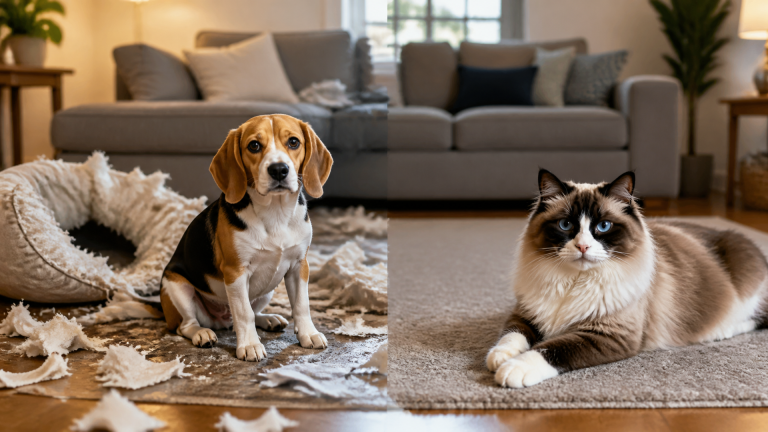
Common mistake: Giving your Beagle a boring bowl of kibble and wondering why they’re destructive. Without a job for their nose, they’ll invent their own — often by chewing furniture or escaping.
Step-by-Step: How to Manage Your Beagle’s Hunting Drive
Step 1: Secure the environment. Check the fence for dig spots and gaps. Use a martingale collar or harness — Beagles can slip out of buckle collars. Never leave the front door open. Run a drill to teach a firm “wait” before crossing thresholds.
Step 2: Provide daily nose work. Spend 10–15 minutes on scent games like snuffle mats or hide-and-seek with treats. On walks, let your Beagle sniff on a long leash for part of the route. Consider a “scent walk” where you lay a trail of treat crumbs in the yard for them to follow.
Step 3: Train a reliable recall. Use a command like “Here!” or “Touch” (nose to your hand). Reward every single time — no exceptions. Practice in low-distraction areas first, then gradually add mild scents. Expect this to take months, not weeks.
Step 4: Supervise outdoor time. Stay outside when your Beagle is in the yard. If they start digging or fixating on a spot, redirect with a toy or treat. Call them in before they get fully absorbed in a scent.
Likely cause of failure: Skipping Step 2. A Beagle with no daily scent outlet will be significantly harder to manage. The most common mistake is expecting training alone to override an unmet instinct.
Escalation signal: If your Beagle stops responding to treats entirely when outdoors, the scent drive is too high. Increase indoor nose games first before trying more advanced outdoor training.
Success check: Your Beagle can walk past a bush with a rabbit scent and still look back at you when you call their name. This may take 3–6 months of consistent work, and some Beagles never fully achieve it.
When Hunting Instincts Become a Problem
Most Beagle owners handle normal drive well. Watch for these red flags:
- Trying to jump out of car windows at fast-moving animals
- Obsessive circling or barking at a room corner (could indicate a mouse or pest inside walls)
- Repeated escape attempts that result in injury or getting lost multiple times
- Aggression toward small pets in the home (guinea pigs, rabbits, hamsters)
If these happen, consult a certified positive-reinforcement trainer who understands hounds. Avoid punishment — it won’t fix the nose drive and will only increase anxiety.
Also consider that a Beagle with intense prey drive may not be safe around small household pets. Management (separate spaces, crates, supervised interactions) may be the only realistic option.
Frequently Asked Questions
Can you train hunting instincts out of a Beagle?
No, you cannot remove the genetic drive. But you can manage it with scent games, secure containment, and solid recall training. The goal is channeling, not eliminating.
Will my Beagle ever be safe off-leash?
Some individual Beagles can learn reliable off-leash recall, but most never reach that level of reliability around fresh animal scent. Assume off-leash freedom is a high-risk activity for this breed. If off-leash hiking is important to you, consider a different breed or commit to a long line permanently.
Do Beagles make good hunting dogs for first-time hunters?
They can be excellent rabbit and hare hunters, but they need structured pack training and a handler who understands scent hounds. They are not ideal for beginners who want a dog that sticks close.
What’s the difference between a field-line and show-line Beagle for instincts?
Field-line Beagles are bred specifically for hunting ability and typically have stronger, more persistent scent drive. Show- and pet-line Beagles still have the instincts, but they’re often less intense and easier to manage. If you’re buying a Beagle puppy, ask the breeder about the line’s background so you know what to expect.
Save This Guide
Key takeaway: Beagles are born hunters through scent, not sight. Their instincts don’t make them bad family dogs — they just need daily nose work, secure fencing, and consistent recall training. The specific intensity depends on your dog’s lineage, age, and individual temperament. Ignoring that drive leads to escaped dogs and frustrated owners.
This guide contains recommendations for training tools. Some links may be affiliate links, and we may earn a small commission at no extra cost to you.