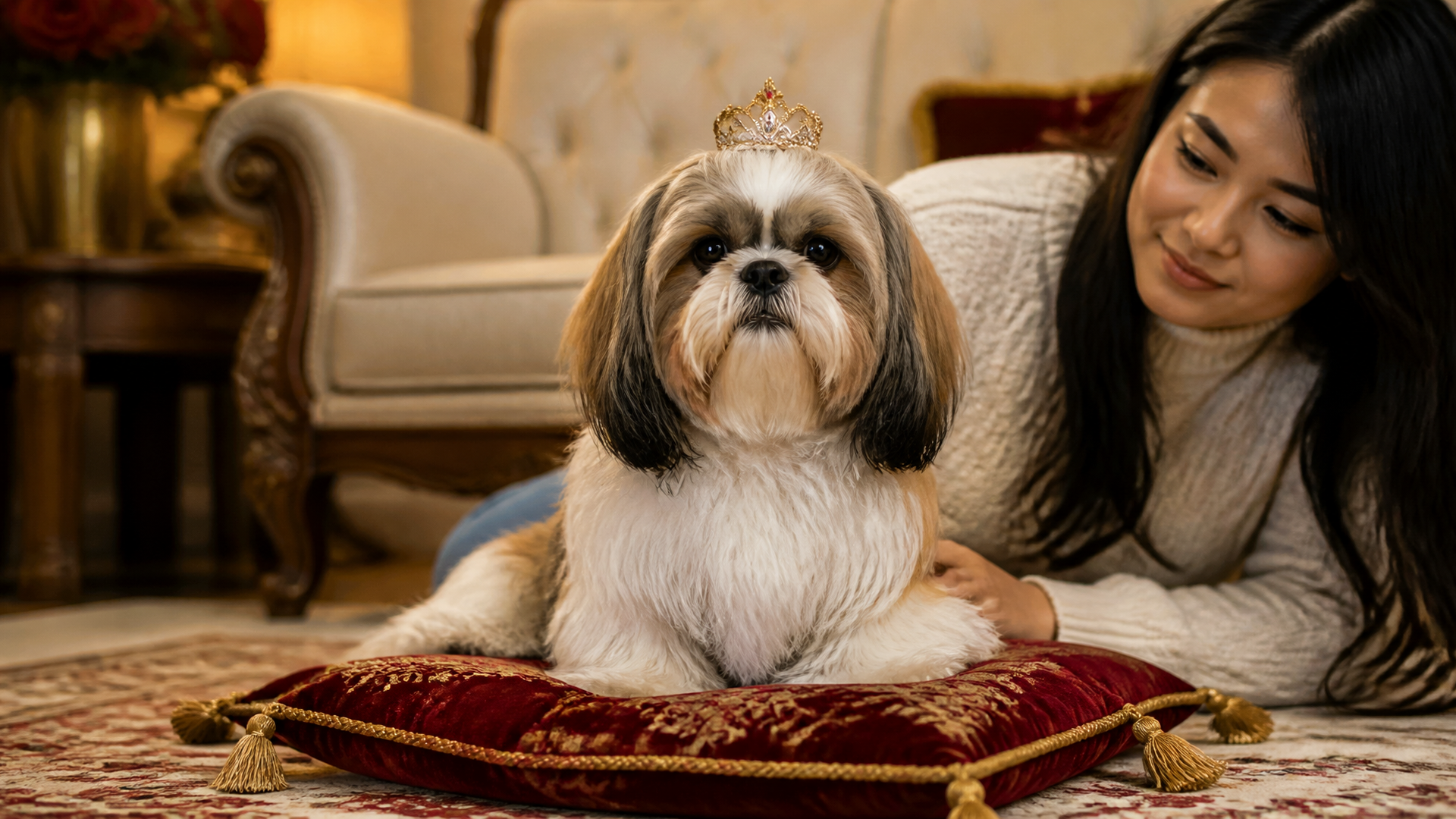
Shih Tzu Historia: Guide: What Every Owner Should Know
The Shih Tzu was bred for Chinese royalty over 1,000 years ago, living exclusively in the Imperial Palace as a treasured companion. That history directly shapes how your Shih Tzu behaves today—from stubborn training sessions to specific health risks. Here is what that means for your daily life as an owner.

Quick Facts Card
| Trait | Details |
|---|---|
| Origin | Tibet / China (Imperial Palace) |
| Original Purpose | Palace companion, lap warmer |
| Weight | 9–16 lbs |
| Height | 8–11 inches at shoulder |
| Lifespan | 10–16 years |
| Coat | Long, double coat (grows continuously) |
| Temperament | Affectionate, alert, independent |
| Common Health Issues | Breathing problems, eye issues, dental disease, ear infections |
Why Your Shih Tzu Acts Like Royalty (And What to Do About It)
Because Shih Tzus were selectively bred for centuries as palace companions—not hunters or herders—they have a specific set of needs that differ from most other breeds.
The companionship requirement you cannot skip
Your Shih Tzu needs constant human contact. This is not a dog that can be left alone for 8-hour workdays without developing separation anxiety. Plan for doggy daycare, a pet sitter, or a dog walker if you work full-time. Without that companionship, expect destructive chewing, excessive barking, or refusal to eat.
Counter-intuitive angle: Despite their royal history, Shih Tzus are not aloof or independent. They want more human interaction than almost any other toy breed. A Shih Tzu left alone too much can develop anxiety that leads to health issues like excessive licking, fur loss, or digestive problems.
The training mismatch new owners face
Many owners expect their Shih Tzu to behave like a Labrador—eager to please and quick to learn. That is not how this breed works. Shih Tzus were bred to entertain royalty on their own terms, not to take orders. They are not being defiant; they are showing independence bred in over centuries.
Practical approach: Keep training sessions to 5–10 minutes max. Use high-value treats (small pieces of chicken or cheese). Skip harsh corrections—they shut down completely. Focus on positive reinforcement only.
The energy reality
Low energy does not mean no energy. Your Shih Tzu needs:
- One 20-minute walk daily
- 10 minutes of indoor play (fetch down a hall, tug-of-war)
- Puzzle toys for mental stimulation
Skip the intense exercise. Their flat faces (brachycephalic structure) make heavy breathing dangerous, especially in heat. On warm days, walk in early morning or evening.
Daily Care Operator Flow
This scan-friendly routine prevents the most common Shih Tzu problems before they start.
Preparation
Supplies to have ready: Slicker brush, pin brush, detangling spray, soft cloth for eyes, vet-approved ear cleaner, dental wipes.
Morning Checkpoints (5 minutes)
Check eyes for discharge, redness, or cloudiness. Shih Tzus have shallow eye sockets, so debris builds up fast. Wipe with a warm, damp cloth from inner to outer corner.
Quick brush with a slicker brush for 2–3 minutes. Focus on armpits and behind ears—these are mat hot spots where tangles form within 24 hours.
Fresh water and small meal (¼ to ½ cup of high-quality kibble, split into two meals).
Evening Checkpoints (10 minutes)
Full coat brush with a pin brush, working section by section from skin outward. Pay special attention to the tail and chest where mats form most often.
Check ears for odor, redness, or dark wax. Floppy ears trap moisture, creating the perfect environment for yeast infections. Clean with a vet-approved ear cleaner and cotton ball—never use Q-tips.
Trim hair around eyes with blunt-tipped scissors angled away from the eye. Or use a groomer for this task if you are nervous—eye injuries heal slowly in this breed.
Likely Causes of Common Problems
| Problem | Likely Cause | Quick Fix |
|---|---|---|
| Eye staining | Shallow sockets + tear overflow | Daily wiping, probiotic supplement |
| Ear odor | Moisture trapped in floppy ears | Weekly cleaning, drying ears after baths |
| Coat mats | Skipping 1-2 days of brushing | Detangling spray + slicker brush daily |
| Bad breath | Dental disease (80% of Shih Tzus by age 2) | Daily dental wipes or finger brush |
Escalation Signals (Call Your Vet)
- Eye: Sudden cloudiness, squinting, or green discharge
- Ear: Head shaking, scratching, or yellow/brown discharge
- Coat: Bald patches, scaly skin, or excessive itching
- Breathing: Blue gums, collapsing, or noisy breathing at rest
Success Check
Your Shih Tzu should have clear eyes, dry ears, a mat-free coat, and normal energy levels. If you are hitting these checkpoints daily, you are preventing 90% of common health problems.
3 Practical Tips from Experienced Owners
Tip 1: Make brushing a non-negotiable daily habit. Set a timer for 3 minutes every evening. Spritz the coat with detangling spray before brushing to prevent hair breakage. Common mistake: brushing a dry coat, which snaps hair shafts and creates more tangles.
Tip 2: Use a harness every single walk. Shih Tzus have delicate tracheas, and collar pressure can cause coughing and breathing problems. Common mistake: using a collar for leash walks, which puts pressure on the throat and aggravates brachycephalic airway issues.
Tip 3: Start dental care the day you bring your puppy home. Rub a flavored dental wipe on their teeth for 10 seconds daily, then give a reward. Common mistake: waiting until they have bad breath or loose teeth to start, at which point professional cleaning is already needed.
Essential Health Watch (Breed-Specific)
Shih Tzus have three health risks that owners must monitor proactively.
Brachycephalic Airway Syndrome
Because of their flat faces, Shih Tzus have compressed airways. Signs to watch for:
- Loud snoring (normal to some degree)
- Gagging or reverse sneezing after excitement
- Blue-tinged gums (emergency)
- Collapsing after exercise or in heat
Tip: Use a harness, not a collar, to avoid pressure on the trachea. Avoid hot weather walks. Keep your Shih Tzu at a healthy weight—extra pounds make breathing much harder.
Eye Problems
Shih Tzus have protruding eyes with shallow sockets. This makes them prone to:
- Corneal ulcers (scratches on the eye surface)
- Dry eye (insufficient tear production)
- Proptosis (eye popping out of socket—medical emergency)
Tip: Never let your Shih Tzu hang out of a car window. Debris can scratch the cornea instantly. Trim face hair regularly.
Dental Disease
Over 80% of Shih Tzus have dental disease by age 2. Their small mouths create overcrowding, which traps food and bacteria.
Tip: Start dental care as a puppy. Use dental wipes daily, provide dental chews, and schedule annual vet dental cleanings. Untreated dental disease damages the heart, kidneys, and liver—not just the teeth.
Grooming Essentials for the Double Coat
Your Shih Tzu has a double coat that never stops growing (like human hair, it keeps growing indefinitely). This means mats are inevitable if you skip even one day of brushing.
The 3-Minute Daily Routine
1. Spritz with detangling spray or water
2. Brush with slicker brush in small sections, working from skin outward
3. Check behind ears, armpits, and tail for tangles
The Full Grooming Schedule
| Task | Frequency | Tools |
|---|---|---|
| Full brush-out | Daily | Slicker brush, pin brush, detangling spray |
| Face trim | Every 1–2 weeks | Blunt-tipped scissors |
| Bath | Every 3–4 weeks | Dog shampoo, conditioner |
| Professional groom | Every 4–6 weeks | Groomer for full clip |
| Nail trim | Every 2–3 weeks | Clippers or grinder |
| Ear cleaning | Weekly | Vet-approved ear cleaner |
Product recommendations: A slicker brush with rounded tips prevents skin scratches. A pin brush with flexible wire pins reaches the undercoat. Use leave-in detangling spray before each brushing session.
Common Grooming Mistakes to Avoid
- Brushing dry hair: Always spritz first. Brushing a dry double coat breaks the hair shafts.
- Using human shampoo: Dog skin pH is different—human shampoo strips natural oils.
- Ignoring the undercoat: Brush to the skin, not just the top layer. Mats form at the skin level.
- Skipping professional grooms: You cannot maintain a show coat alone. Every 4–6 weeks at the groomer prevents disaster.
Feeding Guide
Small dogs have fast metabolisms and small stomachs. Your Shih Tzu needs frequent, portion-controlled meals.
| Age | Meals Per Day | Portion (high-quality kibble) |
|---|---|---|
| Puppy (2–6 months) | 3–4 | ¼ cup total, split |
| Puppy (6–12 months) | 3 | ⅓ cup total, split |
| Adult (1–7 years) | 2 | ½ cup total, split |
| Senior (8+ years) | 2 | ¼–⅓ cup total, split |
Tip: Divide daily food into at least two meals. One large meal increases bloat risk and drops blood sugar in small breeds.
Foods to Avoid (Small Dog Risk)
Because of their small body size, Shih Tzus are more sensitive to toxic substances than large breeds:
- Grapes and raisins – can cause kidney failure
- Xylitol (artificial sweetener in gum, peanut butter) – causes rapid blood sugar drop and liver failure
- Chocolate – even small amounts cause toxicity
- Onions and garlic – damage red blood cells
- Macadamia nuts – cause temporary paralysis
Always check the ingredient list on anything your Shih Tzu might sneak. A single grape or piece of xylitol gum can be dangerous for a 12-pound dog.
Products That Make Life Easier
These specific product types solve common Shih Tzu owner frustrations:
| Problem | Product Type | What to Look For |
|---|---|---|
| Eye staining | Tear stain remover wipes | Enzymatic, gentle, no bleach |
| Coat mats | Dematting comb | Rotating teeth that slice mats apart |
| Bad breath | Dental wipes | Enzymatic, no-brush formula |
| Separation anxiety | Puzzle toy | Treat-dispensing, durable |
| Leash pulling | Front-clip harness | No pressure on throat |
Disclosure: We may earn a commission if you purchase products through links in this article, at no extra cost to you.
Save This Guide
Keep this article saved as your Shih Tzu care reference. Bookmark the daily checklist table for morning and evening routines, print the feeding guide for the fridge, and refer to the escalation signals before calling your vet. Your Shih Tzu’s palace-dog history means they need more companionship, gentler training, and more consistent grooming than most breeds—but the payback is a devoted, long-lived companion.
Frequently Asked Questions
How old is the Shih Tzu breed?
The Shih Tzu breed dates back at least 1,000 years, with evidence of similar small, lion-like dogs in Tibetan and Chinese royal courts. They were bred exclusively as palace companions.
Are Shih Tzus good with children?
Yes, but with supervision. Shih Tzus do well with older, gentle children who understand not to roughhouse. Their small size makes them vulnerable to accidental injury, especially their protruding eyes.
How much exercise does a Shih Tzu need?
About 20 minutes of walking plus 10 minutes of indoor play daily. They are low-energy but need mental stimulation. Skip intense exercise in hot weather due to their flat faces.
Do Shih Tzus shed?
Minimal shedding, but they produce dander. Their hair grows continuously like human hair. This makes them better for allergy sufferers, though no dog is completely hypoallergenic.
How long do Shih Tzus live?
10–16 years with proper care. Many live into their mid-teens if kept at a healthy weight and given consistent veterinary care.
Are Shih Tzus easy to train?
Not particularly. They are independent and stubborn, bred to entertain royalty rather than take commands. Use short sessions (5 minutes), high-value treats, and positive reinforcement. Skip harsh corrections.