Shih Tzu Care: Daily Routine & Expert Tips
Shih Tzus are wonderful companions, but their care is not low-effort. Between their double coat, flat face, and small size, they need daily grooming, proper feeding, and regular health checks. Here’s exactly what you need to do each day to keep your Shih Tzu happy and healthy — with breed-specific details you won’t find in a generic dog care guide.

Daily Shih Tzu Care Checklist
Use this quick scan every morning and evening to stay on track. Check off each item or address it immediately.
| Done? | Task |
|---|---|
| ☐ | Feed ¼ to ½ cup of high-quality small-breed kibble (split into two meals) |
| ☐ | Provide fresh water in a heavy ceramic bowl (no tipping) |
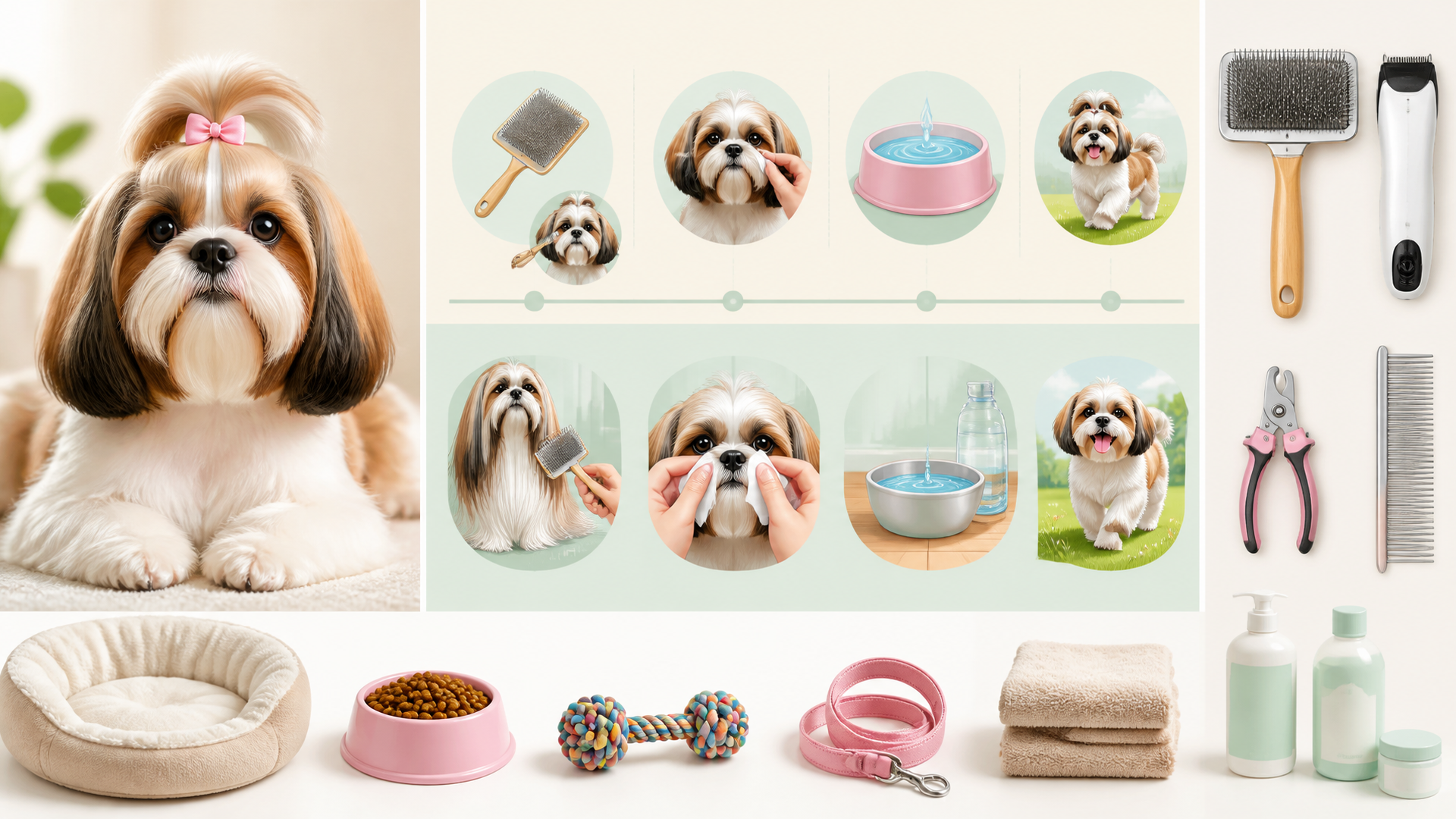
| ☐ | Brush for 5–10 minutes with a slicker brush and pin brush |
| ☐ | Clean eyes with a soft, damp cloth – wipe outward |
| ☐ | Give two 15–20 minute walks (morning and evening, avoid heat) |
| ☐ | Potty break every 3–4 hours; final one right before bedtime |
| ☐ | Check for mats behind ears, under legs, and around collar |
Eye Discharge: When to Worry
After cleaning the eyes, look closely at the discharge. Clear or slightly brownish tears that dry as rust-colored stains are normal for Shih Tzus — a breed trait. But if you see yellow, green, or thick mucus, that signals an eye infection. Stop at-home eye cleaning and call your vet the same day. If the discharge is clear but excessive (wet face all day), it could be a blocked tear duct or dry eye — schedule a vet appointment within the week. Normal discharge wipes away easily; anything that leaves the eye sticky or crusty needs professional attention.
Grooming Flow: The Non-Negotiable Coat Care
Skipping brushing even one day leads to mats that pull on skin and are painful to remove. Follow this step-by-step flow.
Tools You’ll Need
- Slicker brush (for undercoat)
- Pin brush (for topcoat)
- Metal comb (for checking behind ears)
- Detangling spray (use sparingly, avoid eyes)
- Clippers or scissors for paw pads and sanitary areas
Step-by-Step Brushing Every Day
Step 1: Spritz lightly with detangling spray or water.
Step 2: Brush with slicker brush in small sections, starting at the skin and working outward.
Step 3: Follow with pin brush to smooth the topcoat.
Step 4: Comb through — if the comb snags, you missed a mat.
Step 5: Wipe eyes and beard. Food residue in the beard can cause yeast infections.
Verification Step: How to Confirm a Mat-Free Coat
Run the metal comb through each area you brushed — ears, neck, legs, belly, and back. If the comb glides without snagging, the coat is fully detangled and you’re done. If the comb catches or pulls, go back to that spot and brush it again with the slicker brush, working from the skin outward. Only move on when every section passes the comb test. This prevents hidden mats that can turn into painful, skin-tight clumps within 24 hours.
Escalation Signal
If you feel tight clumps against the skin that won’t brush out, or if the comb repeatedly snags in the same area, schedule a professional groomer within 48 hours to shave out the mats. Attempting to cut them yourself with scissors risks cutting the skin.
Bathing Schedule
Bathe your Shih Tzu every 2–4 weeks with a moisturizing dog shampoo — Shih Tzu skin is sensitive. Use a formula for white or long-haired coats. Blow-dry on low heat while brushing. Never let the coat air-dry — that guarantees mats.
Feeding Your Shih Tzu: What to Feed and What to Avoid
Shih Tzus are small but prone to food allergies. Choose a diet that supports skin, coat, and dental health.
Best Food Choices
- Small-breed dry kibble (pieces sized for tiny mouths) with animal protein first (chicken, lamb, salmon)
- Limited-grain or grain-free if allergies arise
- Canned food as a topper (not a full diet) for dogs who need extra moisture
Branch: Suspecting a Food Allergy
If your Shih Tzu is scratching more than usual, has red paws, or gets frequent ear infections, a food allergy is likely. Switch to a fish-based (salmon or whitefish) limited-ingredient diet for 8 weeks. If symptoms improve, the old protein was the trigger. If there’s no change after 4 weeks, schedule a vet visit — it could be environmental allergies. Most Shih Tzus respond well to a novel protein, but some need prescription hydrolyzed diets.
Foods Never to Give
Because of their small size, even a tiny amount of a toxic food can be dangerous.
- Chocolate, grapes, raisins, onions, garlic
- Xylitol (in sugar-free gum, peanut butter — check labels)
- Macadamia nuts, alcohol, caffeine
- Cooked bones (can splinter) and raw meat (bacteria risk)
BLOCKQUOTE_0
Health and Wellness: Common Issues and Warning Signs
Shih Tzus have breed-specific health problems you need to watch for.
Brachycephalic Breathing Issues
Snorting, snoring, and reverse sneezing are normal for flat-faced dogs. But collapse, struggling to breathe, or blue gums mean an emergency vet visit immediately.
Dental Disease
Small mouths mean crowded teeth. Brush teeth 2–3 times per week with dog-safe toothpaste. Signs of trouble include bad breath, red gums, dropping food, or pawing at the mouth. If you see bleeding gums while brushing, stop brushing that area and switch to a dental wipe for a few days. If bleeding persists, schedule a dental cleaning with your vet — Shih Tzus often need professional cleanings yearly.
Eye Problems
Dry eye (keratoconjunctivitis sicca) shows as tear stains, redness, and squinting — it needs vet-prescribed drops. Corneal ulcers show as pawing at the eye, cloudiness, or excessive tearing — that’s an emergency.
Skin Allergies
Itchy skin, frequent ear infections, and red paws point to allergies. Switch to a limited-ingredient diet and use hypoallergenic shampoo. If the diet change alone doesn’t resolve symptoms within 6 weeks, ask your vet about cytology testing to identify secondary yeast or bacterial infections — often missed in Shih Tzus.
When to Call the Vet
Any sudden change in appetite, energy, or breathing requires a call. Persistent vomiting or diarrhea, eye discharge that doesn’t clear, and limping that lasts more than a day also need professional attention.
Training and Behavior: Do’s and Don’ts
Shih Tzus are stubborn but eager to please — positive reinforcement works best. Keep sessions short (5 minutes max). Use small, soft treats like boiled chicken bits.
| Do | Don’t |
|---|---|
| Use positive reinforcement (treats, praise) | Yell or punish — they shut down |
| Socialize early with calm dogs and people | Overwhelm with loud or busy environments |
| Crate train for safe alone time | Leave alone for 8+ hours daily — they bond deeply |
| Take puppy out every 2 hours for potty training | Expect perfection in one week |
Branch: If Training Hits a Wall
If your Shih Tzu ignores treats during a session, switch to a higher-value reward like freeze-dried liver or a squeaky toy — they can be picky about motivation. If they still won’t engage, end the session and try again later with a 2-minute refresher. Consistent short wins beat long frustrating sessions. If potty training stalls after 4 weeks, rule out a UTI with your vet before continuing.
FAQ
Are Shih Tzus easy to care for?
No. They require daily brushing, regular grooming appointments, and careful health monitoring. For a first-time owner, they’re high-maintenance compared to short-haired breeds. But if you can commit to the routine, they’re loyal and affectionate.
What are the do’s and don’ts for Shih Tzu?
Do brush every day, feed a high-quality small-breed food, clean eyes and ears weekly, and use positive training. Don’t skip grooming, overfeed, leave alone for long hours, or let them jump off furniture — they risk slipped kneecaps.
What food is not allowed for Shih Tzu?
Chocolate, grapes, raisins, onions, garlic, xylitol, macadamia nuts, alcohol, caffeine, raw dough, and cooked bones. Because Shih Tzus are small, even a little can cause severe poisoning.
Do Shih Tzus like sleeping with their owners?
Yes, most do. They are lap dogs that crave close contact. Many owners allow it, but be cautious with very young puppies (risk of rolling) and consider a ramp to prevent joint strain from jumping off the bed.
Save This Guide
Shih Tzu care boils down to daily grooming, measured feeding, moderate exercise, and regular vet visits. The coat is the biggest commitment — brushing every day without exception is the key to keeping your Shih Tzu comfortable and happy. This guide covers the essentials you need to start. Bookmark it for quick reference, share it with a fellow Shih Tzu owner, and use the branch guides to know exactly when to adjust or escalate.