do Beagles Need Grooming: Complete Guide for Beagle Owners
Yes, Beagles need regular grooming. Despite their short coat, Beagles have a dense double coat that sheds year-round and blows coat seasonally. You’ll need to brush, bathe, trim nails, clean ears, and care for teeth on a consistent schedule.

The biggest decision point for your Beagle’s grooming routine is whether your dog has allergies or skin sensitivities. About 30% of Beagles develop environmental or food allergies, and that changes everything — from how often you bathe to what products you use and how closely you watch the ears. An allergy-prone Beagle needs medicated baths and weekly ear checks. A Beagle with healthy skin can follow a standard schedule with more flexibility.
Here’s exactly what that looks like, step by step.
Beagles are moderate shedders with a short, weather-resistant coat that needs weekly care to stay healthy and control loose hair around your home. Your routine will take about 20 minutes per session once you have the right tools.
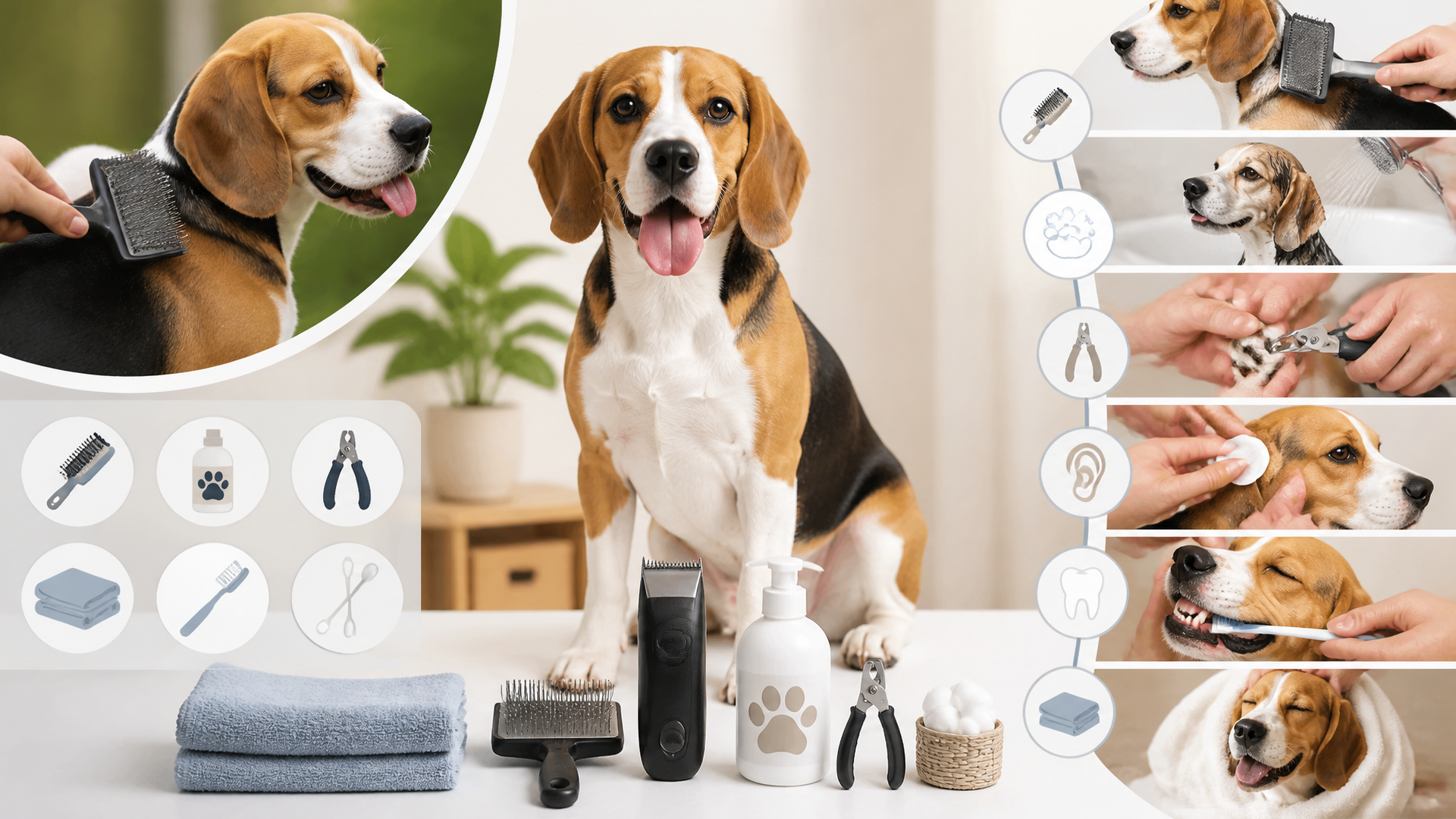
Grooming Tools Your Beagle Actually Needs
Grab these tools before you start. The right tool makes the difference between a Beagle who tolerates grooming and one who fights it.
| Tool | Why You Need It | Best For |
|---|---|---|
| Slicker brush | Reaches the undercoat to pull out loose hair | Weekly brushing sessions |
| Rubber curry brush or grooming mitt | Removes surface dirt and loose hair | Quick daily passes and massage |
| Undercoat rake | Handles heavy shedding | Spring and fall shedding seasons |
| Nail clippers or grinder | Keeps nails at a healthy length | Every 2–3 weeks |
| Dog-safe shampoo and conditioner | Protects sensitive Beagle skin | Baths every 4–6 weeks (or medicated formula if allergies are present) |
| Ear cleaning solution and cotton balls | Prevents ear infections | Weekly ear checks (every 3–4 days if allergies are a factor) |
| Dog toothbrush and enzymatic toothpaste | Maintains dental health | 3+ times per week |
The rubber curry brush is your everyday workhorse. Use it two to three times per week to collect loose hair before it ends up on your furniture. A slicker brush is essential for deeper sessions.
Product tip: For Beagles with allergies, look for oatmeal-based or hypoallergenic shampoos. For healthy Beagles, a gentle dog shampoo with aloe works fine.
7-Step Beagle Grooming Routine
Follow these steps in order once per week. Adjust frequency for nails and teeth as noted. If your Beagle has allergies, pay extra attention to steps 2 and 5.
Step 1: Brush Your Beagle
Start with the rubber curry brush to remove surface dirt and loose hair. Follow with the slicker brush working from neck to tail in the direction of hair growth. Pay extra attention to the rear and thighs where the coat is thicker. A thorough brushing takes 5–7 minutes.
Checkpoint: If you see clumps of hair coming out, your Beagle is in a shedding cycle. Switch to the undercoat rake for this session and increase brushing to every other day until shedding slows.
Verification: After brushing, run a damp paper towel over your Beagle’s back. If it comes up mostly clean, your brushing session removed enough loose hair. If you still see hair on the towel, go over the coat one more time with the slicker brush.
Step 2: Check the Ears
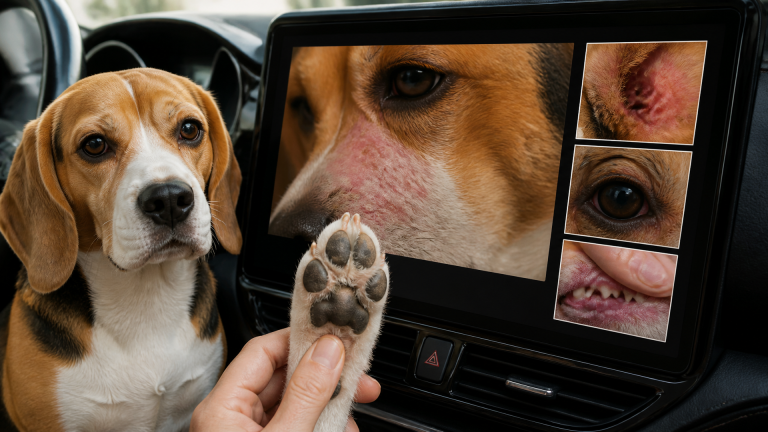
This step matters more for Beagles than for almost any other breed. Beagles’ floppy ears create a warm, dark environment where yeast and bacteria thrive. Lift each ear flap and look for redness, odor, or dark discharge. If the ears look clean and smell neutral, you’re good.
If you see any warning signs, apply ear cleaning solution to a cotton ball (never a Q-tip) and gently wipe the visible part of the ear canal.
Likely cause of dirty ears: Your Beagle spent time in tall grass, got water in the ears during a bath, or hasn’t had ears checked in two weeks. Beagles with allergies tend to have more ear issues — their immune response creates inflammation that yeast loves.
Escalation signal: If the ear looks swollen, your Beagle flinches when you touch it, or the discharge is dark and smelly, skip the home cleaning and see your vet. Do not attempt to clean an infected ear at home — it will make things worse.
Step 3: Trim the Nails
Trim nails every 2–3 weeks. Hold the paw firmly and clip small amounts off the tip, staying below the quick (the pink area visible on light-colored nails). For dark nails, cut tiny slices and stop when you see a black dot in the center of the cut surface — that means you’re close to the quick.
Stop threshold: If you see blood or your Beagle yelps, you’ve hit the quick. Apply styptic powder or cornstarch to stop the bleeding, and stop nail trimming for the day. Resume in a week.
Verification: After trimming, walk your Beagle on a hard floor. If you hear clicking sounds, trim a tiny bit more. If the nails are quiet against the floor, they’re at a good length.
Step 4: Brush the Teeth
Brush your Beagle’s teeth at least three times per week. Lift the lip gently and brush in small circles along the gum line. Focus on the back teeth where tartar builds up fastest. Most Beagles tolerate this better if you start with a finger brush before moving to a toothbrush.
Step 5: Bath Time (Every 4–6 Weeks)
Beagles don’t need frequent baths unless they’ve found something smelly to roll in (common for this breed). Use lukewarm water and dog-specific shampoo only — human shampoo strips their coat oils. Rinse thoroughly because leftover soap causes skin irritation.
Decision point for allergy-prone Beagles: If your Beagle has confirmed allergies, switch to a veterinary-recommended medicated shampoo and bathe every 3–4 weeks during flare-up seasons (spring and fall). ABeagle with healthy skin can stretch baths to every 6–8 weeks.
Checkpoint: If your Beagle has dry, flaky skin after a bath, you’re bathing too often or didn’t rinse completely. Switch to a moisturizing oatmeal shampoo and extend the time between baths.
Verification: After rinsing, run your fingers through the coat. If you feel any slipperiness or soap residue, rinse again. A thoroughly rinsed Beagle’s coat will feel clean and slightly squeaky between your fingers.
Step 6: Dry Thoroughly
Towel dry first, then use a low-heat blow dryer on a quiet setting if your Beagle tolerates it. Never leave a Beagle with damp ears or a wet undercoat — moisture trapped against the skin can cause hotspots or fungal infections.
Stop signal: If your Beagle shows signs of overheating (heavy panting, drooling, red gums), stop the dryer immediately and let your dog cool down before resuming with towel drying only.
Verification: Check the undercoat by parting the fur at the neck and behind the ears. If the skin feels cool and damp, continue drying. The coat should feel warm and completely dry to the touch before you finish.
Step 7: Reward and Inspect
Finish with a treat and a quick full-body check. Run your hands over your Beagle’s entire body feeling for bumps, scabs, or tender spots. This is also when you check for fleas, ticks, or dry patches.
Key spot for Beagles: Check the skin folds around the neck and under the collar. Beagles with allergies often develop hot spots in these areas first.
Weekly Grooming Checklist for Beagles
Print or save this checklist to keep your grooming on track. A checkmark means the task is done for the week.
| Task | Frequency | Done